.svg)
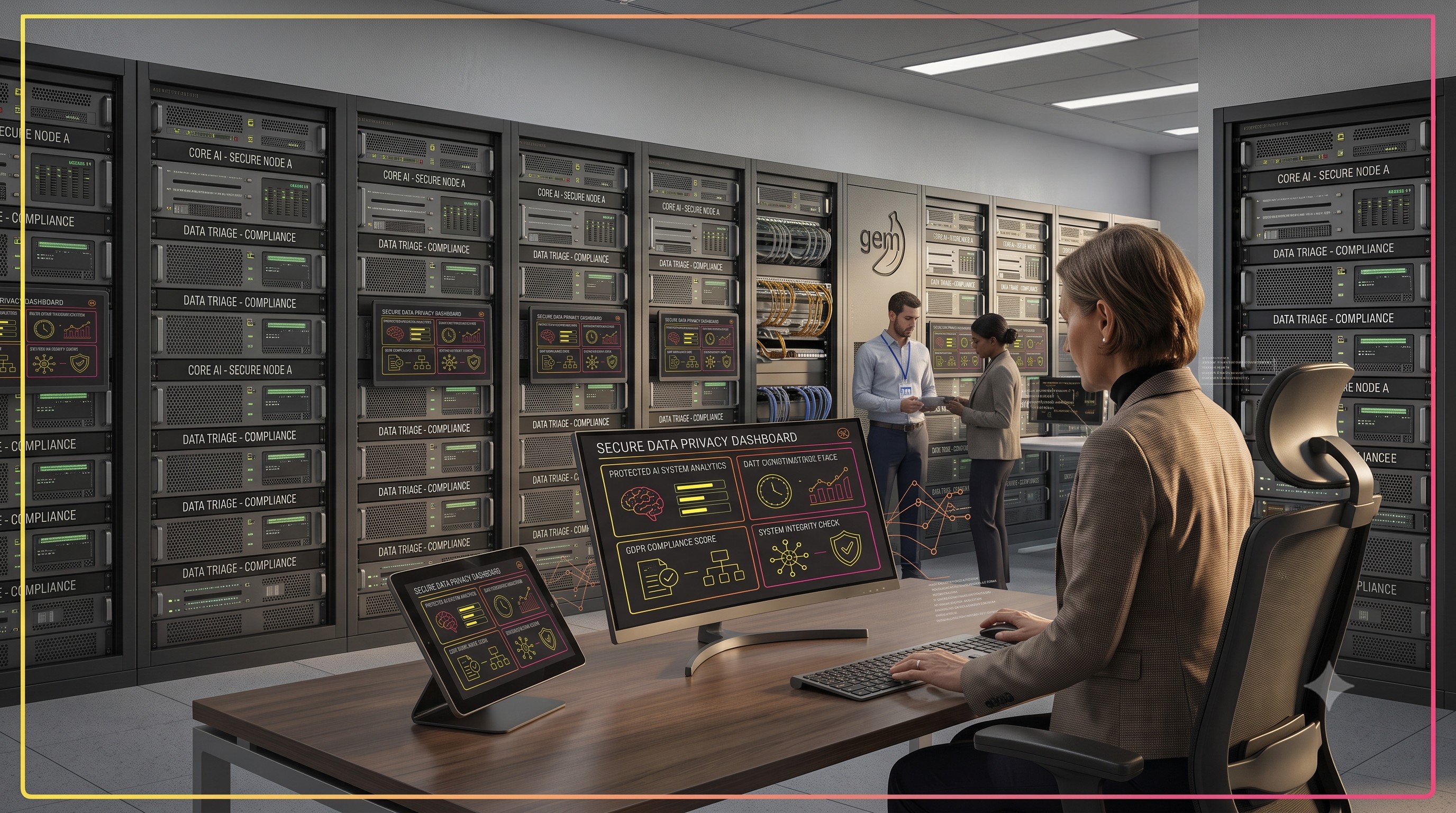
Discover why security concerns stall official corporate AI adoption and how private conversational assistants eliminate shadow AI data leak risks.
There is a major tug-of-war happening in local businesses right now. On one side, frontline teams are eager to use conversational AI assistants to draft emails, sort customer messages, and cut hours of boring data entry out of their daily shifts. On the other side, management is hitting the brakes because they are terrified of compliance penalties, data leaks, and staff accidentally pasting private financial records or client details into public chat boxes.
This standoff leaves companies stuck in limbo. While corporate leadership looks over security checklists, the everyday workforce continues to drown in manual administration. But trying to solve the problem by simply banning these advanced digital assistants creates a massive blind spot that puts your company at even greater risk.
It makes perfect sense why business owners are hesitating to roll out public AI apps across their operations. Traditional public chat models learn by soaking up every single piece of text users feed into them, meaning whatever your team types into a prompt could easily pop up in a competitor's search results later.
According to global research from the Deloitte State of AI Report, 73% of organizations identify data privacy and security as their absolute biggest hurdle to deploying smart workplace tech. When you open the door to ungoverned public apps without a clear data strategy, your business faces real operational vulnerabilities:
Relying on public, unverified software means you are risking your entire digital perimeter just to get a bit faster.
Here is the real catch: telling your staff they cannot use smart digital helpers does not actually stop them from doing it. It just forces them to hide it. Data from the SalesAPE 2026 AI Adoption Survey reveals that a striking 54.1% of professionals are using unapproved "shadow AI" tools at work without their employer's permission.
When you do not provide a safe, official path, your crew will use personal accounts on their phones to keep up with their workloads. In fact, cybersecurity findings from the IBM Cost of a Data Breach Report show that shadow AI was involved in 20% of data incidents, and an incredible 97% of those AI-related breaches happened because the business lacked proper access controls and governance.
“Banning the technology does not keep you safe; it just leaves your most valuable company files completely invisible to your IT setup.”
The only way to win the security standoff is to give your team an official, secure AI workspace that keeps your company data fully isolated. Instead of sending information into a massive public model, a private operational brain locks down your ecosystem so nothing ever leaves your internal server.
This secure framework lets you reclaim massive amounts of time without a single security worry. Our SalesAPE 2026 AI Adoption Survey shows that 32.4% of workers save three to five hours every week through smart automation, while 16.2% save more than five hours weekly. Furthermore, 40.0% of operations leads note that security is their number one barrier to adoption. By choosing a closed partner that treats your database with total privacy, you satisfy your security needs while giving your crew the exact tools they need to succeed.
Ready to swap risky shadow AI habits for a completely secure, closed operational brain built for your team? We promise absolutely no heavy-handed sales loops, zero automated marketing spam tracking, and no unsolicited calls. You can book a real-world look at our secure system through our online scheduling system or reach out directly to our privacy team at hello@salesape.ai to ask a technical data compliance question.
Our platform isolates your data entirely within a secure system, meaning your customer chats, internal emails, and proprietary business records are never shared or used to train public language models.
The easiest strategy is providing an official, highly capable, and fully approved conversational assistant so staff do not feel forced to use risky, unmanaged personal accounts to get their jobs done.
Yes, the platform features native integration pathways to connect with your existing databases and CRMs securely, letting you automate workflows without exposing your internal infrastructure to public data threats.