.svg)
Discover why complex corporate software procurement processes fail deskless trade networks and how conversational mobile setups keep field operations fast.
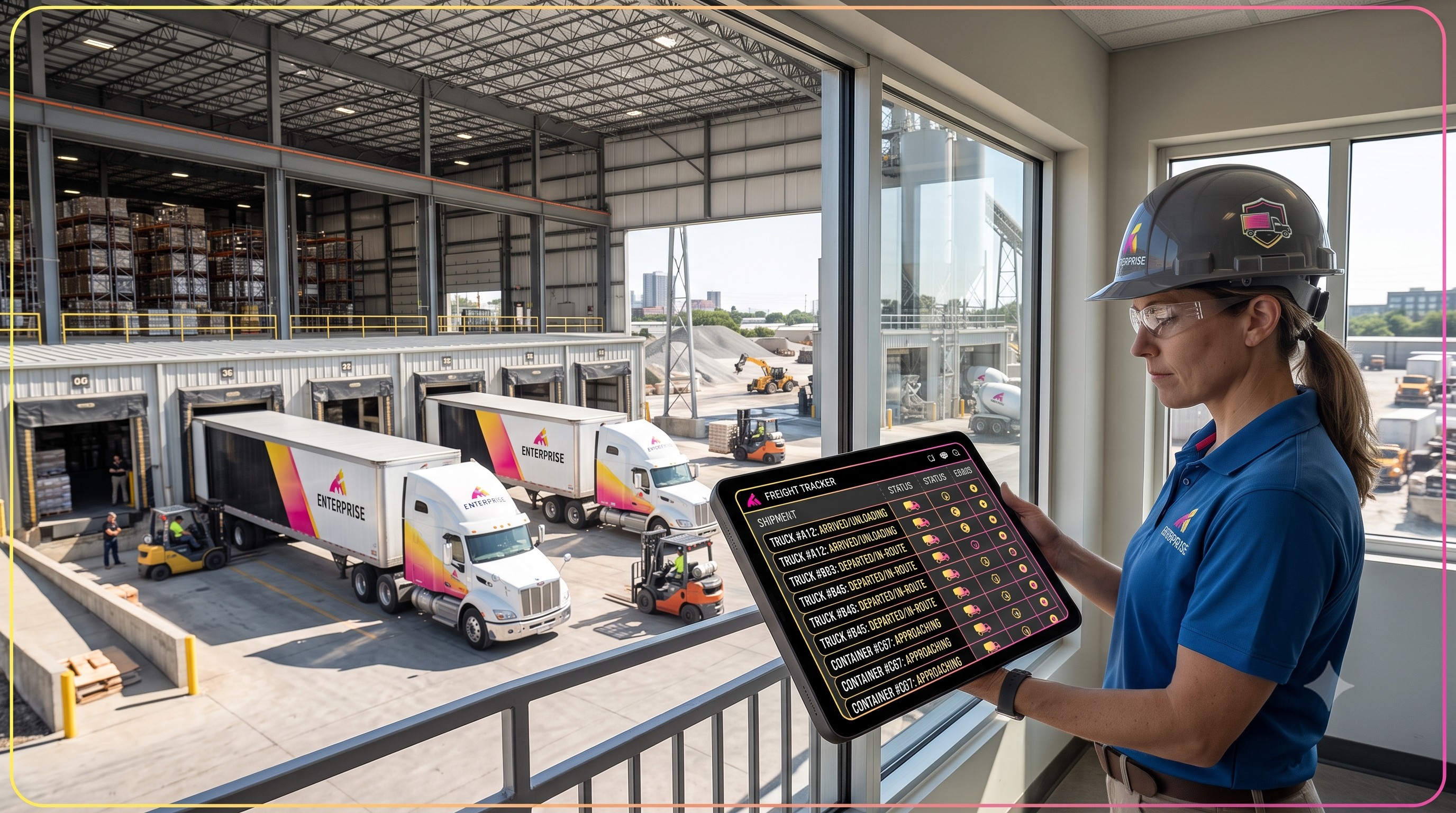
Enterprise software procurement pipelines are fundamentally broken for companies operating on the move. When corporate buying committees spend months evaluating massive resource management platforms, they routinely build their checklists around the needs of desk-bound office administrators. The resulting tools look great in a boardroom presentation but turn into an administrative nightmare for warehouse managers, dispatch coordinators, and field representatives who spend their days on their feet.
Forcing frontline trade workers to log out of their active tasks, walk to a static desktop terminal, or navigate a confusing mobile app with dozens of mandatory fields creates an immediate operational drag. When software feels like a chore imposed by head office rather than a tool that helps get the job done, adoption plummets and the trade network suffers.
The traditional corporate technology rollout is an expensive uphill battle that rarely delivers on its initial promises. According to research published in the Deloitte State of AI Report, only 25% of enterprise technology experiments successfully move all the way into full production environments. The vast majority of these initiatives stall out precisely because the software design clashes with the day-to-day habits of the active workforce.
When independent trade networks try to force heavy enterprise applications onto the frontline, they run directly into major operational friction points:
Relying on software that ignores these physical realities wastes massive corporate budgets and actively slows down your entire distribution cycle.
To fix the frontline tech adoption problem, trade networks must swap out complex, multi-layered menus for simple conversational tools.
Instead of forcing a warehouse supervisor to log into a desktop portal to report an inventory issue or qualify an inbound supplier shift, they should be able to send a quick text message or an email from the loading dock and have the system process the workflow automatically.
Switching to an automated, mobile-first workflow allows your team to reclaim valuable operational hours that are usually burned on basic paperwork. Industry deployment metrics from the Google Cloud AI Agent Trends Report reveal that mobile-focused conversational automation saves team members an average of forty minutes per interaction. By shifting the data entry burden from your workers to an intelligent operational assistant, your field reps can update customer profiles, log inventory status, and check job allocations entirely in real-time without stopping their physical shifts.
When you implement software that fits naturally into a trade worker's active routine, your business experiences a direct increase in pipeline velocity and data accuracy. Operational statistics from our own SalesAPE 2026 AI Adoption Survey confirm that 56.8% of professionals identify speed as the single largest operational benefit of conversational automation. Lowering interface friction ensures that business data flows into your database instantly, rather than sitting on clipboards or in unread text threads for days.
Furthermore, deploying approachable, conversational assistants completely changes how your team views corporate technology. Our research shows that 70.3% of workers explicitly prefer to work for an organization that provides them with official, supportive automated assistants to help handle their workload. Meeting your deskless workforce where they already are makes your entire network faster, more agile, and significantly more resilient.
Ready to dump clunky corporate software and empower your frontline team with conversational automation tools built for the real world? We promise zero high-pressure sales pitches, absolutely no endless automated spam tracking, and no unsolicited calls. You can book an exact look at our system in action via our online scheduling system or reach out directly to our trade infrastructure team at hello@salesape.ai to discuss your specific operational setup.
The intelligent assistant parses raw conversational text or emails instantly, pulling out structural details like product quantities and location codes to update your backend systems without manual typing errors.
Onboarding is practically instantaneous because the system uses natural language text channels, allowing your team to run complex workflows through basic SMS or email apps they already use daily.
The platform keeps your operational data entirely secure and isolated, ensuring that customer communication profiles and internal supply records are never exposed to public databases or shared externally.