.svg)
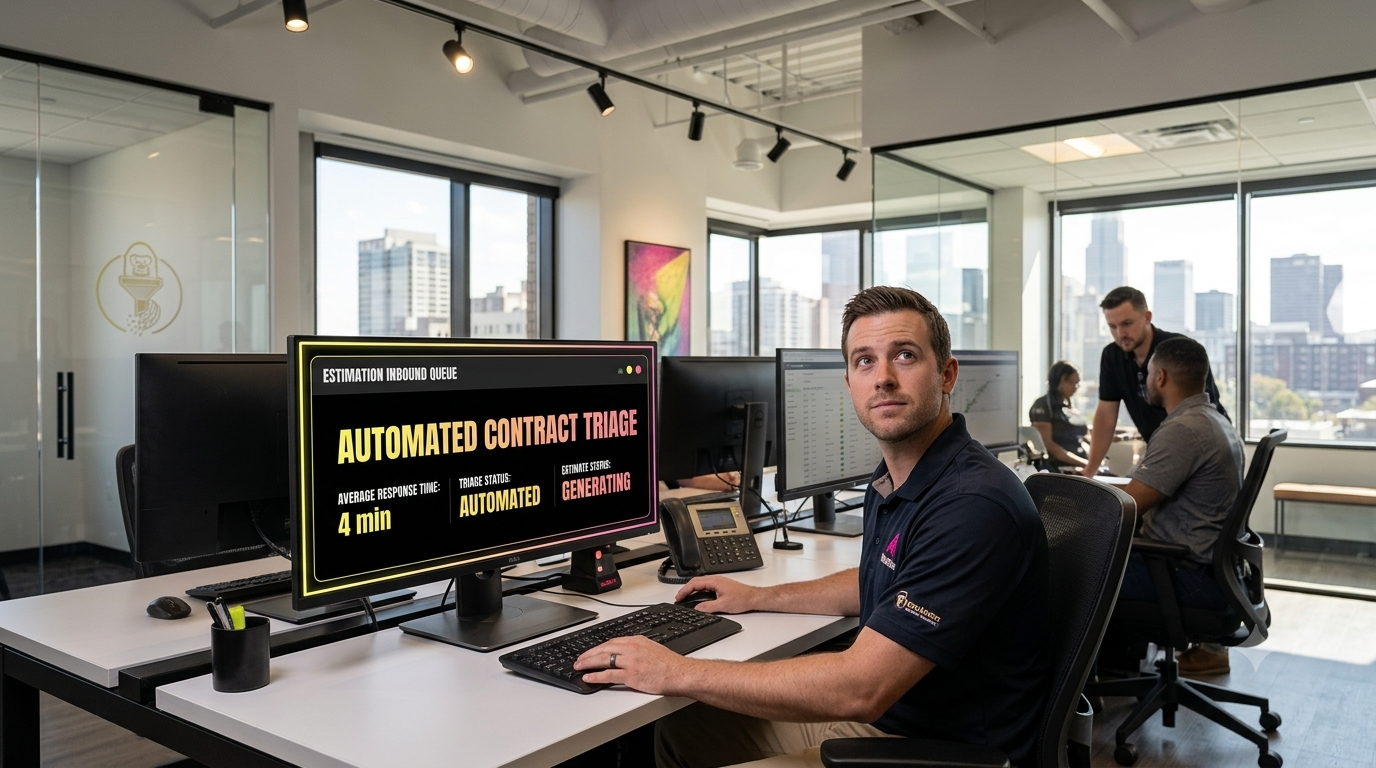
Learn how automated contract triage allows commercial security and fire system integrators to screen dense equipment lists and book qualified estimates instantly.
Commercial security and fire system integrators handle some of the most data heavy inbound pipelines out there. Facility engineers looking for major CCTV installations or complex fire compliance overhauls routinely upload intricate blueprints and dense equipment lists into regional supplier portals. When these massive document packages hit your system, your internal pipeline often grinds to a halt while senior technical estimators manually pick apart spreadsheets just to see if a project is even worth a formal bid.
This administrative bottleneck causes high margin opportunities to sit idle while your team wastes valuable engineering hours on low probability tire kickers. In high stake infrastructure sectors, relying on manual triage means you are sacrificing speed exactly when a swift response is critical to secure the contract.
For busy integrators, manual document review is not just slow, it is actively eating into corporate margins. According to data from the Google Cloud AI Agent Trends Report, tech forward organizations are using agentic automation to slash customer response windows from forty-two hours down to real-time. When your internal team spends days analyzing line items for commercial security contracts, nimbler competitors who prioritize automated velocity capture the business first.
Furthermore, the operational drain of manual intake strains technical teams. Data from our own SalesAPE 2026 AI Adoption Survey reveals that 71.0% of operations leads prioritize reducing administration as their primary goal for automation. Forcing highly paid estimators to act as data entry clerks to screen bids prevents them from focusing on the high value design work that actually drives revenue.
An autonomous AI sales assistant solves this front-end bottleneck by acting as an intelligent operational brain for your inbound portal. The moment a facility engineer submits a multi-page file detailing hundreds of smoke detectors, access control nodes, and security cameras, the digital agent reads the entire technical document instantly.
Instead of relying on rigid, broken chatbot scripts that cannot parse a spreadsheet, the autonomous assistant:
In fact, a Deloitte State of AI Report indicates that 74% of companies plan to deploy agentic systems within two years to handle these exact types of multi-step, complex operational tasks. The system converts raw, unstructured document text into verified lead data, moving the prospect smoothly down the line while keeping your data architecture entirely secure.
Once the autonomous agent verifies that an inbound contract matches your specific project criteria, it executes the handover automatically. Rather than sending an alert to an inbox to be reviewed later, the assistant pulls up your team's live availability and provides the qualified client with a calendar link.
Our internal research shows that 64.9% of professionals are entirely comfortable allowing an AI assistant to manage meeting bookings and calendar links. Speed matters to modern buyers, and our SalesAPE 2026 AI Adoption Survey confirms that 54.1% of customers value a sixty-second response from an automated assistant over a twenty-four-hour wait for a human response. By instantly putting a qualified, high-margin facility manager directly onto your estimator's schedule, you maximize your win rate while protecting your engineering resources from administrative fatigue.
Ready to stop chasing portal document drops and start protecting your team's valuable estimating hours? We promise absolutely no pressure, no endless spam sequences, and zero unsolicited sales calls. You can book a real-world look at our platform through our online scheduling system or send a note directly to our integration team at hello@salesape.ai to ask a specific technical question.
The operational brain uses advanced context reasoning to parse unstructured document drops, matching equipment models and fire compliance codes against your business criteria to qualify scale instantly.
Yes, the platform isolates your custom data infrastructure entirely, meaning your sensitive pricing sheets, client records, and engineering specs are never shared or used to train public models.
The platform features native integration with enterprise tools, automatically updating client files, logging equipment lists, and updating pipeline records in your CRM without manual data entry.