.svg)
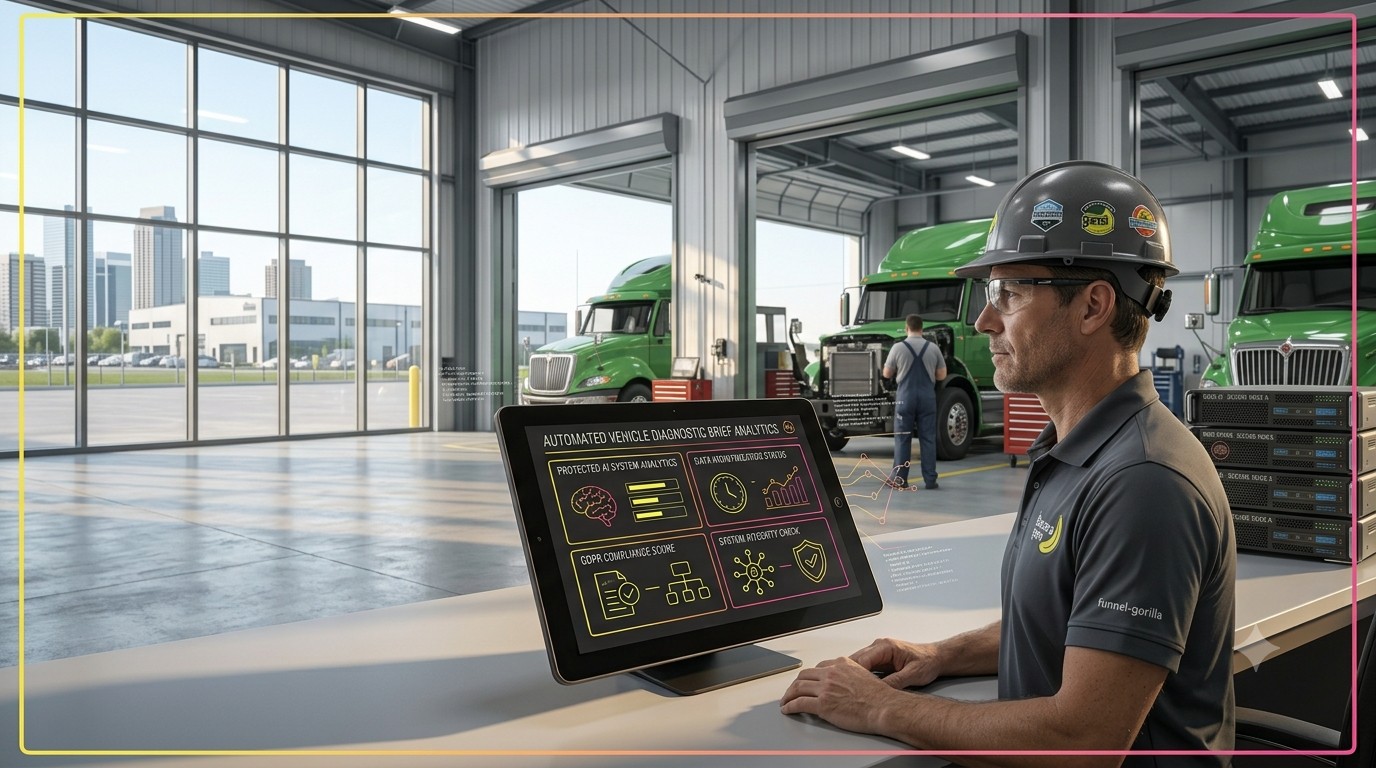
Learn how heavy equipment garages use conversational AI text setups to capture engine fault codes and pre-qualify complex technical repair requests instantly.
When a fleet operator has a commercial piece of heavy iron or a class-8 truck break down on a job site, they are not looking for a vague booking slot. They need to know if your garage has the technical capability, the correct diagnostic tooling, and the exact replacement parts to hit their mandatory deadline. If your service writers are stuck spent half their morning playing phone tag just trying to figure out if the issue is a simple hydraulic leak or a complex engine timing failure, you are letting profitable billable hours slip away.
This front-end drag is where independent heavy-duty shops lose momentum. While your team is busy trying to manually write down long vehicle identification numbers (VINs) and unstructured problem descriptions, your high-paid diesel technicians are left standing around waiting for clear info. Pre-qualifying these complex repair requests before the machine even hooks up to a tow truck is what keeps your shop floor running at peak efficiency.
Relying on traditional service desk phone calls to screen complex mechanical issues introduces immediate errors into your shop pipeline. According to market data published in the Global Commercial Vehicle Fleet Maintenance Trends Report 2026, over 48% of fleet repair facilities report major scheduling delays and lost revenue due to incorrect or incomplete diagnostic data captured during initial client phone intake. Even worse, the study highlights that parts mismatch errors stall work in 31% of complex engine overhauls, forcing trucks to sit idle in bays while waiting for secondary shipments.
When your service desk tries to manually qualify a technical breakdown over the phone, it triggers a costly chain reaction across your garage:
If it takes your front office several back-and-forth phone loops just to figure out what tools your team needs to roll out, you are hurting your shop's bottom line.
An autonomous conversational AI assistant fixes this intake bottleneck by operating as an intelligent digital service writer that works around the clock. The moment a fleet manager sends a text or an email about an emergency breakdown, the assistant picks up the inquiry instantly to screen the job parameters.
Instead of forcing a stressed-out field operator to download an app or complete a rigid web form while standing on a noisy construction site, the assistant carries on a natural, text-based conversation. It asks for specific vehicle parameters, captures exact electronic dashboard fault codes, and logs the customer's strict deadline. This digital approach matches widespread mechanical industry updates highlighted by the Equipment Maintenance Tech Survey, which notes that 68% of commercial garages are prioritizing automated intake workflows to handle upfront data capture. The assistant structures the raw problem data into a clean, actionable brief without anyone on your team having to type a single line.
Once the conversational assistant grabs the technical briefs, it handles the scheduling and routing workflow seamlessly. It cross-references your garage's live bay availability and inventory data, then hands the qualified ticket straight to your head mechanic or shop lead.
Data from our own SalesAPE 2026 AI Adoption Survey confirms that 56.8% of business professionals identify pure speed as the single greatest operational benefit of conversational automation. In the heavy repair world, time is money, and our survey shows that 54.1% of commercial buyers prefer a sixty-second automated response over a twenty-four-hour wait for a human callback. Giving your mechanics accurate fault parameters before the equipment even hits your lot allows your crew to prep the bay, secure the right parts, and log more billable hours every single day.
Ready to clear out the service desk phone chaos and keep your repair bays full of highly profitable work? We promise absolutely no high-pressure sales routines, zero automated marketing spam tracking, and no unsolicited phone calls. You can get an exact look at our private conversational platform in action through our online scheduling system or reach out directly to our garage integration crew at hello@salesape.ai to discuss your specific shop database requirements.
Yes, the intelligent assistant reads standard mechanical fault codes, engine specs, and chassis models instantly, translating unstructured text or emails into a clean, structured technical brief for your technicians.
The platform features native integration pathways to pass confirmed vehicle data, fault specs, and customer details directly into your current shop management systems without manual entry.
The assistant manages the conversation entirely on autopilot, gathering the fault data and setting up a priority drop-off slot so your crew can start working first thing in the morning.