.svg)
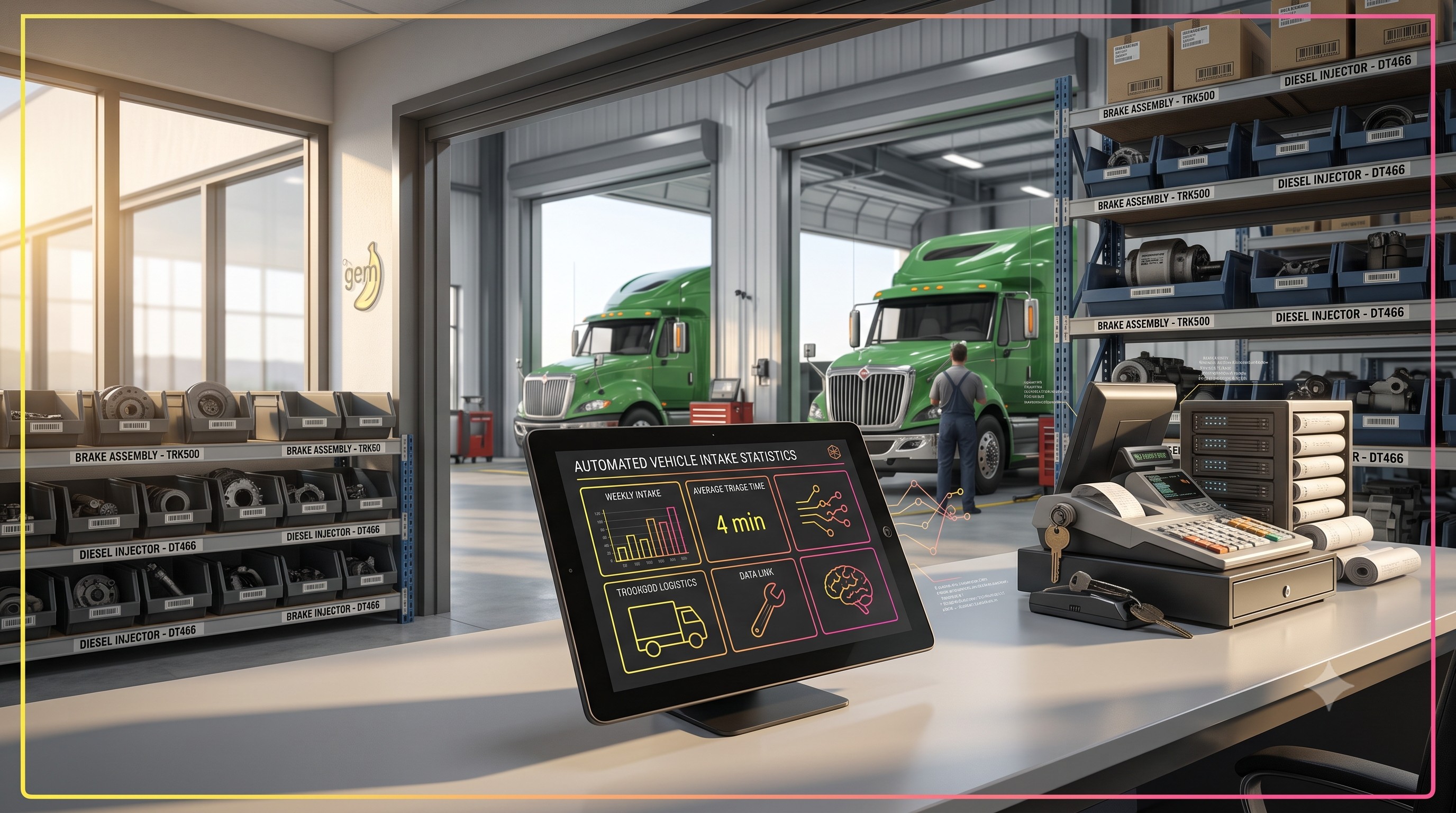
Learn how heavy equipment and diesel repair garages use conversational text automation to capture fault codes and stream line mechanical service pipelines.
Running a commercial heavy equipment or repair garage means you're constantly balancing a shifting schedule. When a fleet manager has a class-8 truck down or a piece of construction equipment broken on a job site, they need to know two things immediately:
If your service desk takes half the day to reply because you're short-staffed or buried under paperwork, that fleet operator isn't going to wait around. They'll pull their rig out of your queue and tow it down the road.
The trouble is, your service writers are usually flat-out. They're trying to quote parts, manage the floor, and deal with physical walk-ins all at once. When intake turns into a slow game of phone tag, your shop floor loses high-margin repair work simply because you couldn't process the diagnostic data fast enough.
For busy heavy-duty garages, manual intake isn't just an annoying chore, it's a massive drag on your day-to-day profitability. Macro economic data from a Morgan Stanley Research Report shows that tech-forward companies adopting automation are capturing an average of 310 bps in EBIT margin expansion over slower competitors. If your service desk is still stuck typing out data by hand, you're giving away those margin gains to the shop down the street.
When your service gate gets slammed with emergency repair requests, relying on manual phone intake breaks your workflow:
Slowing down your front-end intake doesn't just hurt your schedule, it stresses out your technicians and limits the number of billable hours your shop can log each week.
An autonomous AI assistant fixes this bottleneck by acting like a digital service writer who never sleeps. The moment a fleet manager texts or emails your shop about an emergency breakdown, the AI assistant picks up the thread instantly.
Instead of forcing a stressed-out truck dispatcher to download an app or fill out a corporate web form, the assistant keeps the conversation completely informal and text-based. It asks for the exact mechanical fault codes, checks the truck model parameters, and confirms the customer's mandatory deadline. This smart approach aligns with broader market trends from a Deloitte State of AI Report, which indicates that 74% of companies are aggressively deploying agentic systems within two years to take over these exact kinds of multi-step, technical intake workflows. The assistant organizes the raw problem data into a clean, actionable job file without anyone on your team lifting a finger.
Once the automated assistant grabs the diagnostic data and verifies the timeline, it handles the scheduling handover seamlessly. It cross-references your shop's real-time bay capacity and part availability, then drops the qualified ticket straight to your head mechanic or shop lead.
Our internal numbers from the SalesAPE 2026 AI Adoption Survey prove that 71.0% of operations leads prioritize reducing administration as their primary goal for new software. Speed is what keeps fleet clients loyal, and our survey confirms that 54.1% of customers value a sixty-second automated response over a twenty-four-hour wait for a human callback. Getting accurate diagnostic data to your mechanic before the truck even hits the lot lets your crew prep the bay, grab the right tools, and get to work immediately.
Ready to clear out the service desk phone chaos and keep your repair bays full of profitable work? We promise absolutely no high-pressure sales routines, zero endless automated spam tracking, and no unsolicited calls. You can get a clear look at our platform in action through our online scheduling system or send a direct message to our garage integration crew at hello@salesape.ai to see how we connect with your shop software.
Yes, the intelligent assistant easily reads standard mechanical fault codes, chassis models, and component brands, translating raw text data into clear diagnostic briefs for your mechanics.
The platform uses native integration pathways to pass confirmed lead data, truck specs, and customer contact details straight into your existing shop database without manual data entry.
The assistant manages the conversation automatically overnight, gathering the diagnostic codes and setting up a priority drop-off slot so your team can handle it first thing in the morning.