.svg)
Discover how regional electrical contractors capture high-margin out-of-hours callouts and automate emergency triage without burning out staff.
For regional electrical contractors, commercial emergency callouts represent some of the highest-margin work available. Whether it's a blown distribution panel at a food processing facility, a localized power failure in a commercial retail center, or a safety circuit trip at an industrial plant, emergency electrical failures demand immediate resolution.
Yet, many regional contracting firms bleed significant revenue outside standard business hours. When an urgent call comes in at 9:00 PM on a Friday, it often hits a generic office voicemail, an answering service with no technical knowledge, or an overloaded duty manager's personal cell phone. In commercial and industrial electrical emergencies, buyers prioritize immediate responsiveness above all else. If a qualified representative or intelligent system does not confirm triage within minutes, the client moves on to a competitor.
Managing emergency callouts manually creates severe friction for electrical contracting businesses. Industry research on trade contractor operations highlights that a majority of emergency leads choose whichever provider responds first, with delay times exceeding five minutes drastically reducing conversion rates.
When regional contractors rely on traditional after-hours methods, several operational vulnerabilities emerge:
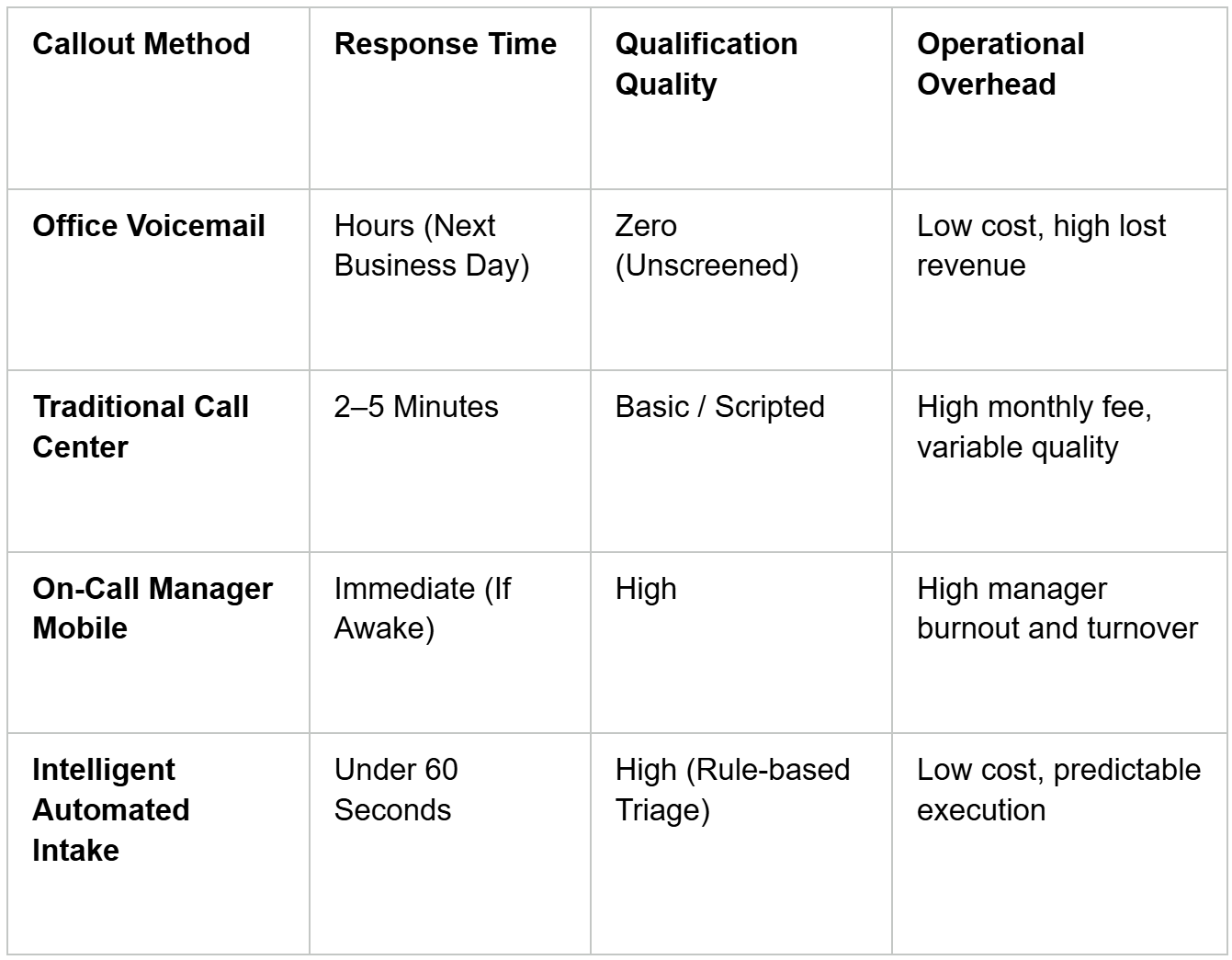
If your business relies on manual or delayed triage for evening and weekend inquiries, operational friction is actively turning away high-margin commercial jobs.
Capturing every commercial emergency requires an intake system that operates around the clock without burning out your engineering team. By deploying an intelligent conversational intake layer across phone lines, SMS, and website portals, regional electrical contractors can automate triage, qualification, and dispatch in real time.
When an emergency inquiry arrives, the intake interface engages the caller instantly, asking structured qualifying questions:
Once qualified, the system generates an urgent job ticket, notifies the designated on-call electrician via instant SMS or push alert with complete job parameters, and provides the client with an immediate estimated time of arrival or confirmation brief.
Automating emergency intake transforms after-hours operations from a chaotic administrative burden into a structured revenue engine. By establishing automated boundaries, non-urgent inquiries, such as routine lighting upgrades or scheduled maintenance requests, are logged automatically for the morning sales team rather than waking up on-call technicians.
Eliminating missed calls ensures that commercial clients and facility managers receive rapid, reliable service when critical power incidents occur.
Capturing every out-of-hours callout protects your contractor firm's reputation, secures recurring maintenance contracts, and maximizes emergency revenue across your operating region.
Ready to capture every emergency callout and streamline your after-hours service dispatch? You can explore a live view of our private platform through our online scheduling system or reach out directly to our technical integration team at hello@salesape.ai to discuss your electrical contracting workflows.
The system follows customizable triage logic, asking specific questions about power loss, facility type, and safety hazards to route urgent calls to the duty electrician while queueing non-urgent requests for normal business hours.
Yes, modern intake tools connect via secure APIs to popular trade scheduling and ERP platforms, automatically creating emergency job tickets and dispatching job details directly to field technicians' mobile devices.
The platform utilizes automated escalation protocols. If the primary on-call technician does not confirm receipt within a set timeframe (e.g., five minutes), the alert automatically escalates to a backup manager or secondary electrician.