.svg)
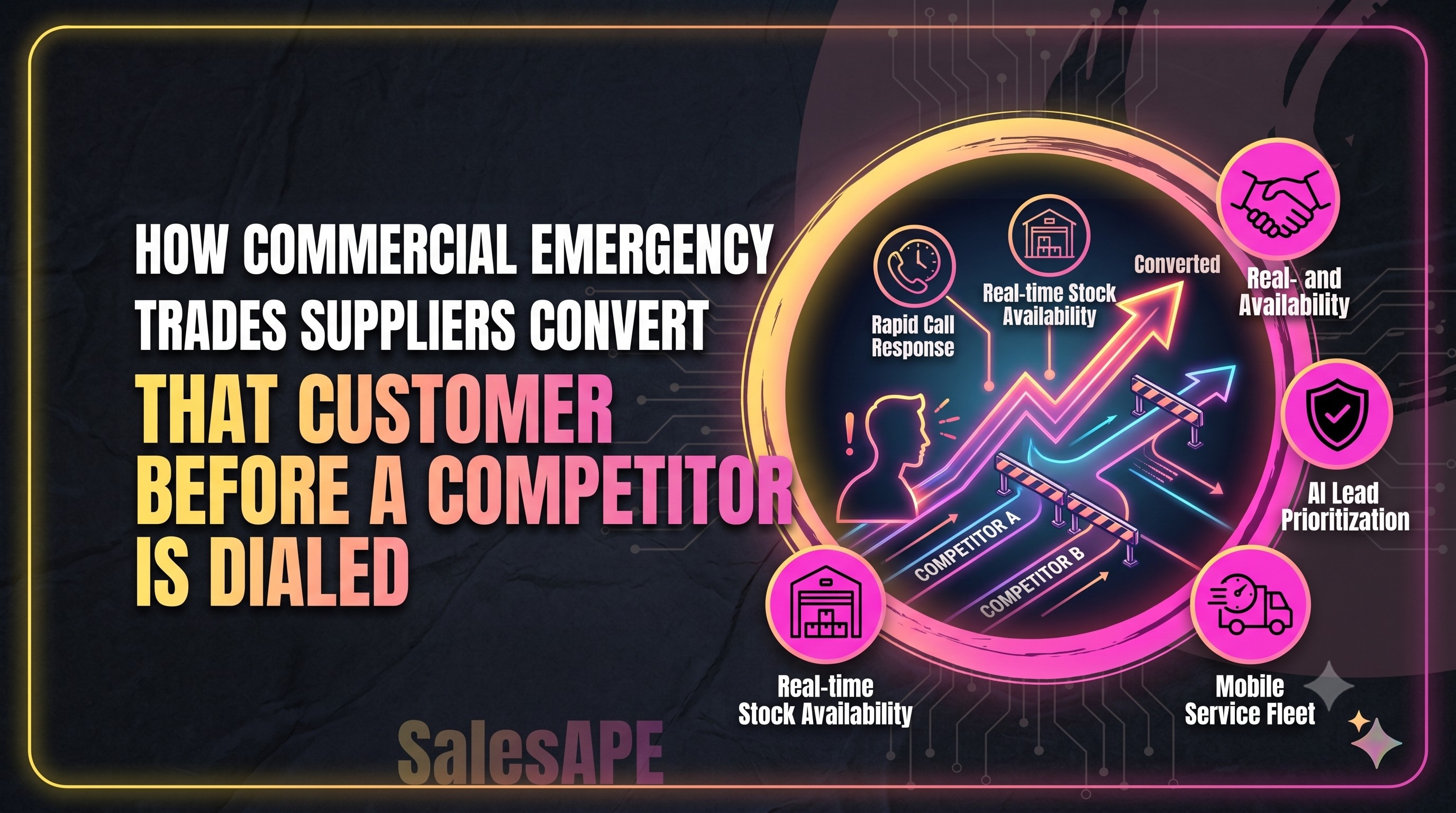
Learn how commercial emergency trades suppliers capture high-value bookings instantly and eliminate missed call revenue loss using conversational AI.
When a commercial facility manager encounters a burst main line, an electrical panel failure, or a compromised security shutter at 2:00 AM, they operate in pure crisis mode. They are not filing a routine inquiry or waiting for a multi-day proposal. They have a single goal: find a qualified, licensed emergency contractor who can confirm immediate dispatch. If your phone line goes to voicemail or your web form yields an automated "we will get back to you in 24 hours" auto-reply, they immediately hang up and dial the next supplier on their list.
This speed-to-lead vulnerability is where local emergency plumbing, electrical, HVAC, and restoration firms leak high-margin accounts. When emergency calls land during peak morning hours or late-night shifts, human dispatchers quickly become overwhelmed. Automating initial intake ensures that every incoming crisis request gets an instant, intelligent response that secures the contract while your team prepares for dispatch.
Relying on manual call routing or static contact forms during an operational crisis severely limits dispatch capacity. Industry analyses from the Salesforce State of Service Research show that over 70% of commercial buyers view instant operational response as the decisive factor when selecting service vendors. Furthermore, broader workflow studies from the Zapier AI Automation Report confirm that immediate lead qualification dominates modern service automation, preventing warm inbound opportunities from going cold.
When an emergency trades supplier relies on traditional intake methods, friction accumulates rapidly:
If your dispatch desk takes ten minutes to return an urgent call, you are effectively transferring high-margin emergency business directly to your fastest competitor.
Deploying an autonomous conversational AI assistant turns your intake channels into an instant digital dispatch desk that operates 24/7 over SMS, WhatsApp, and email. The moment a client reaches out with an urgent repair request, the assistant initiates a rapid conversation to collect essential site parameters.
Instead of subjecting a stressed property manager to rigid web forms, the assistant asks targeted, natural follow-up questions. It verifies the precise job-site address, confirms the nature of the emergency, assesses safety hazards, gathers access instructions, and requests photos of the issue. Market research from Gartner's AI Agent Forecast projects that task-specific AI agents will become standard across enterprise apps to eliminate these exact operational response delays. The assistant structures the collected details into a clear dispatch brief, instantly alerting your on-call crew.
In emergency trade services, response time determines market share. Capturing job details instantly reassures distressed clients that their emergency is being handled, stopping them from calling rival contractors.
Data from our SalesAPE 2026 AI Adoption Survey demonstrates that 56.8% of business leaders view execution speed as the single greatest advantage of conversational automation. Furthermore, 54.1% of commercial buyers prefer an immediate, automated 60-second response over waiting for a manual callback. Automating crisis intake protects your on-call technicians from administrative fatigue, streamlines field dispatches, and ensures your firm remains the first responder of choice in your service area.
Ready to capture emergency service calls instantly and secure high-value trade bookings before competitors get dialed? We promise no high-pressure sales routines, zero automated marketing spam tracking, and no unsolicited phone calls. You can explore a live view of our private platform through our online scheduling system or reach out directly to our integration team at hello@salesape.ai to discuss your dispatch workflows.
The assistant evaluates incoming text or email descriptions against your custom priority criteria, instantly flagging urgent hazards for rapid escalation while routing non-urgent requests to normal business scheduling.
Yes, the assistant can request and receive photos, video clips, gate codes, and equipment model numbers over SMS or messaging channels, organizing them cleanly into the technician's dispatch brief.
Once the incident brief is compiled, the assistant sends immediate notification alerts to your on-call dispatchers via SMS or email, while providing the client with an instant order reference and expected technician arrival window.