.svg)
Learn how to establish secure read-only data bridges between external messaging channels and master directories using conversational AI.
Modern commercial sales and customer service teams operate in a fast-paced messaging ecosystem. Inbound inquiries arrive constantly across SMS, WhatsApp, web chat, and email, demanding instant verifications of stock availability, custom account pricing, order statuses, and technical specifications. To deliver immediate answers, external intake channels need real-time access to operational data.
However, connecting external communication tools directly to your master directory, customer relationship management (CRM) database, or enterprise resource planning (ERP) system introduces unacceptable cyber risks. Granting broad read-write credentials or exposing internal database ports creates structural security gaps that malicious actors can exploit. Building a secure pipeline requires establishing read-only data bridges that pass verified information to external communication layers while keeping core enterprise architecture completely isolated.
Allowing external communication tools to query master directory structures directly compromises enterprise governance. According to research highlighted in the IBM Cost of a Data Breach Report, compromised credentials and third-party vendor access points remain among the most expensive initial attack vectors, with supply chain breaches costing an average of 4.91 million dollars and taking nearly nine months to identify and contain. Furthermore, analysis from the Gartner Third-Party API Security Governance Report reveals that unmonitored inbound and outbound data flows introduce massive compliance risks when sensitive internal directories are exposed to external applications.
When organizations connect customer-facing channels directly to central directory software without isolated middleware, several structural risks emerge:
Relying on direct, bidirectional database connections for routine customer inquiries forces IT leadership to choose between pipeline speed and strict data security.
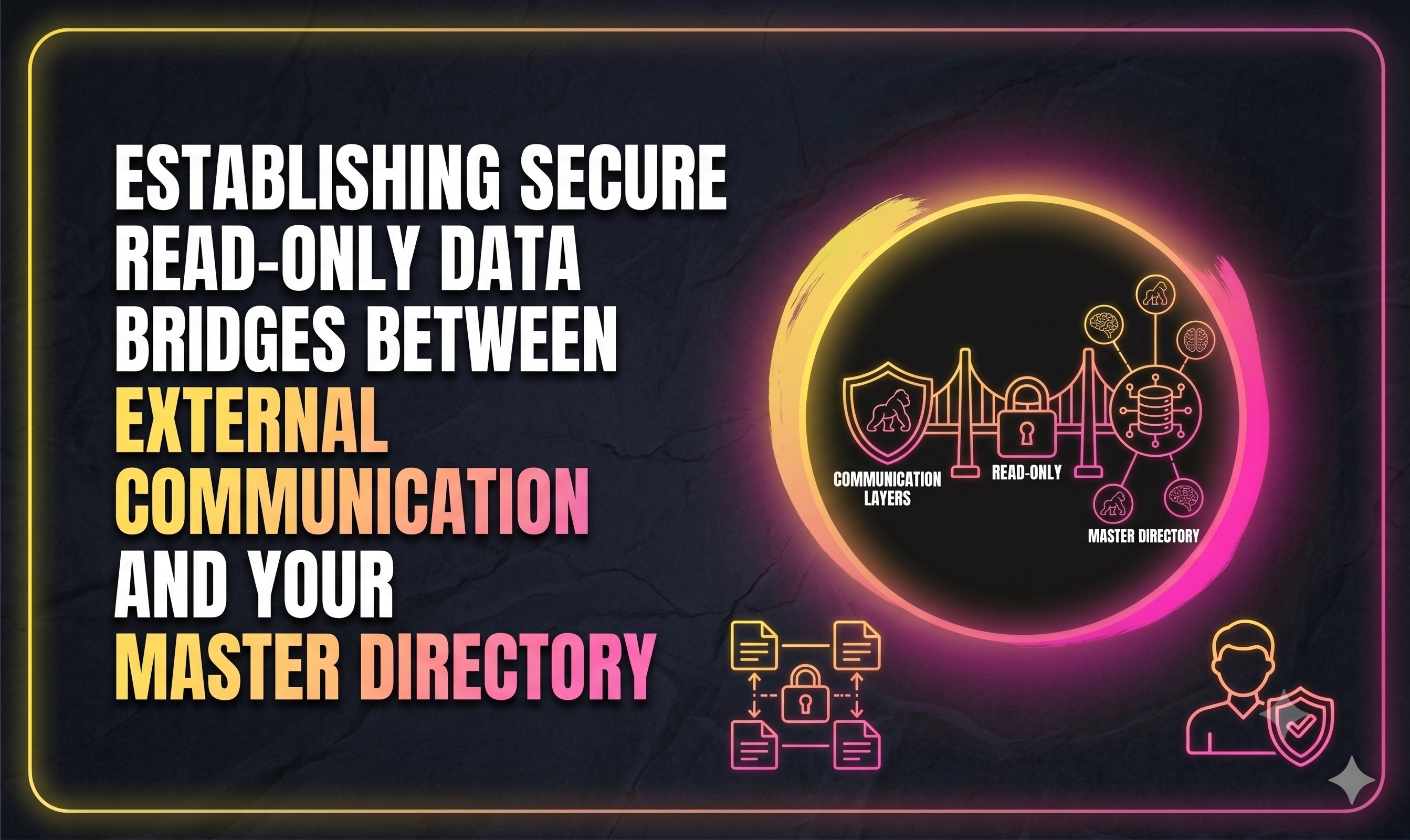
Establishing an isolated, read-only data bridge resolves this security dilemma. An autonomous conversational AI assistant acts as a zero-trust buffer, sitting between external customer communication channels and your internal directory.
Instead of exposing live database connections, the assistant communicates through an isolated API gateway that utilizes unidirectional tokenization. When an inbound text message or email requests pricing or inventory, the assistant queries a read-only mirror or a scoped, stateless API endpoint. The bridge retrieves the requested information, validates the response structure, and passes the answer back to the customer over SMS or email. Market findings detailed in the Okta Identity Governance Enterprise Report confirm that managing autonomous AI software through fine-grained, scoped authorization pathways is essential for maintaining governance as digital workflows scale. This architecture ensures that external users receive instant data while core directories remain completely invisible to the public internet.
Deploying secure read-only data bridges removes administrative barriers without slowing down sales velocity. Customer inquiries get answered in seconds over messaging channels, while your security team maintains total peace of mind.
Data from our SalesAPE 2026 AI Adoption Survey shows that 56.8% of business leaders identify pure execution speed as the single greatest operational benefit of conversational automation. Furthermore, 54.1% of prospective buyers prefer an immediate, automated 60-second response over waiting for manual approvals or portal access logins. Isolating your master directory behind a read-only conversational assistant protects your core infrastructure, satisfies strict compliance standards, and keeps your customer pipeline operating at peak speed.
Ready to establish secure read-only data bridges and automate customer intake without exposing your core databases? We promise no high-pressure sales routines, zero automated marketing spam tracking, and no unsolicited phone calls. You can explore a live view of our private platform through our online scheduling system or reach out directly to our security and integration team at hello@salesape.ai to review our air-gapped architecture protocols.
The data bridge uses stateless API pathways restricted solely to read operations, meaning external requests cannot execute write, update, or delete commands against your central database.
Because integration tokens operate within a strictly scoped read-only environment, a compromised key cannot be used to modify directory schemas, elevate account permissions, or access restricted employee databases.
Yes, your system administrators hold total control over data governance, establishing explicit rules regarding which database tables, pricing tiers, and stock fields the assistant can query and share.