.svg)
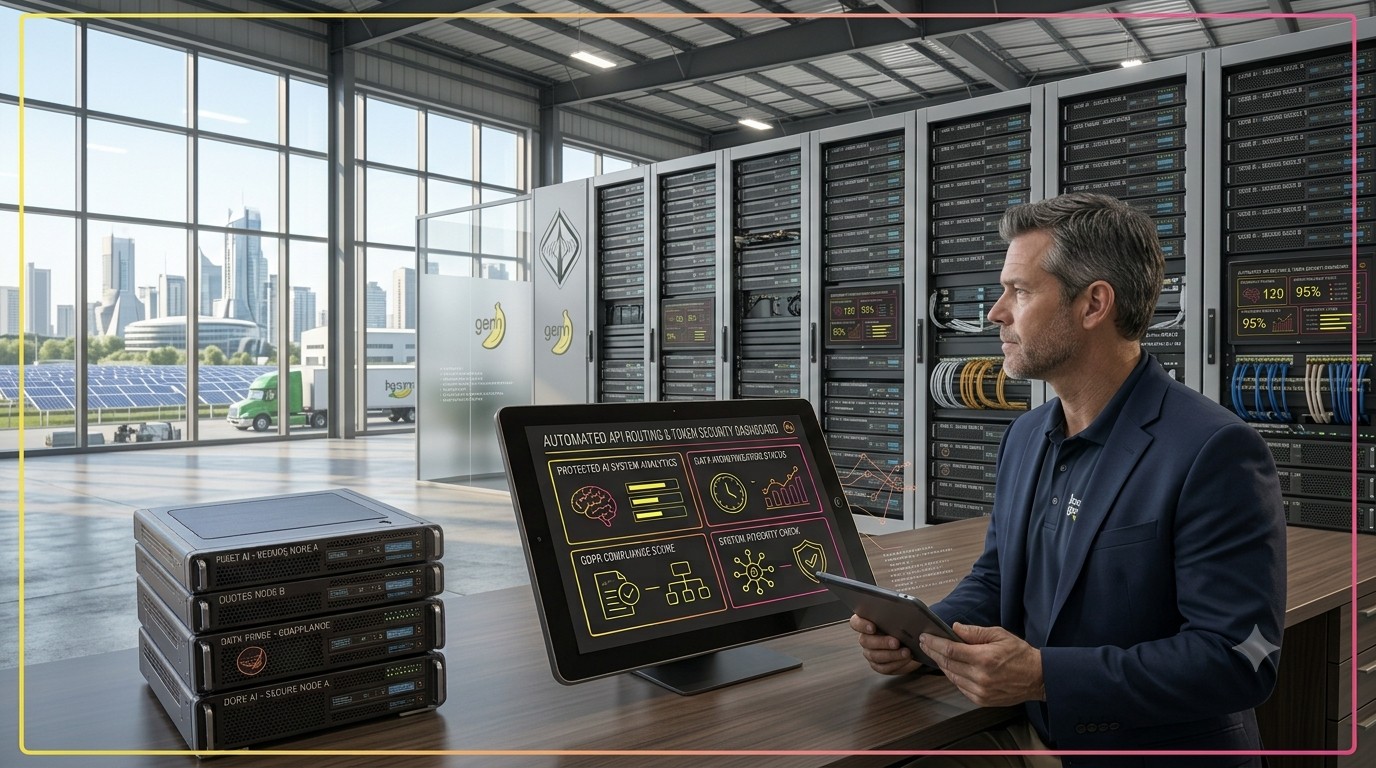
Discover how isolated token integrations and standalone API routing resolve the security anxieties freezing enterprise business automation adoption.
There is a frustrating paradox playing out across enterprise leadership teams today. Operations directors are desperate to accelerate potential customers inquiry response times, eliminate manual admin, and capture leads the second they hit the pipeline. At the same time, IT leads and Chief Information Security Officers are stepping in to pull the handbrake. They are not trying to be difficult—they are protecting the company's most valuable asset: its data.
When standard automation tools require deep, unrestricted access to primary customer relationship databases, cybersecurity teams see an unacceptable risk. One compromised integration or external breach could expose proprietary financial records, customer details, or trade secrets. This tension leaves enterprises paralyzed, watching nimbler competitors win market share while their own automated initiatives sit frozen in risk assessment loops.
The hesitation to automate isn't just cautious speculation—it is the single largest structural bottleneck in corporate operations today. According to data from the SalesAPE AI Adoption Survey, 40.0% of operations and IT leads identify security concerns as their absolute number one barrier to adopting automated workflows.
When enterprise leaders look at traditional automation platforms, three major security anxieties consistently freeze the approval process:
Telling these executives to "just trust the software" does not work. To break the deadlock, enterprises need a structural architecture that guarantees data privacy while delivering the instant operational speed their sales teams need.
The key to easing IT anxiety is eliminating broad database permissions entirely. Instead of handing an automated assistant the keys to your main database, modern architectures use isolated token integrations.
Under an isolated token framework, the automated platform never directly browses or stores your underlying database records. Instead, interaction requests are authenticated using temporary, single-use security tokens. The automated system validates the incoming inquiry, processes the immediate request in a secure, ephemeral workspace, and passes the structured output back through a controlled gate.
This means that even if an external endpoint encounters an issue, your central system remains completely untouched and isolated behind your enterprise firewall.
To protect sensitive customer databases while maintaining rapid response times, smart enterprises deploy standalone API routing. Rather than letting automated assistants make direct calls to your core software, communication flows through a dedicated, air-gapped API layer designed strictly for intake and routing.
This setup creates a clear digital perimeter with distinct operational benefits:
By separating the communication layer from your core storage systems, you eliminate the structural risks that keep IT leads awake at night. You satisfy your security team's strictest compliance standards while giving your operations crew the instant speed-to-lead capabilities required to win in today's market.
Ready to break through enterprise security barriers and deploy a completely secure, closed operational brain for your team? We promise no heavy-handed sales loops, zero automated marketing spam tracking, and no unsolicited phone calls. You can explore our secure, private architecture through our online scheduling system or reach out directly to our security and compliance team at hello@salesape.ai to review our technical data protocols.
Isolated token integrations use temporary, single-use authorization keys to process specific requests, ensuring the automated platform never holds persistent, broad permissions to browse or edit your core database.
No, our platform operates within a closed operational environment that completely isolates your data, ensuring your customer records, internal emails, and workflow logs are never shared or used for public model training.
Standalone API routing processes incoming leads through an air-gapped communication gateway, allowing the system to engage prospects in seconds without exposing your internal infrastructure to direct external traffic.