.svg)
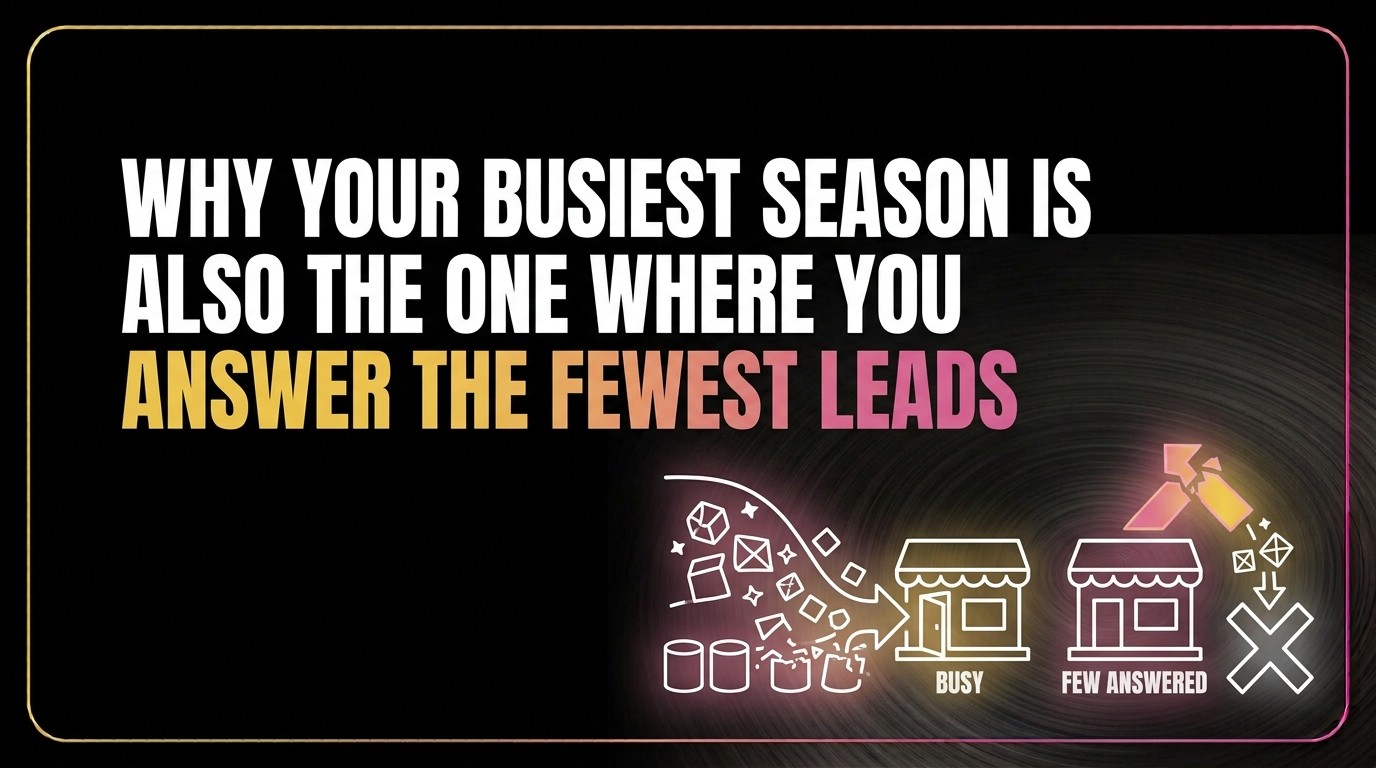
E-commerce ramping toward Black Friday and home/auto services facing the pre-winter rush hit the same problem in September. Here's why, and what to fix now.
TL;DR
Two businesses that look nothing alike are about to hit the exact same problem. An e-commerce brand is ramping up for the run-up to Black Friday and Christmas, when inquiry volume, order questions, and support requests all spike well above a normal month. A home or auto service provider is heading into the seasonal rush of people trying to get something fixed; a furnace, a roof, a car, before winter actually arrives. Different customers, different products, same underlying pattern: a predictable seasonal spike in demand that normal, average-month staffing isn't built to absorb.
Neither of these spikes is a surprise. Both are predictable, recurring, and roughly the same every year. That's exactly what makes the resulting response gap frustrating rather than forgivable, it's not an unexpected event catching a business off guard, it's a known seasonal pattern that the business's normal operating capacity simply isn't sized to handle.
Most businesses staff for typical, ongoing volume, not for the specific weeks when demand triples. That's a reasonable, sensible default for eleven months of the year. It becomes a real liability in the specific weeks when volume genuinely spikes, because there's no elastic capacity built in to absorb it, only the same team working the same hours trying to cover meaningfully more ground.
During a seasonal spike, a team isn't just fielding more new inquiries, they're also handling existing customer volume that doesn't pause just because it's a busy season. A returning customer asking about an order, or an existing client calling with an urgent issue, competes directly with a brand-new inquiry for the exact same limited attention, and new inquiries are usually the ones that lose that competition, since existing relationships tend to get prioritized.
An e-commerce shopper comparing several sites during the holiday season, or a homeowner calling around for pre-winter repair quotes, is very likely doing the same thing with your competitors at the same time. A seasonal capacity gap doesn't just mean a slower response, it means a slower response during the exact window when competitors are getting the fastest possible shot at the same customer.
The most visible cost is a slower response time. The less visible cost is which inquiries get missed entirely rather than just delayed. When a team is stretched thin, the inquiries most likely to fall through the cracks are the ones that require the most manual attention to even notice, exactly the pattern that turns a busy season into a season where a meaningful share of demand simply goes unanswered rather than just slowly answered.
The point to address a predictable seasonal capacity gap is before the season starts, not during it, since building or adjusting a response process while already underwater rarely goes well.
The fix worth prioritizing now, in September, isn't hiring a wave of seasonal staff, though that's part of some businesses' approach. It's making sure the first response to any inquiry, especially the flood of unfamiliar, first-time ones that a seasonal spike brings, happens reliably and immediately regardless of how stretched the existing team is during the actual peak weeks. That's the layer that determines whether a seasonal spike in demand becomes a strong season or a season where a real share of it quietly went to whoever answered first.
If last year's fall rush meant slower responses and inquiries that got missed entirely, it's worth putting something in place before this year's version of the same predictable spike arrives. SalesAPE offers a free demo if you'd like to see what that looks like in practice, no pressure either way.
Why do e-commerce and home service businesses both struggle with response times in the fall?Both face predictable seasonal demand spikes, e-commerce toward Black Friday and Christmas, home and auto services with the pre-winter repair rush, that exceed normal, average-month staffing capacity. It's the same structural mismatch showing up in two very different industries.
Does hiring seasonal staff solve the response gap?It can help, but it's not the whole answer, since new seasonal staff still need training and ramp-up time, and hiring alone doesn't guarantee every inquiry gets an immediate first response during the actual peak weeks. Reliable first-response capacity matters as much as headcount.
What gets lost first when a business gets overwhelmed by seasonal demand?Often it's not just slower responses, it's some inquiries being missed entirely, particularly first-time inquiries competing against existing customer volume for the same limited team attention. The inquiries that need the most manual effort to notice are usually the first ones to fall through.
When should a business start preparing for a predictable seasonal demand spike?Before it starts, not during it. Since these spikes are recurring and predictable year to year, the response process worth having in place should be built or adjusted ahead of the actual peak weeks, not improvised while the team is already stretched thin.