.svg)
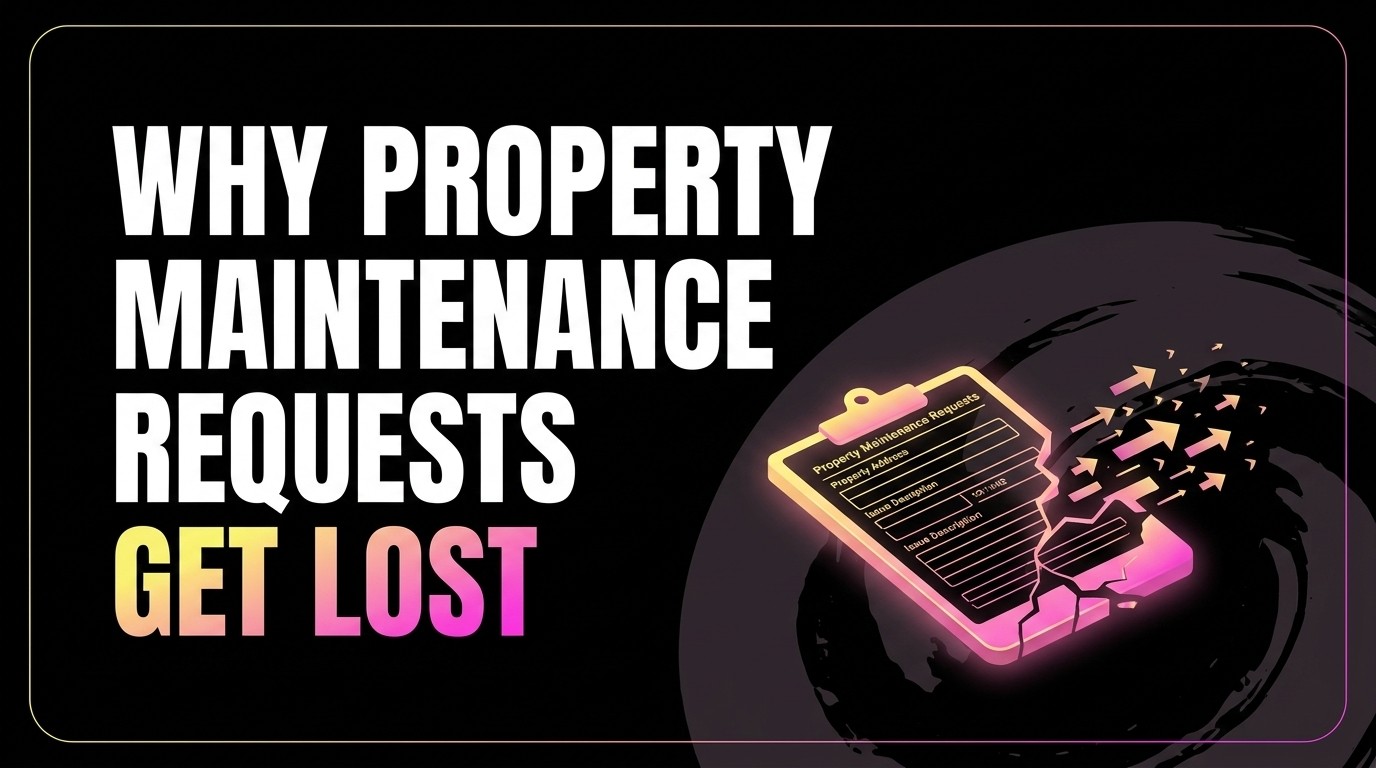
A property manager overseeing many units fields requests through texts, calls, and paper notes. Here's why that breaks down at volume, and what fixes it.
A tenant mentions a dripping faucet to a maintenance worker in passing. Another texts the property manager's cell phone directly. A third submits a request through the official tenant portal. A fourth leaves a note at the leasing office because that's what they've always done. All four are legitimate maintenance requests. None of them are sitting in the same place, and there's a real chance at least one gets forgotten before anyone follows up.
This isn't a story about a careless property manager. It's what happens by default when maintenance requests can legitimately arrive through several different channels, and nothing reconciles them into a single, reliable list. Each individual channel might work fine on its own. The problem is that nobody's actually looking at all of them together, consistently, every single day.
A system built on remembering, checking a few different inboxes, keeping a mental list, following up when something comes to mind, can genuinely work when there are only a handful of active requests at once. It stops working as the number of units grows, not because the property manager becomes less capable, but because the sheer volume of parallel, informally-tracked requests eventually exceeds what any single person can reliably hold in their head or reconstruct from memory at the end of a busy day. Fifty units generating a steady trickle of requests across four different channels is a fundamentally different problem than five units doing the same thing, even though the process looks identical on paper.
The most immediate cost is obvious: a maintenance issue goes unaddressed longer than it should, and a tenant's problem sits unresolved. But there's a second, quieter cost that matters more than it might seem. When a request only ever existed as a text message to a personal phone or a verbal mention in a hallway, there's often no record that it happened at all. If that unresolved issue later becomes a bigger problem, a leak causing damage, an electrical issue causing a safety concern, the property manager may have no documented proof the tenant ever actually reported it, which matters considerably if the situation ever becomes a liability question. Losing the paper trail is sometimes a bigger risk than losing the original request.
The fix isn't picking one single channel and insisting every tenant use it, that rarely works in practice, since tenants will keep reaching out however is easiest for them regardless of the official policy. The more realistic fix is making sure that whatever channel a request comes through, text, call, portal, it lands in the same consistent record, with the same basic details captured every time: what the issue is, which unit, when it was reported. That reconciliation step is what actually prevents a request from disappearing, not asking tenants to change their behavior.
If maintenance requests are currently scattered across texts, calls, and a portal with no single reliable record tying them together, it's worth seeing what consistent intake across channels looks like in practice. SalesAPE offers a free demo if you'd like to take a look, no pressure either way.
Mostly because requests come in through multiple channels, texts, calls, a tenant portal, informal mentions, with nothing reconciling them into a single, reliable record. Informal tracking that works for a handful of units breaks down as volume grows across more units and more parallel channels.
In practice, this rarely works well, since tenants will keep reaching out however is most convenient for them regardless of official policy. A more reliable fix is capturing requests consistently across whichever channel they arrive through, rather than trying to control tenant behavior.
Beyond the immediate inconvenience of a delayed fix, the lack of a record becomes a real liability concern if an unresolved issue later causes damage or a safety problem. Being able to show a tenant's request was received and when matters considerably in that situation.
Making sure every request, regardless of which channel it arrives through, gets captured into the same consistent record with the same basic details: the issue, the unit, and the date reported. That reconciliation across channels is what actually prevents loss, not picking a single preferred channel.