.svg)
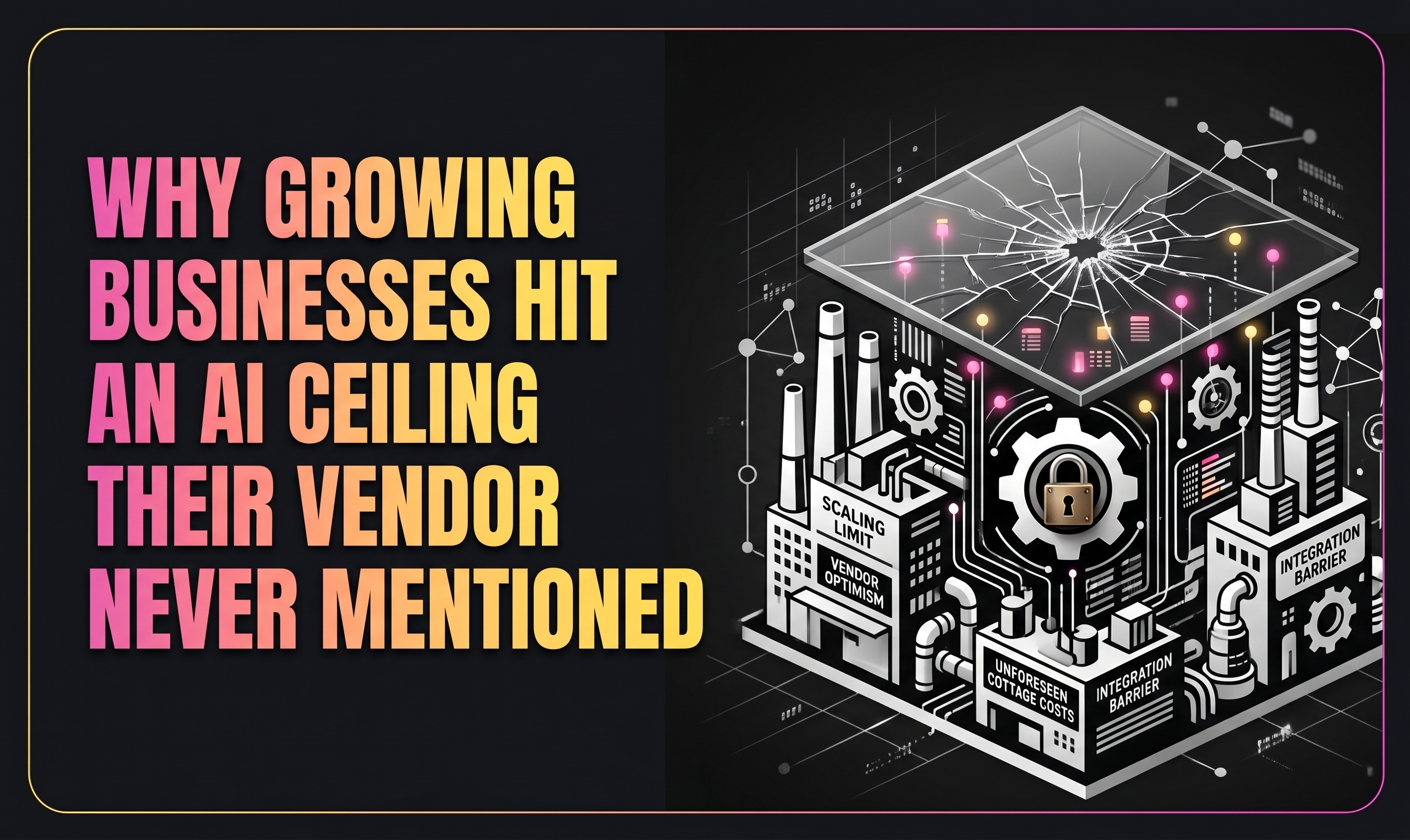
An AI tool that worked perfectly at your old size can start showing cracks as you grow. Here's why that happens, and what to actually ask before it does.
TL;DR
An AI tool that worked genuinely well when a business was smaller can start showing real strain as that business grows, more inconsistent results, more situations it wasn't built for, a general sense that it's not keeping pace anymore. This often catches businesses by surprise, since it wasn't something anyone flagged during the original evaluation, when the business's needs looked considerably simpler.
The tool usually hasn't actually gotten worse. What's changed is the complexity of what it's being asked to handle. A smaller business often has more homogeneous, predictable inquiries, a narrower product line, fewer edge cases. As a business grows, it typically adds complexity, more products or services, more varied customer situations, more nuanced judgment calls, that the original setup, built around a simpler version of the business, was never actually designed to handle.
A setup that handled every situation well when inquiry volume was modest can start encountering unusual, edge-case situations more frequently simply because there's more total volume flowing through it. Rare situations that essentially never came up before start showing up regularly enough to matter, exposing gaps in the original training that low volume had simply been masking.
A business that's expanded its offerings since the AI tool was originally set up is often asking that tool to handle genuinely new material it was never actually trained on, producing noticeably weaker, more generic responses for anything outside its original, narrower scope.
Growth often brings more sophisticated customers with more nuanced needs, situations that don't fit cleanly into the qualification criteria and decision rules that were reasonable for a simpler, earlier version of the business.
The businesses that avoid being surprised by this ceiling are generally the ones that asked, during initial evaluation, not just "does this handle what we need today" but specifically "what happens as our volume, product range, and complexity grow, and does the setup process account for that."
A vendor should be able to speak concretely to how their setup process handles growth, whether retraining and criteria updates are a normal, built-in part of an ongoing relationship or an afterthought nobody's really thought through. That's a meaningfully different proposition than a tool that was configured once at a smaller scale and never revisited as the business genuinely changed around it.
If you're thinking about how an AI setup would actually keep pace as your business grows, rather than just how it handles things today, that's worth a direct conversation. SalesAPE offers a free demo if you'd like to talk through it, no pressure either way.
Usually not because the tool itself got worse, but because growth introduces new complexity, higher volume revealing rare edge cases, new products or services outside the original training, more nuanced customer situations, that the original setup wasn't built to handle.
Not necessarily. A tool well-suited to a business at one size and complexity level can genuinely need updating as that business grows, similar to how many business processes and systems need revisiting as a company scales, not evidence the original choice was wrong.
Ask specifically how their setup process handles growth, whether retraining and updating qualification criteria is a normal, built-in part of an ongoing relationship, rather than assuming the initial setup will remain sufficient indefinitely as the business changes.
Watch for a pattern of increasingly inconsistent results, more situations the tool clearly wasn't built for, or noticeably weaker responses specifically around newer products, services, or more complex customer situations that have emerged since the original setup.