.svg)
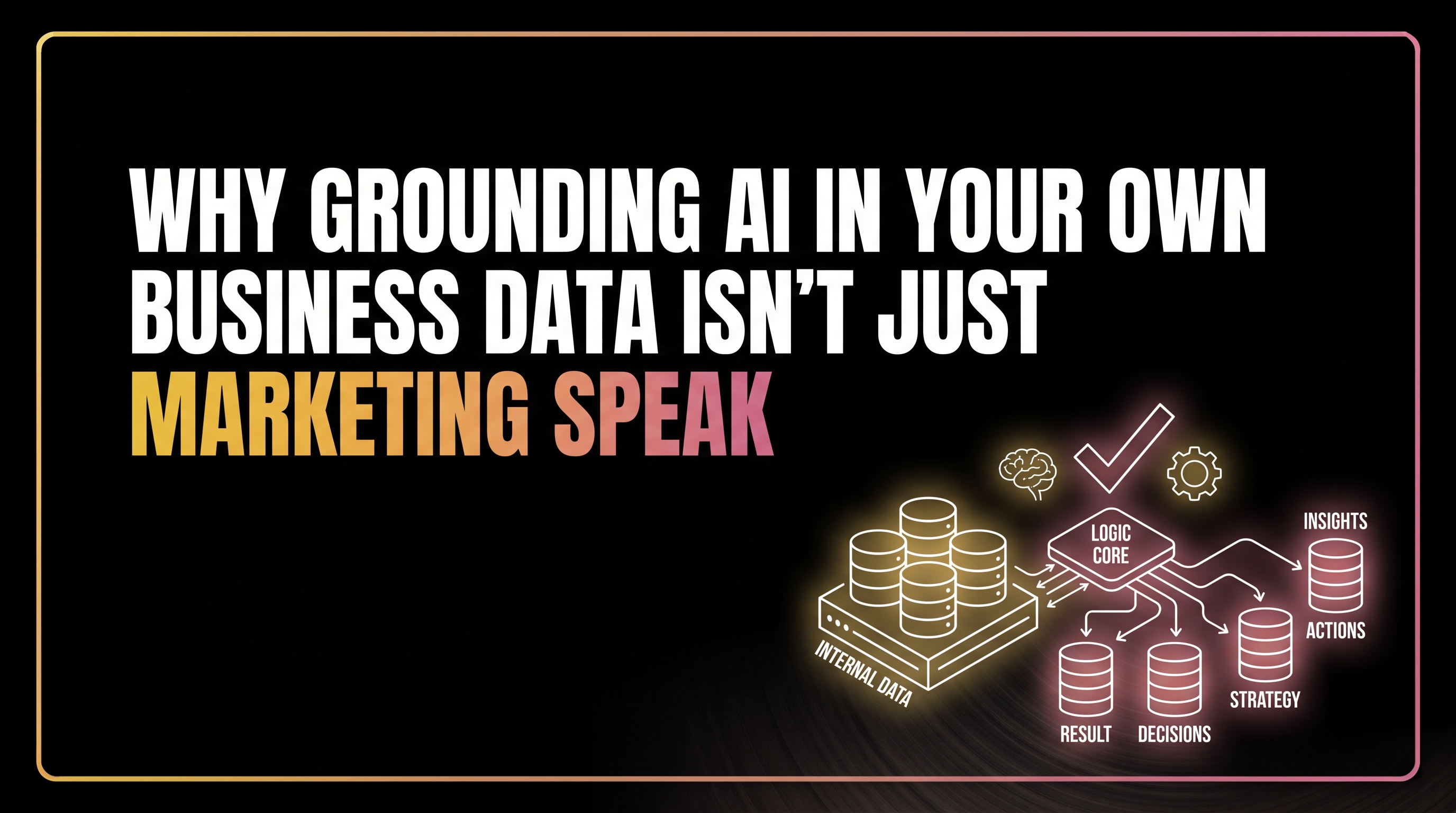
"Trained on your own data" sounds like a sales pitch, but it describes a real, mechanical difference in how an AI tool actually processes your business. Here's the technical reason it matters.
TL;DR
"Trained on your own business data" is one of those phrases that's easy to wave off as marketing language, vague enough to mean almost anything. It actually describes something specific and mechanical about how an AI system processes information, and understanding that mechanism is what explains why the difference is real rather than just a nicer way of saying "we set it up for you."
Before an AI model does anything with text, it breaks that text down into smaller processing units. Common words and phrases the model has encountered often during training get represented efficiently, as familiar, well-established patterns. Less common terms, unusual product names, specific pricing structures, industry-specific terminology unique to a particular business, get broken down into smaller, less familiar fragments that the model has to piece together with less established pattern support behind them.
A general-purpose AI model has never specifically encountered your business's exact product names, your specific pricing tiers, or the particular way your team phrases things internally, during its original training. When asked about them, it's working with less familiar fragments, reconstructed on the fly, rather than the well-established patterns it has for widely-known information. That's the mechanical root of the generic, slightly-off quality people associate with AI that hasn't been properly set up for a specific business.
Grounding a tool in real, specific business material, your actual pricing, your actual policies, your actual past conversations, doesn't just give the model more information in an abstract sense. It gives the specific terms and patterns that make up your business more consistent exposure and reinforcement within that particular tool's working context, closer to the kind of familiar, well-supported pattern recognition it has for widely-known information generally. The output becomes noticeably more specific and consistent, not because the underlying model changed, but because it's now working with much better-supported material for this particular use.
The distinction between a generic AI tool and one properly grounded in a specific business isn't a vague quality difference that's hard to pin down, it traces to a specific, mechanical fact about how these systems process unfamiliar versus familiar patterns.
This matters for evaluating any AI tool making a "trained on your data" claim. It's worth asking specifically what that actually involved, real historical conversations, actual pricing and policy documents, genuine past customer interactions, versus a generic company description that provides comparatively little of the specific material the model actually needs to represent that particular business accurately and consistently.
If you want to see the practical difference this makes rather than just the mechanical explanation, that's worth seeing directly. SalesAPE offers a free demo if you'd like to take a look, no pressure either way.
Mechanically, it means the tool has been given real, specific material, your actual pricing, policies, and past conversations, so that the terms and patterns unique to your business are represented consistently rather than reconstructed from unfamiliar fragments each time.
Because it's working with less familiar, less well-supported information about your specific pricing, products, or terminology, compared to widely known, general information it encountered often during its original training.
It describes something mechanically real. Whether an AI tool has been given genuine, specific business material affects how consistently and accurately it can represent that business, a difference rooted in how these systems process familiar versus unfamiliar information.
Ask specifically what material was actually used, real historical conversations, actual current pricing and policy documents, genuine past customer interactions, versus a generic company description. The depth and specificity of that material is what actually determines how grounded the resulting tool is.