.svg)
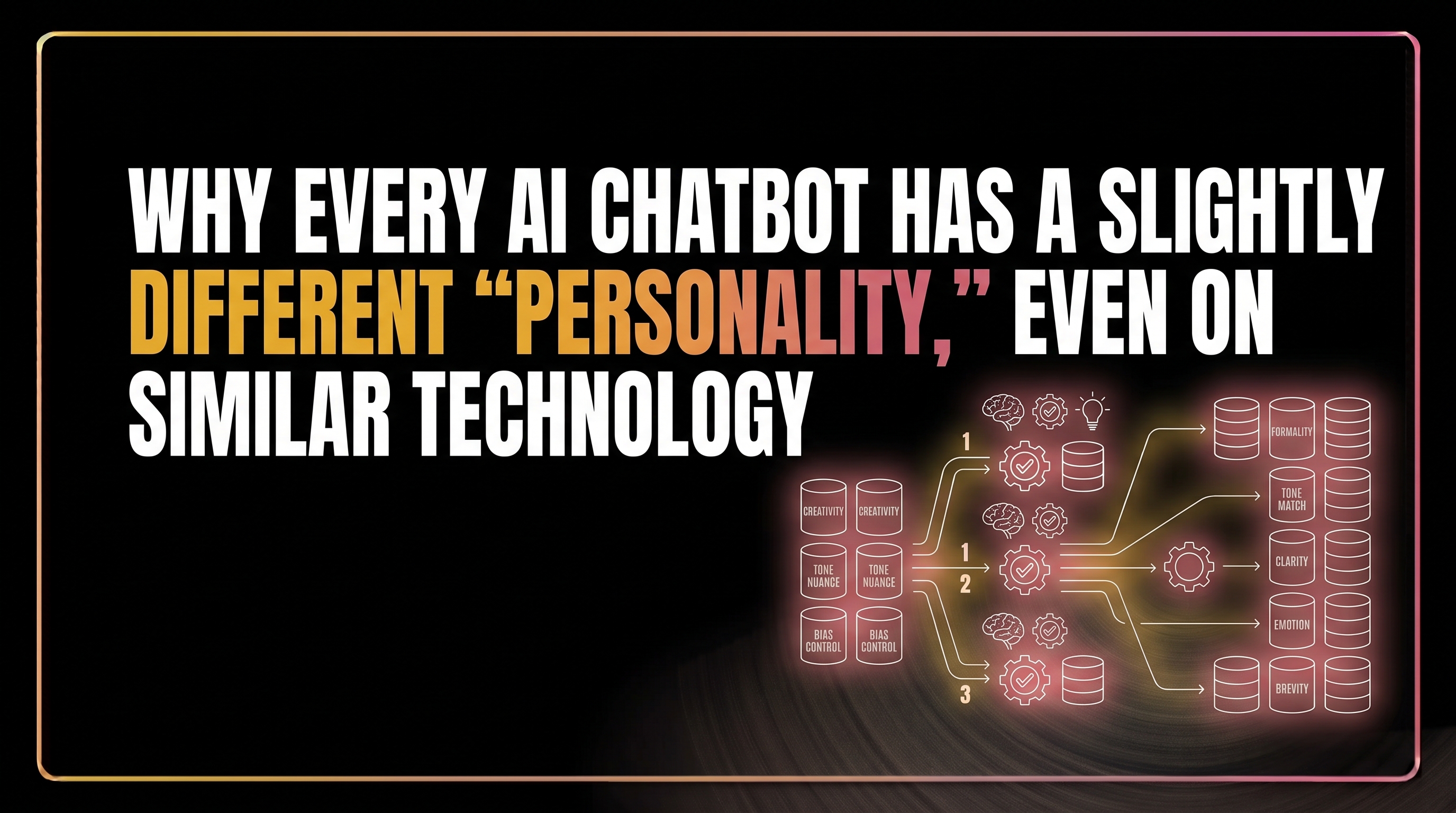
Two AI chatbots can be built on genuinely similar underlying technology and still feel noticeably different to talk to. Here's where that difference actually comes from.
TL;DR
Switch between two different AI chatbots and you'll often notice a real difference in how each one "feels" to talk to, one more formal, one more casual and quick with jokes, one that hedges more, another that answers with more confidence. This happens even when the underlying core technology has real similarities between the two. The personality difference comes from somewhere specific, and it's not the core model itself.
A chatbot's specific personality is shaped by a layer of deliberate choices made on top of whatever underlying model powers it: written instructions about how it should behave and what tone to use, specific examples of ideal responses it was further trained or guided on, and decisions about what it should and shouldn't do in particular situations. Two products can use genuinely similar core technology and still end up feeling completely different because this additional layer of specific choices differs considerably between them.
This additional layer is often where a huge share of what actually distinguishes one AI product from another actually lives.
Both could be built on comparable core technology and still feel like talking to genuinely different characters, because of decisions made specifically for that particular product.
It's tempting to think of this personality layer as a thin, cosmetic coating over an otherwise identical underlying system, but it actually shapes real, substantive behavior, not just tone;
All of this can be meaningfully shaped by this layer of product-specific decisions, not just the superficial wording choices.
Since a chatbot's personality comes primarily from a layer of product-specific decisions rather than the underlying core technology, comparing two AI tools based on how one specific interaction "feels" tells you more about each product's particular configuration choices than about the fundamental underlying technology powering either one.
This is worth keeping in mind when evaluating different AI tools for a specific purpose. A chatbot that feels notably more cautious, more casual, or more willing to give direct answers isn't necessarily built on fundamentally different or superior underlying technology, it likely reflects deliberate choices made specifically for that product, which may or may not be the right fit for what you actually need it for.
Because a chatbot's specific personality comes from a layer of deliberate choices made on top of the underlying model, written instructions, guiding examples, and specific behavioral decisions, not from the core technology itself. Two products can share similar underlying technology and still feel distinctly different because of these product-specific choices.
Not necessarily. The personality layer is often where much of what distinguishes one AI product from another actually lives, separate from the core underlying model, which may be broadly comparable across different products.
It affects real, substantive behavior, not just tone. How much a system hedges, how willing it is to give direct answers, and how it handles ambiguous situations can all be shaped by this product-specific layer of decisions, not just superficial wording.
Not directly. A chatbot's specific personality reflects deliberate product choices more than it reflects the fundamental capability of the underlying technology. It's more useful to evaluate whether that particular personality and configuration fits your specific need, separately from judging the underlying technology itself.