.svg)
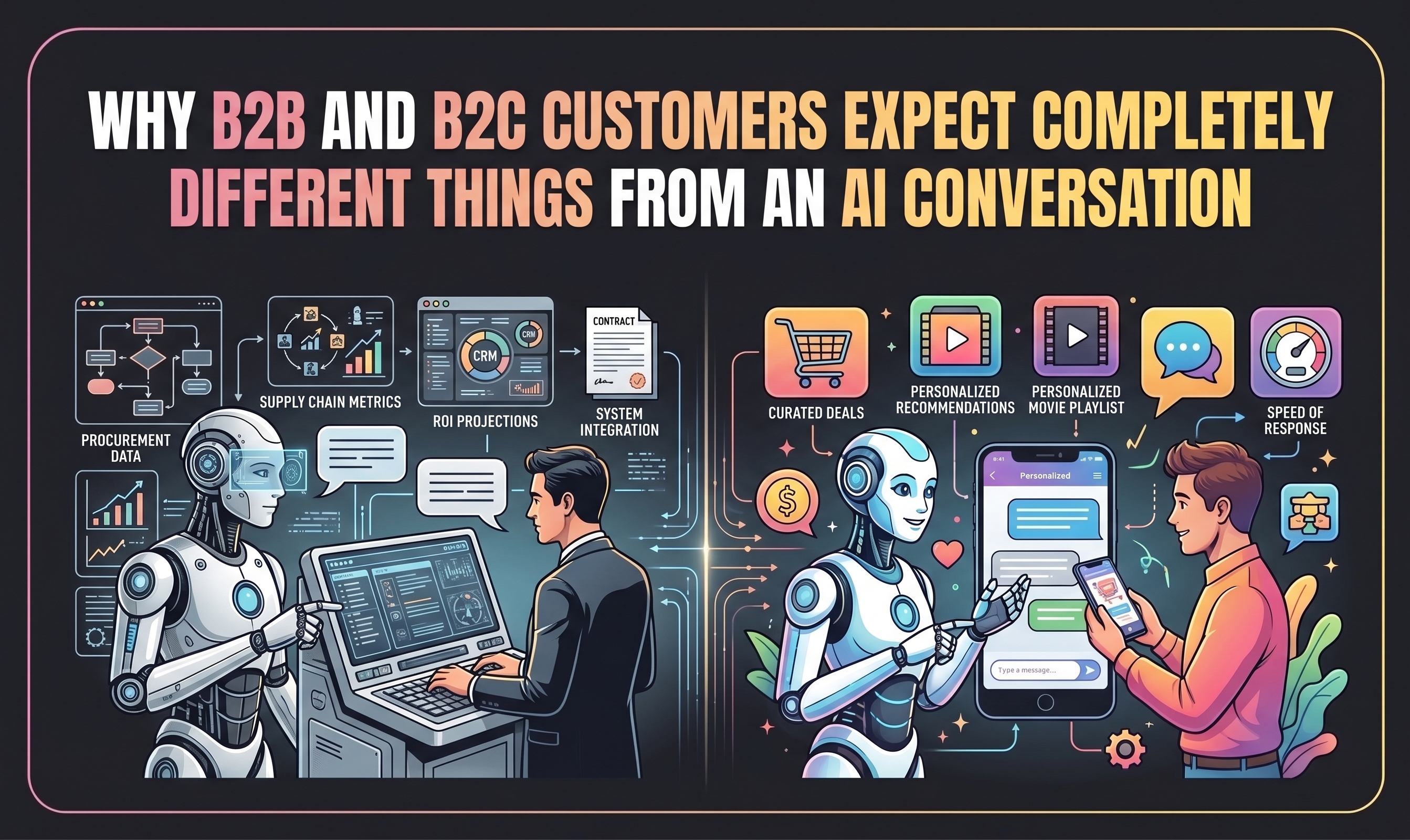
A B2B buyer and a B2C shopper judge an AI interaction by genuinely different standards. Here's what actually differs, and why it matters for setup.
TL;DR
An AI conversation that works beautifully for a B2C customer asking a quick question can feel noticeably thin and unsatisfying to a B2B buyer evaluating a significant purchase decision, even though both are, technically, "a customer talking to AI." The expectations genuinely differ, and understanding why matters directly for how a tool should actually be set up.
A B2B purchase typically involves more consideration, higher stakes, and often more than one decision-maker weighing in. A B2B buyer engaging with an AI tool generally expects to be able to ask follow-up questions, get real substance rather than a surface-level answer, and have some tolerance for a longer, more exploratory conversation before reaching a decision point. An AI interaction that rushes toward a quick close, appropriate for a simple B2C purchase, can feel genuinely mismatched to how a B2B buyer actually wants to evaluate something significant.
A B2C customer is more often looking for a fast, straightforward answer, confirming availability, checking a price, getting a quick question resolved, without wanting to wade through extensive detail or a drawn-out exchange. An AI interaction that's overly thorough or slow to get to the point, appropriate for a considered B2B evaluation, can feel unnecessarily tedious for a B2C customer who just wants a quick, clear answer.
A B2B buyer, often more experienced with a considered purchase process generally, tends to have more patience for a conversation that doesn't immediately resolve everything, understanding that a genuinely good answer to a complex question sometimes takes a bit of back-and-forth. A B2C customer typically has less patience for ambiguity or a conversation that doesn't move directly toward resolution, expecting a more immediately clear, direct answer.
Since B2B and B2C customers are genuinely judging an AI conversation by different standards, depth and patience versus speed and simplicity, a tool's configuration needs to reflect which context it's actually operating in, rather than applying one generic conversational approach to both.
This isn't just a matter of tone, it affects real structural choices: how much detail to proactively offer, how many follow-up questions to expect and accommodate, how quickly to move toward a specific next step versus allowing a longer, more exploratory conversation. A tool configured well for one context can genuinely underperform in the other if this distinction isn't deliberately accounted for during setup.
If you're thinking through how an AI tool should actually be configured for your specific type of customer, that's worth a direct conversation rather than a generic, one-size-fits-all setup. SalesAPE offers a free demo if you'd like to talk through it, no pressure either way.
Yes, genuinely. B2B buyers tend to expect more depth, substance, and patience for a longer, more exploratory conversation, while B2C customers typically expect more speed and a direct, quickly resolved answer.
Because B2B purchases typically involve more consideration, higher stakes, and sometimes multiple decision-makers, which makes a buyer more likely to want follow-up questions answered and real substance, rather than a quick, surface-level response.
B2C purchases are often lower-stakes and more transactional, so customers typically want a quick, clear answer without wading through extensive detail or a drawn-out conversation to get there.
Generally, yes. The right level of detail, pace, and tolerance for exploratory conversation differs meaningfully between the two contexts, and a tool's setup should reflect which one it's actually operating in rather than using one generic approach for both.