.svg)
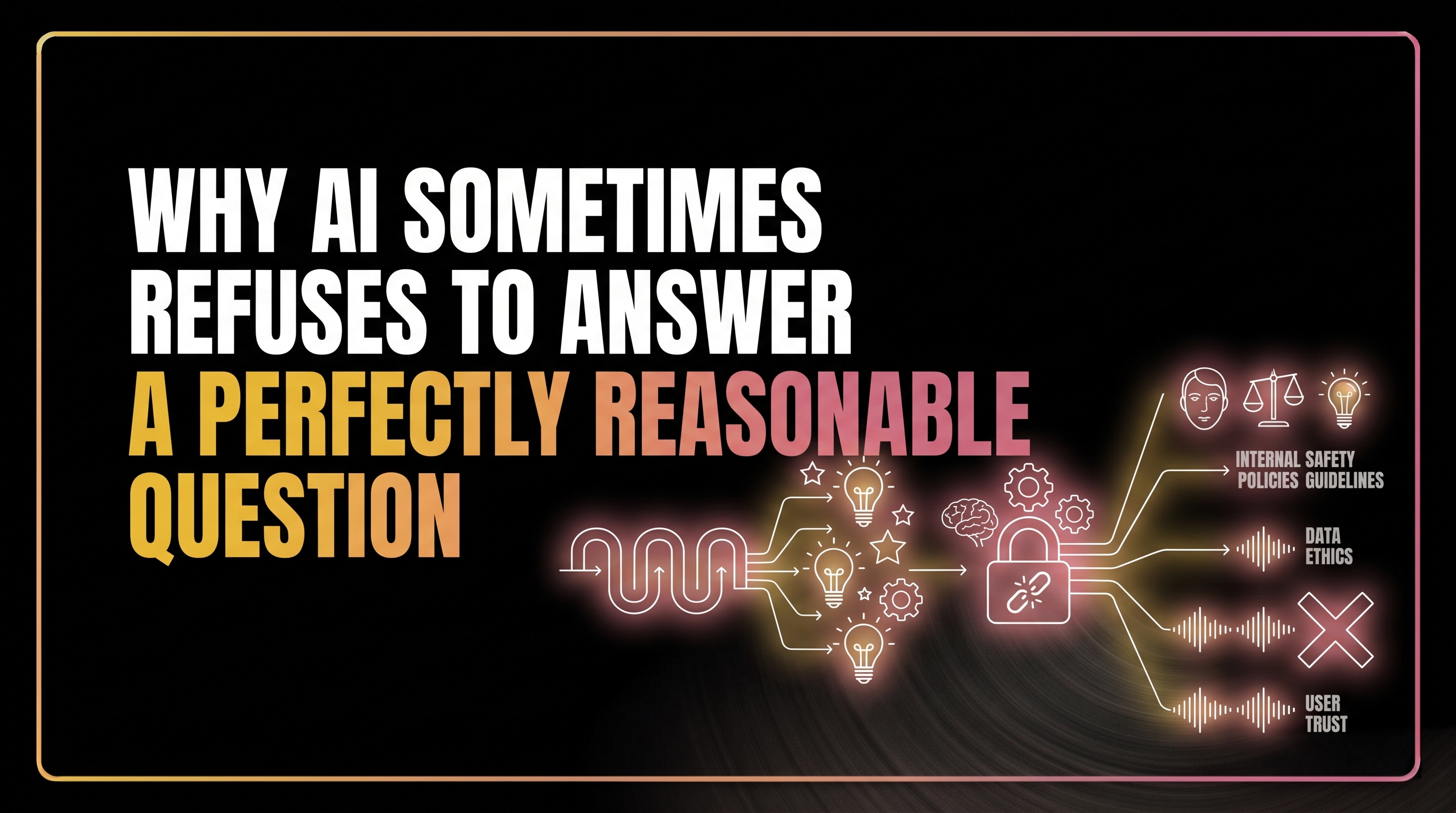
Ask an AI something completely innocent and occasionally get a flat refusal. Here's why that happens, and why it's usually a sign of caution, not malfunction.
TL;DR
An AI model occasionally refuses a request that seems completely reasonable, or answers with so much hedging and caveat that the actual useful content gets buried. This is genuinely frustrating when it happens, and understanding why it happens explains both the behavior and why a small rephrase sometimes fixes it entirely.
AI safety systems are generally built to recognize broad patterns associated with genuinely harmful requests, not to deeply evaluate the actual, specific intent behind every individual question. A perfectly innocent question can happen to use phrasing, word combinations, or a general shape that pattern-matches to something the system is built to be cautious about, even though the actual underlying intent is completely benign. The refusal is a response to the surface pattern, not a considered judgment about what you're actually trying to do.
Building a system that never refuses anything reasonable while also reliably catching every genuinely harmful request is a much harder problem than it sounds like it should be. Given that tradeoff, most systems are deliberately built to err toward caution in ambiguous cases, occasionally over-refusing a reasonable request, rather than the alternative of under-refusing and missing genuinely harmful ones. The frustrating false positives are a known, accepted cost of prioritizing safety on the genuinely harmful side of that tradeoff.
If a refused question gets a completely different, helpful response after being rephrased with no real change in actual intent, that's not the system suddenly understanding you better in some deep sense, it's the new phrasing simply not triggering the same surface-level pattern that caused the original refusal. This is a genuinely useful thing to know: a refusal often reflects specific wording tripping a broad filter, not a considered judgment that your actual request was inappropriate.
A refusal to a genuinely reasonable question is usually a sign of an imperfect but deliberately cautious pattern-matching system doing its job on ambiguous surface signals, not evidence that the system has concluded something specific and negative about your actual intent.
If a reasonable request gets refused, it's generally worth trying a direct rephrase, providing a bit more specific context about the legitimate reason behind the question, before assuming the system has made some considered judgment about you. Most of these refusals are genuinely just an overcautious pattern match, not a meaningful verdict on the actual request.
Because safety systems generally work by recognizing broad patterns associated with potentially harmful requests, not by deeply evaluating the true intent behind every specific question. An innocent question can occasionally match a pattern the system is built to be cautious about, triggering an unnecessary refusal.
Because the refusal was likely triggered by the specific surface-level wording or pattern of the original question, not a considered judgment about your actual intent. A rephrase that avoids that specific pattern can produce a helpful response to what is, in substance, the same underlying question.
Yes, this is a known and generally accepted tradeoff. Systems built to reliably catch genuinely harmful requests tend to also occasionally over-refuse ambiguous but actually reasonable ones, since erring toward caution on unclear cases is usually considered the safer overall approach.
Try rephrasing the question directly, or provide a bit more specific, legitimate context for why you're asking. This often resolves the issue, since most refusals stem from surface-level pattern matching rather than a genuine, considered judgment about the request.