.svg)
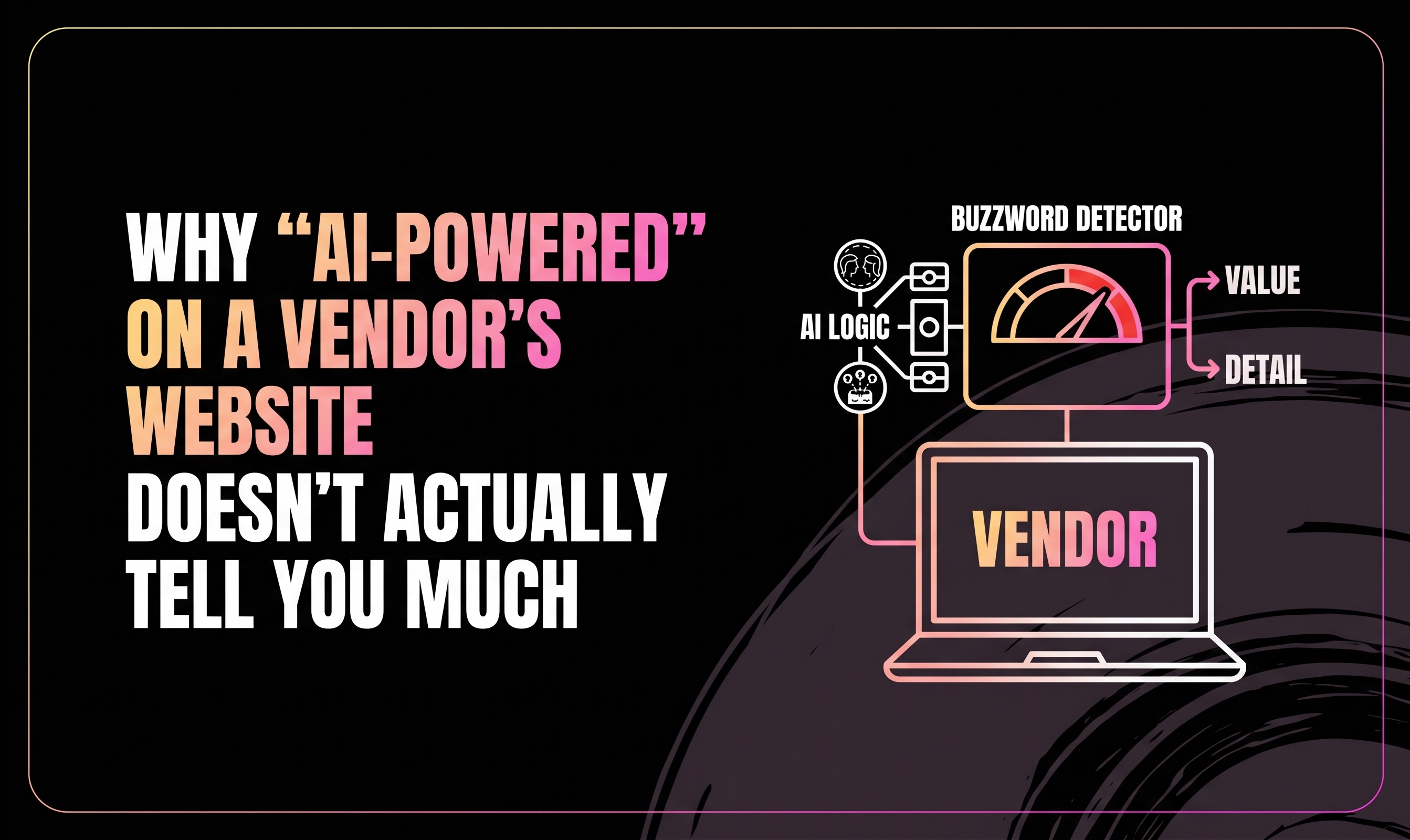
The phrase "AI-powered" covers an enormous range of actual capability. Here's what it doesn't tell you, and the specific questions that actually do.
TL;DR
"AI-powered" shows up on software ranging from tools where AI does something small and peripheral to tools where it's the entire core function. The label itself covers such an enormous range that, on its own, it tells you almost nothing useful about what you're actually evaluating.
A product can honestly describe itself as "AI-powered" whether AI handles 90% of its actual functionality or a single minor feature buried three menus deep. Both descriptions are technically accurate, and both use the exact same phrase, which means the label itself carries almost no information about where on that spectrum a specific product actually sits.
"AI-powered" doesn't distinguish between a tool built entirely around AI as its core function and a traditional tool with one AI-assisted feature added on. These are genuinely different products with genuinely different value propositions, described with the exact same marketing phrase.
The phrase says nothing about quality. A poorly implemented AI feature and a genuinely excellent one can both honestly claim to be "AI-powered," since the label describes the presence of the technology, not how well it's been built or how much real value it actually delivers.
A generic AI feature working from broad, general patterns and one specifically trained on your particular business or use case can both fairly use the same label, even though the practical difference in output quality and relevance between the two is often substantial.
A few specific questions get at what the phrase alone can't tell you: What specifically does the AI component actually do, in concrete terms, not marketing language. How central is it to the product's core value, versus a minor, optional feature. Can you see it working on a real example relevant to your specific situation before committing. These questions replace a vague, near-meaningless label with actual, checkable information.
Since "AI-powered" alone doesn't reliably distinguish a genuinely strong, central capability from a minor, bolted-on feature, it's worth treating the phrase as a prompt to ask more specific questions rather than as meaningful information on its own.
This isn't a reason to be cynical about every product using the phrase, plenty of genuinely strong AI-powered tools exist. It's a reason to look past the label itself and ask the specific questions that actually reveal whether a given tool's AI capability is central, high-quality, and relevant to your specific situation, rather than treating the phrase as a meaningful signal on its own.
If you're evaluating a tool and want specific, concrete answers about what its AI capability actually does rather than a marketing label, that's a fair thing to ask for directly. SalesAPE offers a free demo if you'd like to see exactly how it works in practice, no pressure either way.
Not necessarily. The phrase can accurately describe a product where AI handles a single minor feature just as easily as one where AI is the entire core function. It doesn't distinguish between these very different cases.
Yes. The phrase describes the presence of AI technology, not the quality of its implementation. A poorly performing feature and a genuinely excellent one can both fairly use the same label.
Ask specifically what the AI component does in concrete terms, how central it is to the product's core value versus being a minor add-on, and whether you can see it working on a real, relevant example before committing.
Not automatically. Plenty of genuinely strong products fairly use the label. The point is that the phrase alone doesn't tell you enough to evaluate a product, so it's worth asking more specific questions regardless of how confidently or often the label appears.