.svg)
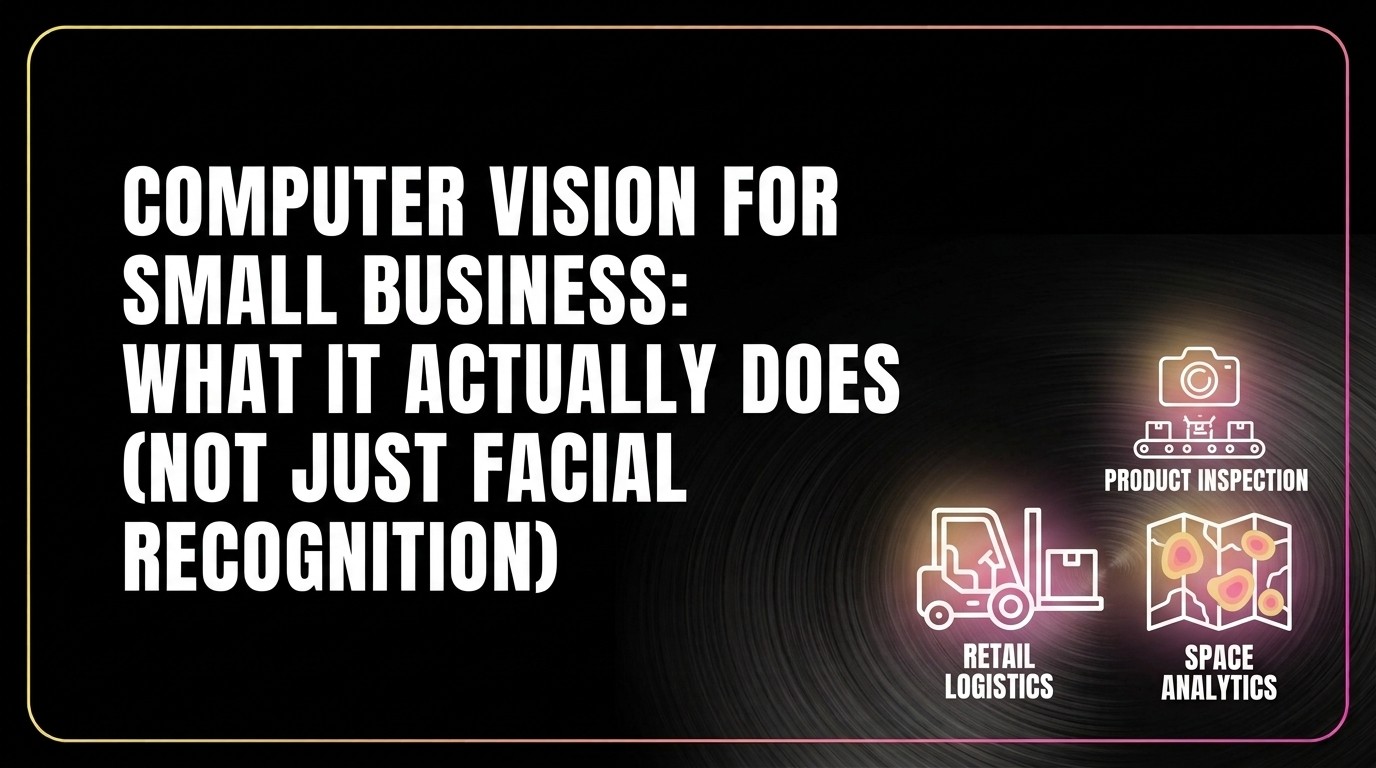
Computer vision isn't just facial recognition or self-driving cars. Here's what it actually does, and where small businesses are already quietly using it.
TL;DR
Say "computer vision" to most people and they picture facial recognition at an airport, or a self-driving car reading a stop sign. Both are real examples, but they're also the most dramatic, headline-grabbing use cases, which tends to crowd out a much more mundane and, for most small businesses, more relevant picture of what this technology actually does.
At its core, computer vision is the part of AI concerned with interpreting visual information, images and video, in a way that produces useful output:
“It's the difference between a camera that simply records footage and a system that can look at that footage and actually understand something about what's happening in it.”
A photo of a shelf or a storage area can be analyzed to count items, confirm stock levels, or flag when something's running low, without a person manually counting and logging it. This is a genuinely practical use case for retail, warehousing, or any business managing physical inventory at a scale where manual counts are slow or error-prone.
On a small production line, computer vision can check whether a finished product matches expected specifications, spotting a visible defect, a missing component, or an inconsistency a person might miss after the two-hundredth identical item that day. Human attention naturally drifts on repetitive tasks. A system built for this specific job doesn't.
A photo confirming what was actually delivered or shipped, matched against what was ordered, can catch discrepancies before they become a customer complaint, rather than after. This is a straightforward, unglamorous application, but a genuinely useful one for any business handling physical goods.
Extracting information from a photographed receipt, invoice, or form is also a computer vision task, turning an image into usable, structured data instead of requiring someone to type it in manually. This overlaps with a broader category of automation, but the "reading the image" step specifically is computer vision doing the work.
Facial recognition and self-driving cars are complex, high-stakes applications built by companies with enormous resources and very specific, narrow problems to solve. That's not a realistic comparison point for a small business considering whether "computer vision" has anything to offer them. The more useful question isn't "could we build something like that," it's "is there a repetitive, visual task in our business that currently depends on a person looking at something and making a judgment call," because that's the category where this technology tends to actually help.
If there's a task in your business that involves someone regularly looking at a photo, a shelf, a product, or a document, and manually checking or logging what they see, that's worth a closer look as a potential fit for this kind of technology, regardless of which specific tool or vendor might eventually be involved.
No, those are just the most well-known, dramatic examples. Much more common, practical applications include inventory counting, defect detection, delivery verification, and reading information from photographed documents.
Yes, particularly for repetitive visual tasks currently done manually, checking stock levels, verifying orders, or spotting defects. The scale doesn't need to match a major tech company's use case for the underlying technology to be useful.
A regular camera system records footage for someone to review later. Computer vision analyzes that image or video and produces a useful output automatically, a count, a match, a flag, without requiring a person to manually interpret what's in the frame.
Look for a task that involves someone regularly looking at something visual, a shelf, a product, a document, and manually checking or recording what they see. That kind of repetitive, visual judgment call is the category where this technology tends to be genuinely useful.