.svg)
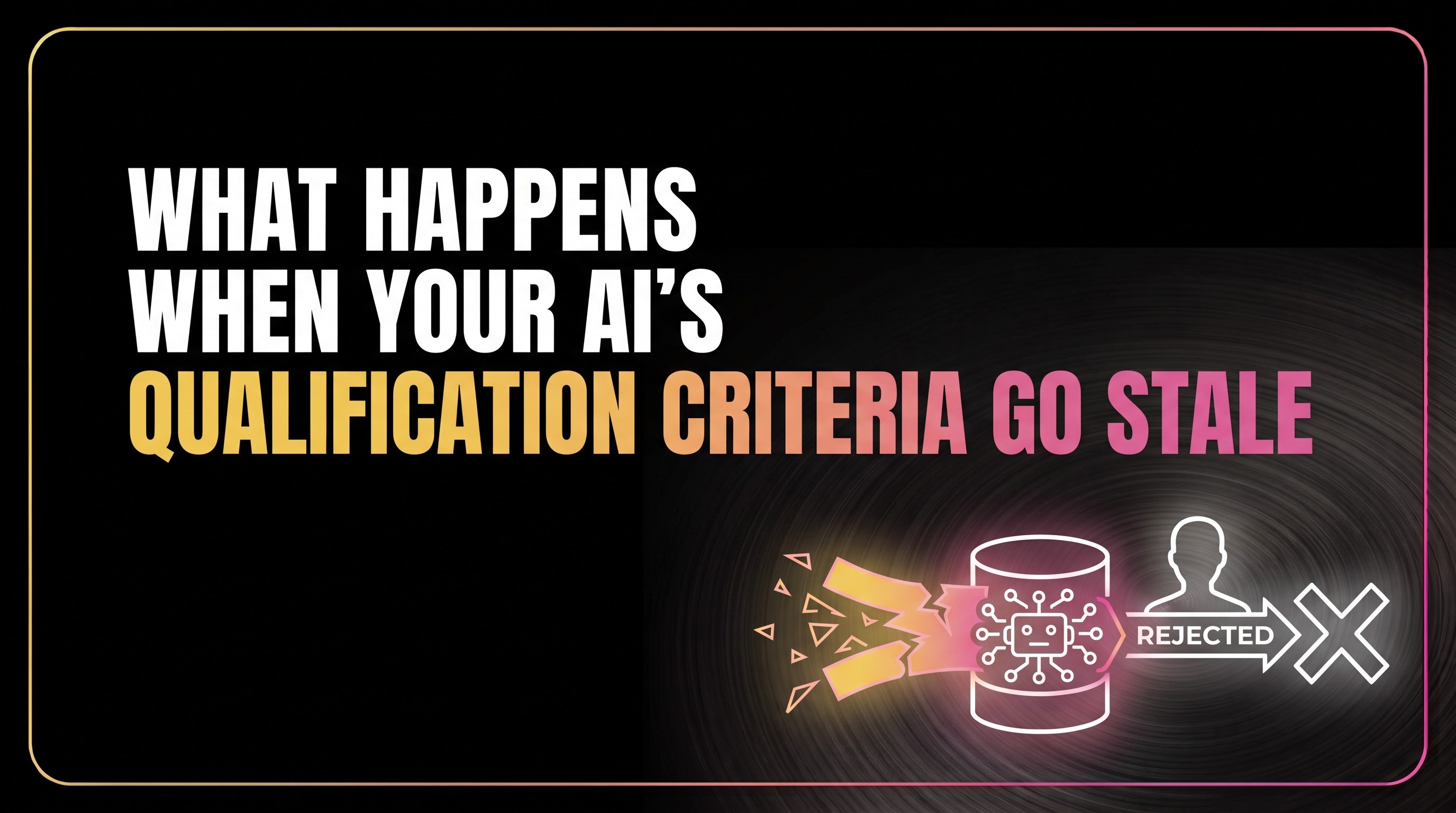
Qualification criteria that were right at setup quietly stop matching the business six months later. Here's why that happens, and how to catch it.
TL;DR
A qualification system gets set up carefully, criteria defined based on what a good lead looked like at the time, thresholds tuned, edge cases handled. Six months later, the business has changed, a new pricing tier launched, a product line got discontinued, the target market expanded into an adjacent industry, and the qualification criteria never got updated to reflect any of it. The system isn't broken. It's doing exactly what it was told to do. It's just being told the wrong thing now.
Qualification criteria are a snapshot of what mattered at a specific point in time, what a good customer looked like, what disqualified a bad fit, what threshold separated a real opportunity from a waste of a rep's time. None of that is static. A business's pricing changes. Its ideal customer profile shifts as it moves upmarket or into new verticals. A competitor's move changes what used to be a disqualifying objection into a routine one. The criteria don't update themselves just because the business around them did.
This is the part that makes it easy to miss. A qualification system running on stale criteria doesn't throw an error or flag itself as wrong. It keeps functioning exactly as configured, consistently, reliably, just against an outdated picture of what actually matters now. The result shows up gradually: reps start noticing more leads that "don't quite fit" even though they technically passed qualification, or a segment of genuinely good leads keeps getting filtered out because a threshold set a year ago no longer reflects current reality. Neither of these looks like a system failure. They look like normal variation, right up until someone actually investigates the pattern.
A qualification threshold built around an old pricing tier doesn't automatically adjust when pricing changes. A budget threshold that made sense a year ago might now filter out leads who'd be a perfectly good fit under current pricing, or let through leads who no longer clear the bar.
Criteria built for one industry or company size often don't translate cleanly when a business expands into an adjacent market. What counted as a disqualifying detail in the original context might be completely normal and expected in the new one, and vice versa.
A discontinued product line, a new service offering, a shift in what the business actually delivers, all of these can make old qualification questions irrelevant or misleading without anyone deciding to update the criteria that still reference them.
This doesn't require a constant, high-effort review process. A simple periodic check, quarterly is often reasonable, works well: pull a sample of recently qualified and recently disqualified leads, and ask whether they'd still get the same outcome given how the business operates today, not how it operated when the criteria were originally set. If the answer is consistently yes, the criteria are holding up. If patterns of mismatch start showing up, that's the signal to revisit and update, before drift accumulates into a genuinely misaligned system.
If it's been a while since your qualification criteria were actually reviewed against how your business operates today, that's worth a look regardless of which tool is doing the qualifying. SalesAPE offers a free demo if you'd like to see how criteria review fits into an ongoing setup, no pressure either way.
Usually not because the system malfunctioned, but because the qualification criteria it was configured with no longer match how the business actually operates. Pricing, target markets, and product offerings change, and criteria set at an earlier point don't update automatically alongside them.
A quarterly review is a reasonable default for most businesses, though the right cadence depends on how quickly the business itself is changing. A business going through significant pricing or market changes may need more frequent review than one operating in a stable, unchanging market.
Pull a sample of recently qualified and disqualified leads and check whether they'd get the same outcome under how the business operates today. Consistent mismatches, good leads being filtered out or weak ones getting through, are a sign the criteria need updating.
No. A well-built system does exactly what its criteria specify, reliably. Drift happens because the business changed around the criteria, not because the underlying system failed. The fix is reviewing and updating criteria periodically, not replacing the system.