.svg)
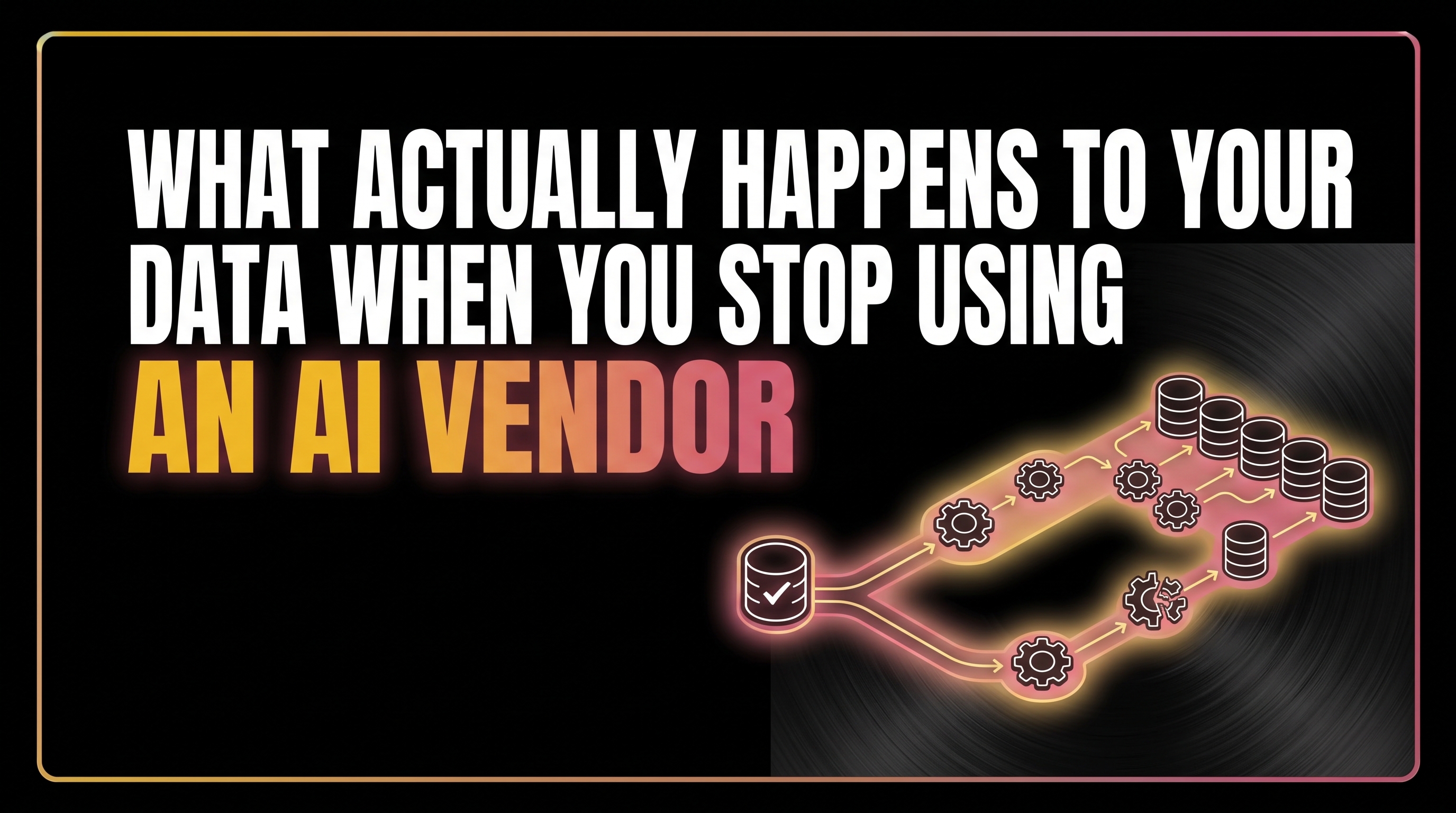
Cancelling an AI tool raises a real question nobody asks upfront, where does your data actually go? Here's what to check before you ever sign up.
TL;DR
Most evaluation of an AI vendor happens at the beginning of the relationship, pricing, features, setup process. Almost nobody asks the equally important question about the end of it: what actually happens to the business's data, the conversations, the training material, the accumulated history, once that relationship stops. The honest answer varies a lot by vendor, and it's worth knowing before you're actually in the position of needing to find out.
Nobody signs up for a new tool while actively thinking about canceling it. The offboarding question feels premature and slightly pessimistic at the exact moment a business is excited about a new capability, which is exactly why it tends to get skipped, and exactly why it's worth deliberately asking anyway, before the decision is being made under different, less favorable circumstances.
Some vendors delete a business's data promptly after a contract ends. Others retain it for a defined period, sometimes for legitimate reasons like dispute resolution or legal requirements, sometimes simply because deletion wasn't built as a clean, automatic process. Knowing which category a specific vendor falls into, and getting a specific answer rather than a vague one, matters considerably more than it might seem at signup.
A meaningful distinction exists between a vendor deleting data and a vendor exporting it back to the business first. Losing access to accumulated conversation history, qualification patterns, and other data a business has effectively built up over time, with no ability to export or retain any of it, is a real loss, not just a formality, particularly if that history has any ongoing value for training a future tool or simply understanding past customer interactions.
Depending on how a vendor's system works, there's a real question about whether patterns learned from a specific business's data persist in some form even after that business's account is closed, versus being cleanly and specifically tied to that account and removed along with it. This is a legitimately more technical question, and a vendor should be able to give a clear, specific answer rather than a vague reassurance.
Asking about data handling at the end of a relationship, before you've actually signed up, gives you real leverage and a genuine choice, asking after you've already decided to leave means negotiating from a weaker position with fewer real options available.
A vendor's answers to these questions, asked directly during evaluation, also tell you something useful about how seriously they treat data handling generally, a vendor with clear, specific, confident answers to offboarding questions is generally a good sign about how carefully they've thought through data handling across the board, not just at the end of the relationship.
If you're evaluating a vendor and want clear, specific answers to exactly these questions before signing up, that's worth asking about directly. SalesAPE offers a free demo if you'd like to talk through this directly, no pressure either way.
This varies considerably by vendor. Some delete data promptly, others retain it for a defined period, and some may not have a fully clean, automatic deletion process at all. It's worth getting a specific answer from any vendor before signing up, not after deciding to leave.
Not automatically with every vendor. There's a real difference between a vendor simply deleting data and one that exports it back to you first, which matters if that accumulated history has ongoing value to your business.
Before, ideally. Asking during evaluation gives you real leverage and options. Asking after deciding to cancel means negotiating from a weaker position, since the relationship is already ending and you have fewer alternatives at that point.
A vendor with clear, specific, confident answers about data handling at the end of a relationship is generally a good sign about how carefully they've thought through data handling overall, not just about what happens specifically when you leave.