.svg)
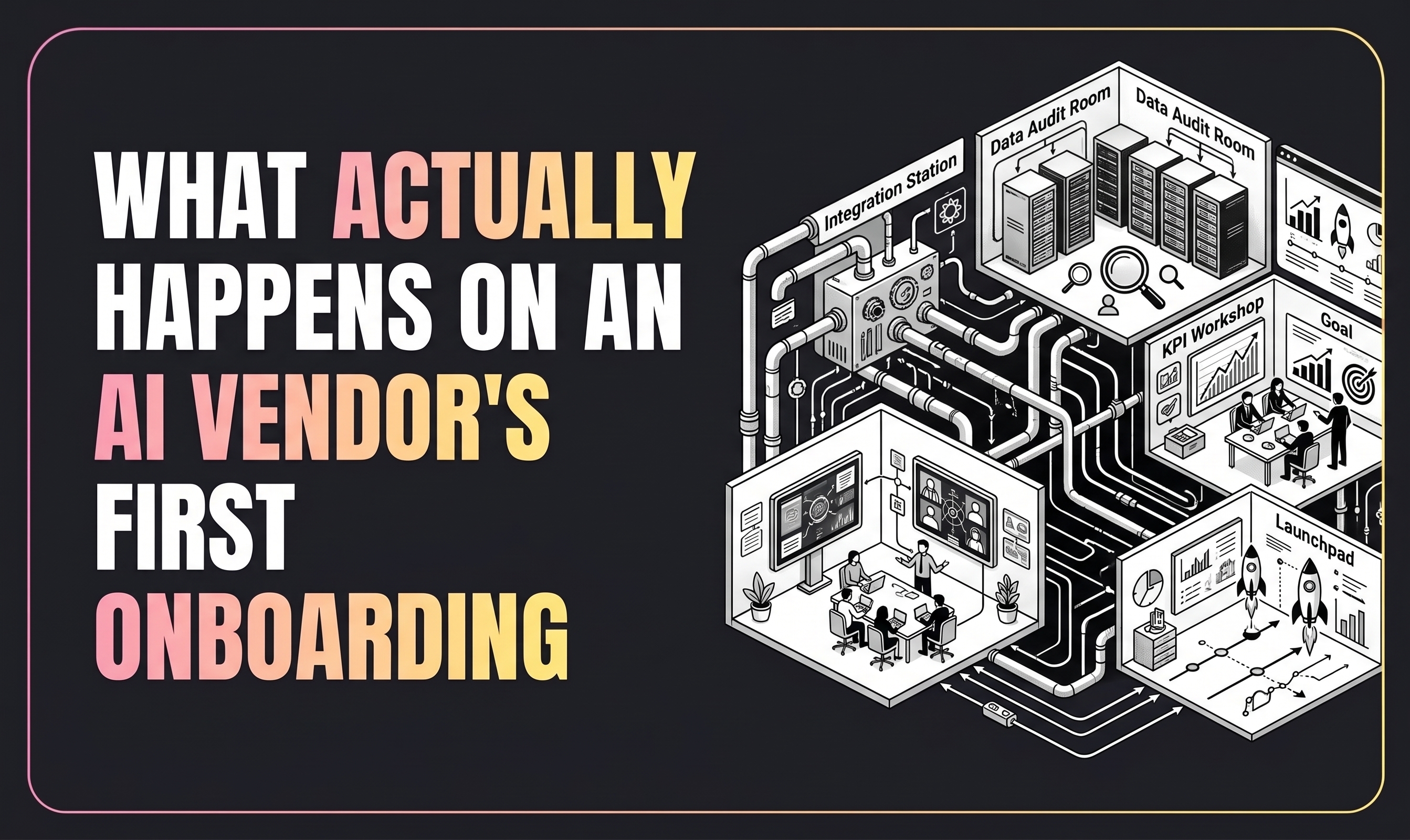
The first onboarding call sets the tone for the whole setup process. Here's what a genuinely good one actually covers, and what to watch for.
TL;DR
The first onboarding call with an AI vendor is often treated as a formality, a quick kickoff before the "real" setup work begins. A genuinely good first call is actually doing real, substantive work already, and knowing what that looks like helps set the right expectations going in.
A strong first call spends real time on specifics: what actually makes a good customer for this particular business, what the common objections and questions genuinely look like, what the team's actual communication style is. A weaker version stays at a generic, industry-level conversation without digging into what's actually specific about the business sitting on the call.
A good onboarding call proactively asks about situations that don't fit a simple, standard pattern, an unusual customer request, a specific exception the team makes regularly, a judgment call that requires real context. Surfacing these early, rather than discovering them later through trial and error, is one of the clearer signs of a genuinely thorough process.
A strong first call ends with a clear, specific sense of what material the business needs to provide, what the testing period will actually look like, and roughly what timeline to expect, rather than a vague sense that "the team will be in touch."
A rushed, generic kickoff tends to stay at a high level, walking through the tool's general features rather than digging into the specific business's actual situation, without asking many genuinely probing questions about edge cases or judgment calls. It often ends without a clear, concrete sense of what happens next, leaving the business unsure what to actually expect from the following weeks.
How thoroughly a vendor engages with a business's specific situation on the very first call is a reasonably reliable early signal for how seriously the rest of the setup process is likely to be handled, since a rushed, generic first conversation rarely gives way to a suddenly much more thorough process afterward.
This first call is worth paying real attention to, not just getting through. A vendor who asks genuinely specific, probing questions about your particular business, rather than sticking to a generic script, is showing you something real about how the rest of the relationship is likely to go.
If you want to see what a genuinely thorough first conversation actually looks like, that's worth experiencing directly rather than taking on faith. SalesAPE offers a free demo if you'd like to see the process firsthand, no pressure either way.
A strong first call focuses on the specifics of your business, what makes a good customer, common objections, communication style, along with proactively surfacing edge cases and judgment calls, and ending with a clear, concrete sense of what happens next.
Staying at a generic, high-level conversation about the tool's general features rather than digging into your specific business, few or no probing questions about edge cases, and ending without a clear sense of what to expect in the following weeks.
Reasonably reliably, yes. A vendor's engagement on the very first call tends to reflect how the rest of the relationship is likely to be handled, since a rushed, generic first conversation rarely transforms into a much more thorough process later.
Specific examples of real customer interactions, common objections your team hears, and any unusual situations or judgment calls that come up regularly. Having concrete material ready helps the call actually dig into specifics rather than staying generic.