.svg)
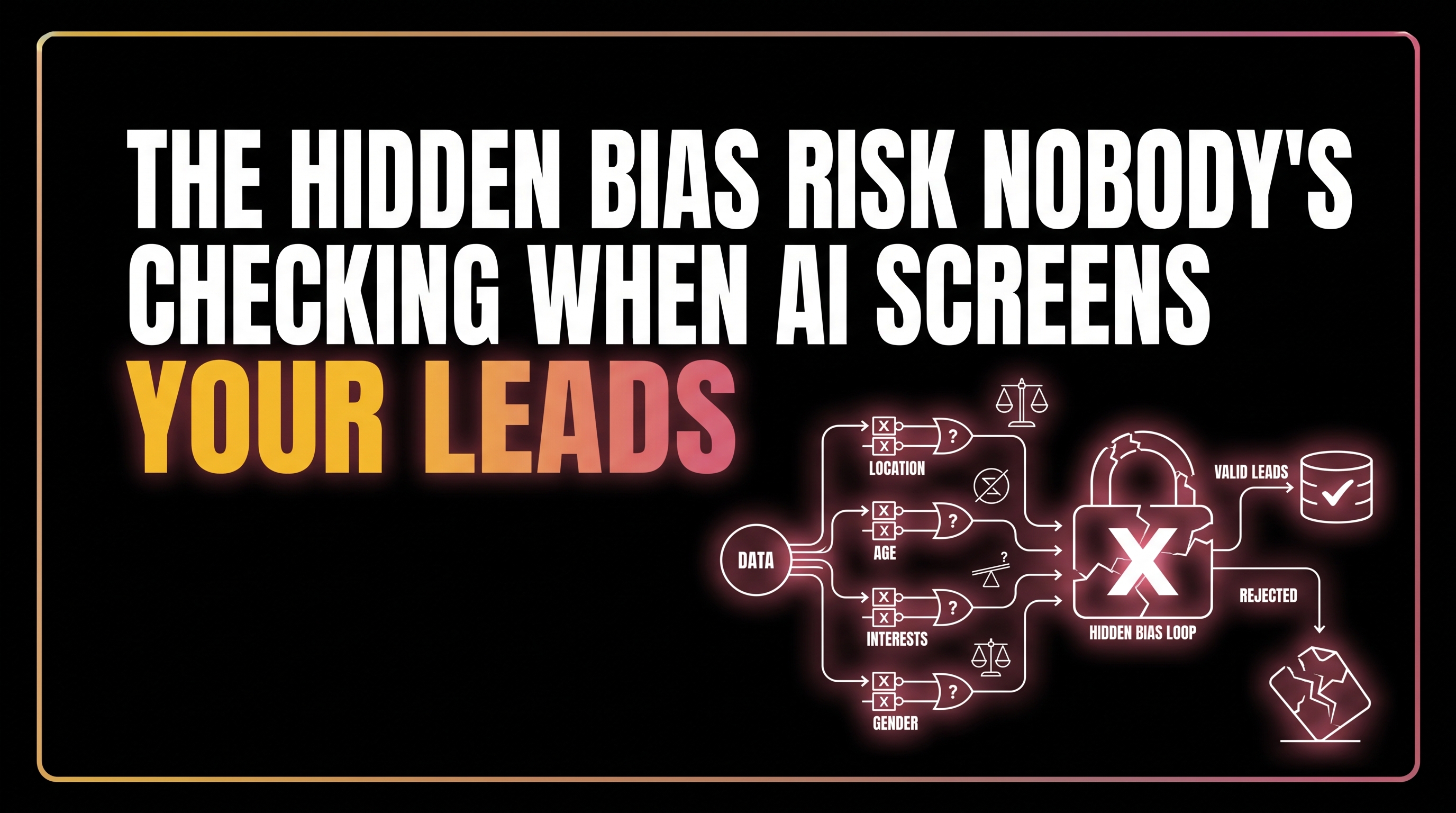
An AI qualification system can quietly develop consistent, unintended bias without anyone noticing. Here's why this happens, and what's actually worth checking.
TL;DR
An AI system qualifying inbound leads makes a judgment call on every single inquiry: worth pursuing or not. Over enough volume, that system can develop a consistent, unintended pattern in who gets prioritized and who doesn't, without anyone having deliberately built that pattern in, and without anyone necessarily noticing it's happening at all.
A qualification system doesn't need to be given explicitly biased instructions to end up producing biased outcomes. It can develop consistent patterns from the training examples it was actually given, if those examples happened to skew in some particular direction, in the phrasing patterns it associates with a "good" versus "poor" lead, or in how it weighs specific details that correlate, even unintentionally, with something the business never meant to screen on. None of this requires deliberate intent anywhere in the process to produce a real, consistent skew in outcomes.
A biased qualification system doesn't produce an obvious error message or a visible red flag, it just quietly, consistently favors certain patterns over others, at a volume and pace that makes the aggregate pattern genuinely hard to notice without deliberately looking for it. Individual decisions can each look reasonable in isolation, while the pattern across hundreds or thousands of them tells a different, more concerning story that nobody's specifically checking for.
Periodically reviewing qualification outcomes against basic demographic or geographic patterns, not to find a specific culprit, but simply to check whether any unexpected correlation exists, is a reasonable, concrete practice regardless of which system is doing the screening.
If the specific conversations and examples used to set up a qualification system happened to skew heavily toward one type of customer or one particular communication style, that's worth knowing, since it directly shapes what the system learns to treat as a "typical" or "good" inquiry.
A system that automatically qualifies or disqualifies every single inquiry, with no mechanism for flagging genuinely ambiguous or unusual cases for a person to review, removes an important check that would otherwise catch a developing pattern before it becomes deeply entrenched.
The quiet, consistent nature of this specific risk, no error message, no obvious red flag, just a gradually skewing pattern, is exactly what makes it worth deliberately checking for rather than assuming a well-built system has automatically avoided it.
This isn't a reason to avoid AI-driven qualification, it's a reason to build in the specific habit of periodically checking outcomes for unexpected patterns, the same way a business would periodically audit any other consistent, high-volume decision-making process for consistency and fairness.
If you want to understand what to actually ask about when evaluating how an AI tool handles this specific risk, that's a fair, specific question worth raising directly with any vendor. SalesAPE offers a free demo if you'd like to talk through it, no pressure either way.
Yes. Bias can emerge from the training examples a system was given, even without any deliberate intent, if those examples skewed in a particular direction or the system developed unintended associations from the specific patterns it learned from.
Because a biased system doesn't produce an obvious error or red flag, it produces a quiet, consistent pattern that only becomes visible when someone specifically reviews outcomes in aggregate, rather than looking at individual decisions in isolation.
Periodically reviewing qualification outcomes for unexpected correlations, checking whether the original training examples were genuinely representative, and making sure ambiguous edge cases get flagged for human review rather than automatically decided.
Not necessarily. It means building in a deliberate, periodic habit of checking qualification outcomes for unexpected patterns, the same way any consistent, high-volume decision-making process in a business would reasonably be audited for fairness and consistency.