The Best Cars With Advanced Car Intelligent And AI Features
Kim Taylor
•
July 6, 2026
•
12mins
Confused by the latest in-car AI terminology? Our comprehensive guide breaks down the driver-assist suites from major automakers—like Toyota Safety Sense, Ford Co-Pilot360, and more—explaining what comes standard and the cutting-edge features you'll find on top-tier trims.
The Complete Guide to In-Car AI and Driver-Assist Suites Available In The US
TL;DR
Major automakers utilize distinct trade names—like Toyota Safety Sense, Ford Co-Pilot360, and Nissan Safety Shield—to package overlapping driver-assist safety systems.
Everyday features like automatic emergency braking and lane-keeping assistance have become standardized infrastructure across the majority of mass-market car brands.
Elite trim levels are introducing hands-free highway lane changes, automated evasive steering, and active medical fallback stop protocols.
Whether you’re shopping new or pre-owned, the car buying landscape has changed dramatically in the last few years. It’s no longer about a full service history or miles to the gallon, these days even the most tech savvy shopper can feel overwhelmed.
Just when you’ve got a handle on the basic terminology and you understand what lane keeping assist is, you’ve got to understand the newer intelligent features like Proactive Driving Assist. And of course, every manufacturer has a marketing team patting themselves on the back for coming up with the most complex sounding brand name for these features.
So we’re going to look at the most popular makes of cars on America’s roads today. We’re going to break down what the manufacturers are calling their intelligent systems, what’s included as standard and what’s on the horizon and currently only available on their top trims.
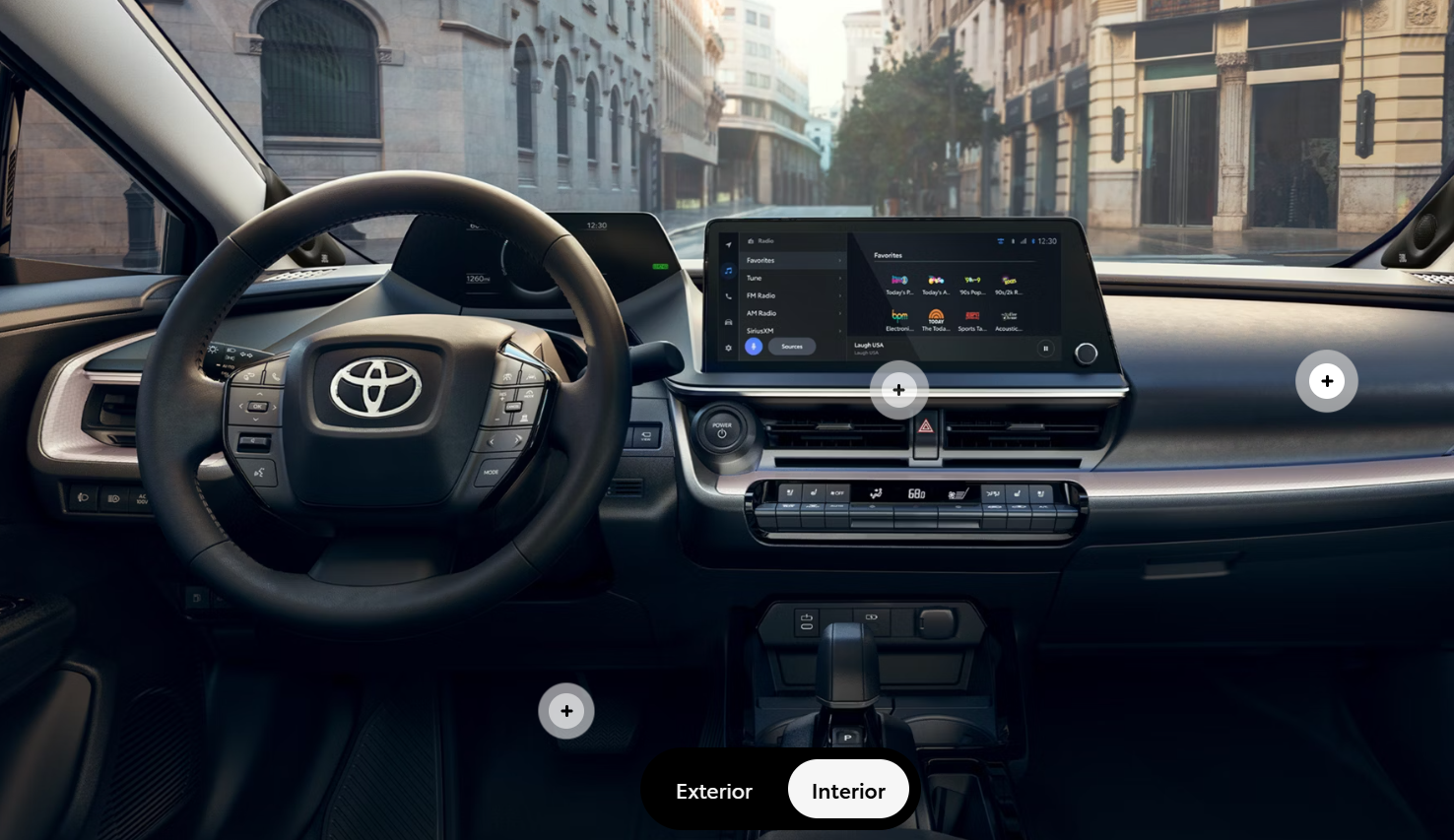
1. Toyota
Image source: Toyota
Toyota has built its massive market dominance on the philosophy of democratic technology—standardizing complex active safety features across their entire vehicle lineup rather than locking them behind expensive luxury packages or top-tier trim configurations.
The Core Suite Name:Toyota Safety Sense (TSS 3.0)
What comes as standard?Every volume model, including the commuter-favorite Corolla, the best-selling RAV4, and the midsize Camry, ships standard with TSS 3.0.
What does this mean? The hardware relies on a high-resolution forward-facing camera paired with an advanced millimeter-wave radar array which powers:
A Pre-Collision System with Pedestrian Detection
Lane Departure Alert with Steering Assist
Dynamic Radar Cruise Control
Road Sign Assist, which acts as an active digital scout, reading speed limits and traffic signs to display them directly on your gauge cluster.
Top-of-the-Range & Future Tech: On high-end models and electric platforms like the bZ4X, Toyota introduces Proactive Driving Assist (PDA). PDA operates continuously in low-risk scenarios, subtly using micro-braking and gentle steering adjustments to help you manage distances from preceding traffic or smoothly glide through sweeping highway curves. Toyota’s global R&D teams are currently investing heavily in localized predictive machine learning to help future vehicles anticipate the erratic movements of urban cyclists and pedestrians before they step off the curb.
Ford has transformed its legendary truck and SUV fleet into a highly connected digital environment, designing its electrical architecture to receive extensive over-the-air software updates that continuously optimize vehicle intelligence long after the car leaves the dealership.
The Core Suite Name:Ford Co-Pilot360
What comes as standard? Baseline configurations of the Ford F-150, Explorer, and Escape come standard with a robust safety foundation, this includes:
Pre-Collision Assist with Automatic Emergency Braking (AEB)
Blind Spot Information System (BLIS) with Cross-Traffic Alert
Structured Lane-Keeping System that monitors road markings to prevent accidental drift.
Top-of-the-Range & Future Tech: Premium trim levels unlock Ford BlueCruise, an advanced Level 2 hands-free highway piloting system operating across extensive pre-mapped, divided North American interstates. The newest software versions feature Automatic Lane Change and Lane Repositioning.
What does this mean? If you get stuck behind a slow-moving commercial truck, BlueCruise will automatically check adjacent lanes, signal, and execute a hands-free passing maneuver. It also subtly shifts the vehicle away from large semi-trucks within your own lane to provide extra psychological comfort. Ford is currently working to expand this hands-free geofence onto complex secondary highways.
General Motors leverages its massive manufacturing scale to deploy highly sophisticated sensing software across its volume brands, prioritizing structural stability for long-distance towing alongside refined executive commuting assistance.
The Core Suite Name:Chevy Safety Assist
What comes as standard? Standard Chevrolet models, including the Equinox, Tahoe, and Silverado, package a six-feature safety suite directly into their base MSRP, this includes:
Forward Collision Alert
Automatic Emergency Braking
Front Pedestrian Braking
Lane Keep Assist with Lane Departure Warning
Following Distance Indicator
IntelliBeam automatic high-intensity headlights.
Top-of-the-Range & Future Tech: The absolute pinnacle of GM's automation deployment is Super Cruise, available on luxury trims like the High Country or Premier. Super Cruise stands out as one of the industry's premier hands-free systems due to its specialized Trailering Logic.
What does this mean? When you hook up a heavy boat or a travel trailer, the system automatically recalibrates its acceleration parameters, braking distances, and hands-free lane-centering math to perfectly offset the added weight and aerodynamic drag. GM's engineering labs are currently focused on deep cloud-infrastructure integration, linking vehicle sensor feeds to build real-time metropolitan hazard maps.
Honda focuses heavily on predictable, ultra-smooth mechanical inputs, engineering its driver-assist software to mirror the careful, gradual braking and steering patterns of an attentive human driver to prevent cabin jerky motion.
The Core Suite Name:Honda Sensing
What comes as standard? From the base Civic and Accord to the family-sized Pilot and CR-V, the full Honda Sensing suite is non-negotiable standard equipment, it includes:
Collision Mitigation Braking System (CMBS)
Road Departure Mitigation (RDM)
Lane Keeping Assist (LKAS)
Adaptive Cruise Control (ACC) with Low-Speed Follow, which can bring the car to a dead stop in heavy traffic and resume acceleration automatically.
Traffic Jam Assist, which blends lane-centering logic with low-speed adaptive cruise to handle the grinding fatigue of stop-and-go morning commutes.
In international markets and elite premium trims, Honda is deploying Honda Sensing 360, which adds front omnidirectional radar sensors. This hardware expansion enables Front Cross Traffic Warning (detecting blind oncoming traffic at hidden intersections) and Lane Change Collision Mitigation, which actively steers the vehicle back into its lane if you attempt to merge when a vehicle is approaching rapidly from your rear blind spot.
Hyundai has established itself as an aggressive technology leader, packing its mainstream models with advanced digital features that are typically reserved for high-end European luxury imports.
The Core Suite Name:Hyundai SmartSense
What comes as standard? Baseline configurations for the Elantra, Tucson, and Santa Fe ship from the factory floor with:
Forward Collision-Avoidance Assist (FCA) featuring Pedestrian and Cyclist Detection
Top-of-the-Range & Future Tech: On top-tier trims and their cutting-edge Ioniq electric vehicle lineup, Hyundai deploys Highway Driving Assist II (HDA II) and Junction Turning Assist.
What does this mean? When making a left-hand turn at a busy intersection, Junction Turning Assist monitors oncoming traffic and automatically jams on the brakes if you accidentally cut across the path of an approaching vehicle. Top trims also feature the Blind-Spot View Monitor (BVM). The second you flick your turn signal, the vehicle projects a live, high-resolution video stream of your physical blind spot directly onto your digital instrument dashboard, completely eliminating visual guesswork.
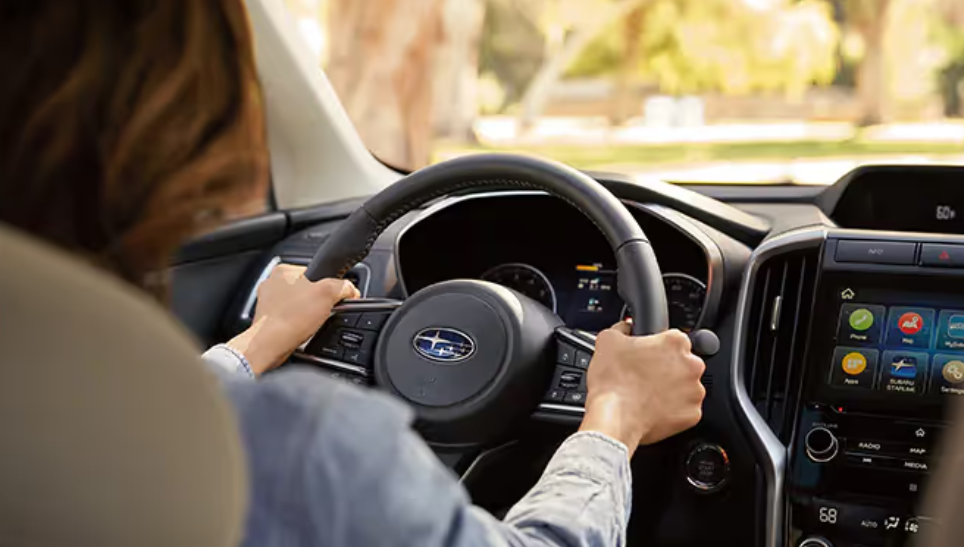
Subaru approaches automotive intelligence from a unique engineering angle. Rather than hiding radar units inside plastic bumpers, they rely on an optical camera system mounted safely inside the cabin glass to deliver highly accurate spatial analysis.
The Core Suite Name:Subaru EyeSight Driver Assist Technology
What comes as standard? Standard on all volume models like the Outback, Forester, Crosstrek, and Ascent, the EyeSight suite utilizes a dual-camera stereo vision system mounted near the rearview mirror. This hardware acts as a digital set of human eyes, constantly scanning for brake lights, lane markers, pedestrians, and hazards so it provides:
Pre-Collision Braking
Pre-Collision Throttle Management (cutting engine power if you accidentally select 'Drive' instead of 'Reverse' when facing a wall)
Lane Departure and Sway Warning,
Advanced Adaptive Cruise Control with Lane Centering.
Top-of-the-Range & Future Tech: The newest premium iterations of EyeSight introduce a third, Wide-Angle Mono Camera paired with localized radar units to drastically improve low-visibility and all-weather performance. Elite trims also offer Emergency Stop Assist with Safe Lane Selection.
What does this mean? If the vehicle's interior facial-recognition camera detects that the driver has suffered a severe medical emergency or becomes completely unresponsive while adaptive cruise is active, the system doesn't just halt in the middle of the road. It will actively activate its hazard lamps, look for a clear path to the highway shoulder, steer itself to a safe stop out of traffic, unlock the doors, and use its connected telemetry to call emergency services.
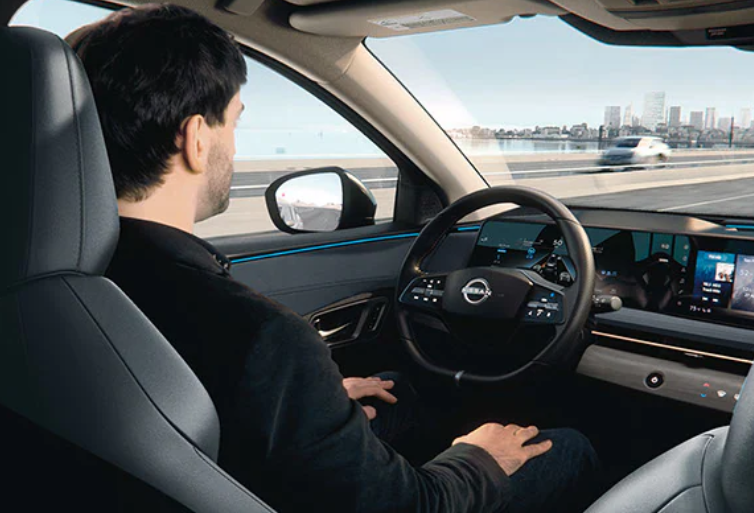
Nissan prioritizes relieving the daily physical and psychological tension of long-range commuting, engineering its systems to act as a highly responsive safety net that simplifies tight parking maneuvers and heavy highway traffic.
The Core Suite Name:Nissan Safety Shield 360 / ProPILOT Assist
What comes as standard: The baseline Safety Shield 360 suite is included across the Rogue, Altima, and Sentra lines, featuring
Automatic Emergency Braking with Pedestrian Detection
Rear Automatic Braking (which stops the car if you are about to back into a hidden obstacle or post)
Lane Departure Warning
Blind Spot Warning
Rear Cross Traffic Alert
High Beam Assist.
Top-of-the-Range & Future Tech: Mid-to-high tier models unlock ProPILOT Assist with Navi-link. This system links your adaptive cruise control directly to the vehicle's onboard navigation mapping database.
What does this mean? As you approach a sharp highway curve, a major exit ramp, or an upcoming interchange, ProPILOT automatically slows the vehicle down to a comfortable, physics-appropriate speed before you even turn the wheel, resuming your target speed once the road straightens out. Their premium R&D division is scaling ProPILOT 2.0, which introduces hands-off single-lane highway cruising alongside automated lane-change prompts.
The 2026 Comprehensive Automotive Intelligence Matrix
To provide a clear, side-by-side comparison across the automotive landscape, this comprehensive matrix categorizes standard baseline safety features against the innovative, cutting-edge AI breakthroughs defining the modern era of mobility.
Manufacturer & Suite
Baseline Intelligent Features (Standard Across Volume Trims)
Advanced & Innovative AI Capabilities (Available on Top Trims / Upcoming R&D)
Toyota
• Pre-Collision Braking
Proactive Driving Assist (PDA): Continuous, low-level braking and steering adjustments that automatically manage cornering speeds and pedestrian safety buffers.
• Dynamic Radar Cruise Control
(Toyota Safety Sense 3.0)
• Lane Departure Steering Assist
• Road Sign Assist
Ford
• Automatic Emergency Braking (AEB)
BlueCruise: Hands-free highway piloting featuring Automatic Lane Change and Lane Repositioning to smoothly pass slower traffic.
• Blind Spot Information System (BLIS)
(Ford Co-Pilot360)
• Cross-Traffic Alert
• Lane-Keeping System
Chevrolet
• Front Pedestrian Braking
Super Cruise with Trailering: Hands-free highway pilot that actively recalibrates acceleration and steering physics to compensate for heavy towed loads.
• Forward Collision Alert
(Chevy Safety Assist)
• Lane Keep Assist
• Following Distance Indicator
Honda
• Collision Mitigation Braking (CMBS)
Honda Sensing 360: Omnidirectional intersection monitoring with Front Cross Traffic Warning and active lane-change collision mitigation steering.
• Road Departure Mitigation (RDM)
(Honda Sensing)
• Lane Keeping Assist (LKAS)
• ACC with Low-Speed Follow
Hyundai
• Forward Collision Avoidance (FCA)
Highway Driving Assist II & BVM: Active junction turning protection paired with real-time blind spot video feeds projected onto the digital dashboard.
• Blind-Spot Collision Avoidance (BCA)
(Hyundai SmartSense)
• Rear Cross-Traffic Assist (RCCA)
• Lane Following Assist (LFA)
Subaru
• Optical Stereo Camera Pre-Collision Braking
Emergency Stop Assist: Advanced medical fallback protocol that automatically steers an incapacitated driver to a safe stop on the highway shoulder.
• Pre-Collision Throttle Management
(EyeSight Driver Assist)
• Lane Centering Assist
• Adaptive Cruise Control
Nissan
• Rear Automatic Braking
ProPILOT Assist with Navi-link: Predictive speed management that utilizes mapping topology databases to slow the vehicle automatically before highway curves.
• Automatic Emergency Braking
(Safety Shield 360)
• Blind Spot Warning
• Rear Cross Traffic Alert
Tesla
• Traffic-Aware Cruise Control
Full Self-Driving Capability: Vision-only neural network processing designed to navigate complex city streets, roundabouts, and multi-lane intersections unassisted.
• Base Autosteer Lane Centering
(Autopilot / FSD)
• Side Collision Warning
Frequently Asked Questions
What happens if an automated safety feature malfunctions or causes an incident?
From a legal standpoint under current US transport laws, the driver remains fully responsible for the vehicle's safe operation when utilizing any Level 2 automated system (which includes all standard suites like ProPILOT, BlueCruise, and Autopilot). Because these systems require constant human supervision, you are legally expected to override the technology if it makes an error. The only exception occurs when a vehicle is operating in an officially certified Level 3 autonomous mode, at which point the civil liability for a system failure shifts directly to the automotive manufacturer's software provider.
How do modern car cameras and radar sensors manage to "see" during heavy rain, snow, or dense fog?
Automakers use a strategy called sensor fusion to maintain accurate situational awareness in poor weather conditions. While heavy rain or blinding snow can obscure optical cameras (similar to how they block human eyes), radar sensors utilize longer electromagnetic wavelengths that pass right through rain droplets and fog particles to measure distances and tracking velocities accurately. By combining optical camera data with radar feeds, the vehicle's central processor builds a reliable digital model of the surrounding traffic, even when the human driver is struggling to see the road markings.
Why do some hands-free systems allow you to take your hands off the wheel while others require constant touching?
This distinction comes down to how individual manufacturers track driver attention and manage risk. Systems that allow true hands-free operation, such as Ford BlueCruise and GM Super Cruise, utilize specialized infrared driver-monitoring cameras embedded on the steering column to track your eye movement and head position. As long as the camera verifies your eyes are focused on the road, you do not need to touch the wheel. Systems that require you to keep your hands on the wheel typically lack these advanced facial-tracking cameras, relying instead on torque sensors inside the steering rack to confirm that you are physically alert and ready to react.
.svg)