.svg)
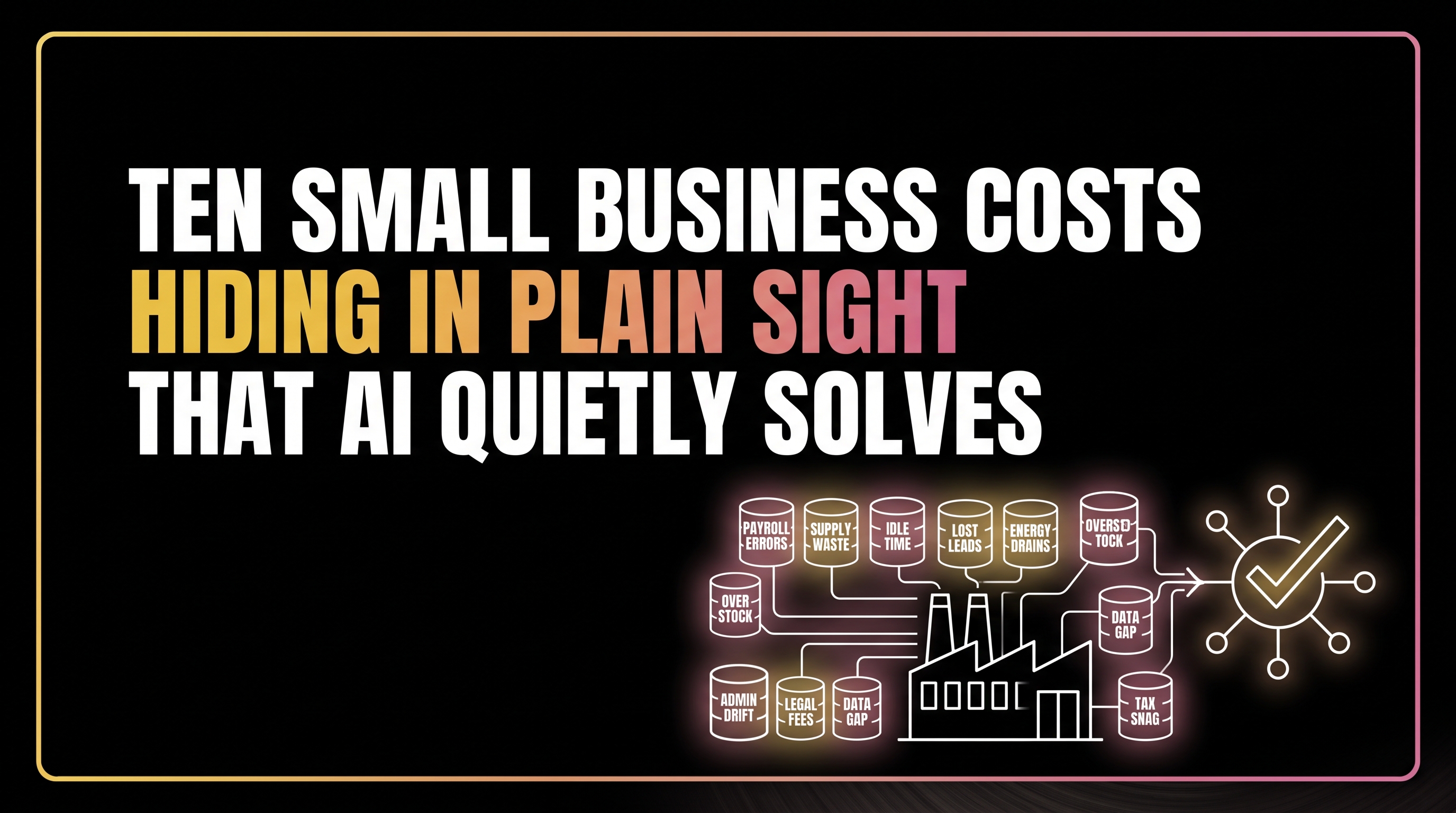
Some of the most expensive costs in a small business aren't on any line item. Here are ten, and why cost efficiency is where AI delivers first.
TL;DR
A lot of the real cost of running a small business never shows up as a clean number anywhere. It's a missed call that would have been a sale, an hour spent on data entry that could have gone toward something billable, a lead that went cold because nobody got back to it fast enough. Here are ten specific, common examples, and why AI's near-term value tends to show up exactly in this category.
According to Morgan Stanley Research, 80-89% of AI's expected near-term business benefit comes from cost efficiency rather than revenue growth. That's a useful frame for the list below: most of these ten costs aren't about generating dramatic new revenue, they're about quietly stopping money and time from leaking out of the business in ways that were never being tracked properly in the first place.
None of these show up as a clean, obvious expense on a balance sheet, which is exactly why they tend to persist for years without anyone deciding to fix them, they're not absent, they're just invisible to the normal way a business tracks its costs.
Recognizing these as real, addressable costs, rather than just an unavoidable part of running a business, is usually the first step. Most of them share a common thread: they're the result of a gap between when something needs attention and when a person actually gets to it, which is exactly the kind of gap automated, always-available response tends to close.
If a few of these sound familiar, it's worth seeing what closing that gap actually looks like in practice. SalesAPE offers a free demo if you'd like to take a look, no pressure either way.
According to Morgan Stanley Research, 80-89% of AI's expected near-term benefit comes from cost efficiency rather than revenue growth, which tends to show up as quietly reduced wasted time and missed opportunities rather than dramatic new sales.
Missed calls or messages outside business hours are a common one. They never appear as a line item, but each one represents a real, if invisible, lost opportunity.
Because they don't show up as a clean, obvious expense the way a bill or an invoice does. They're gaps in time and attention rather than direct charges, which makes them easy to overlook even though they add up to real money.
Not necessarily. Many of these costs stem from gaps between when something needs a response and when a person is actually available to give it, a gap that's often more efficiently closed with better always-on processes than with additional headcount alone.