.svg)
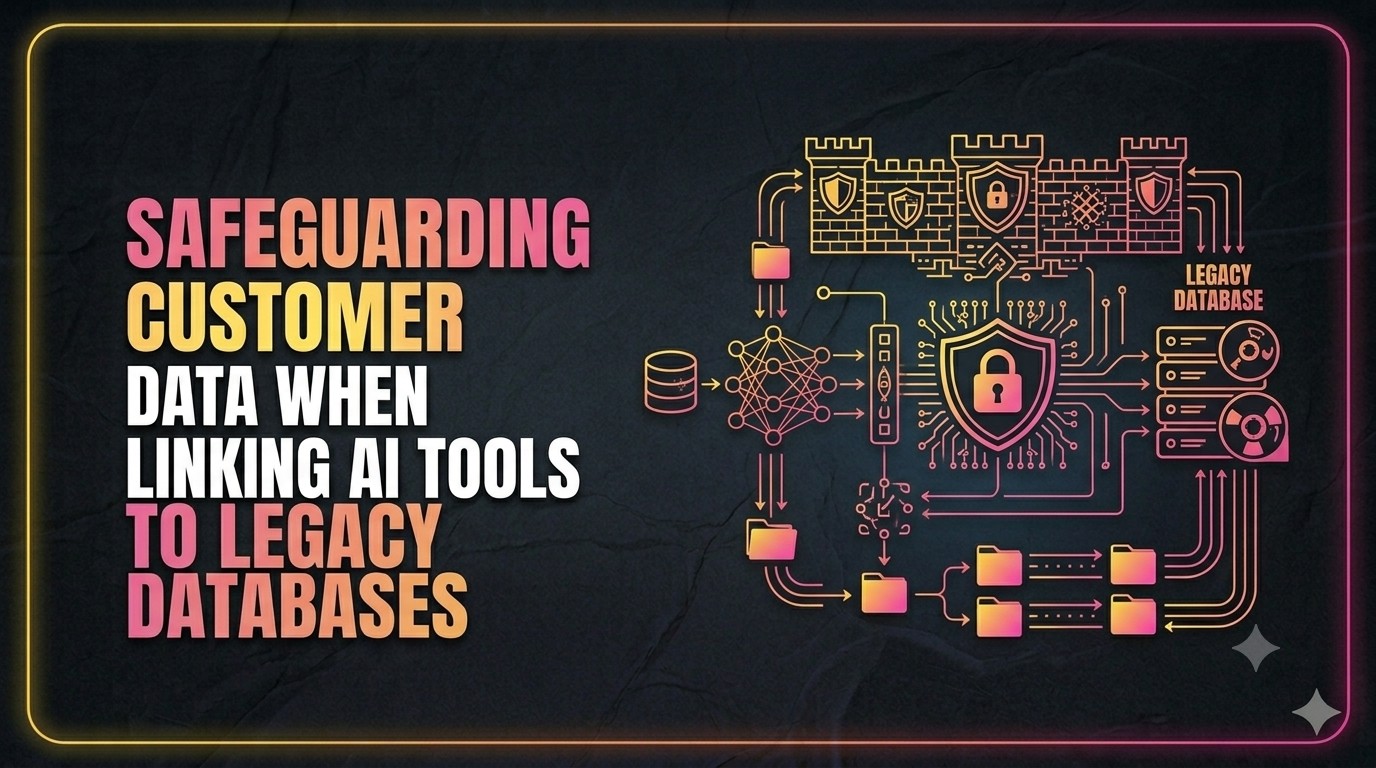
Learn how trade merchants safeguard customer data when linking AI tools to legacy databases using isolated, tokenized API gateways.
For established trade merchants, building materials distributors, and commercial equipment suppliers, customer databases are the lifeblood of the enterprise. Decades of proprietary pricing structures, contractor credit terms, account contacts, and transaction histories reside inside legacy Customer Relationship Management (CRM) databases and Enterprise Resource Planning (ERP) systems.
As digital automation and conversational AI tools become standard across modern trade distribution, executive teams face an acute tension: how do you deploy fast, automated customer intake without opening your most valuable data assets to corruption or unauthorized exposure? The fear of a software tool leaking confidential client data to competitors or accidentally overwriting master customer records remains a primary barrier holding traditional operators back.
Understanding how to construct clean, non-technical data security boundaries allows trade executives to modernize customer service workflows while keeping master databases completely protected.
Granting external applications direct database privileges is one of the highest operational risks an enterprise IT infrastructure can take. Modern cybersecurity standards emphasize that credential exposure and third-party vendor entry points consistently rank among the most costly vectors for enterprise data breaches. When legacy trade systems are connected to cloud tools via unrestricted channels, severe technical risks emerge.
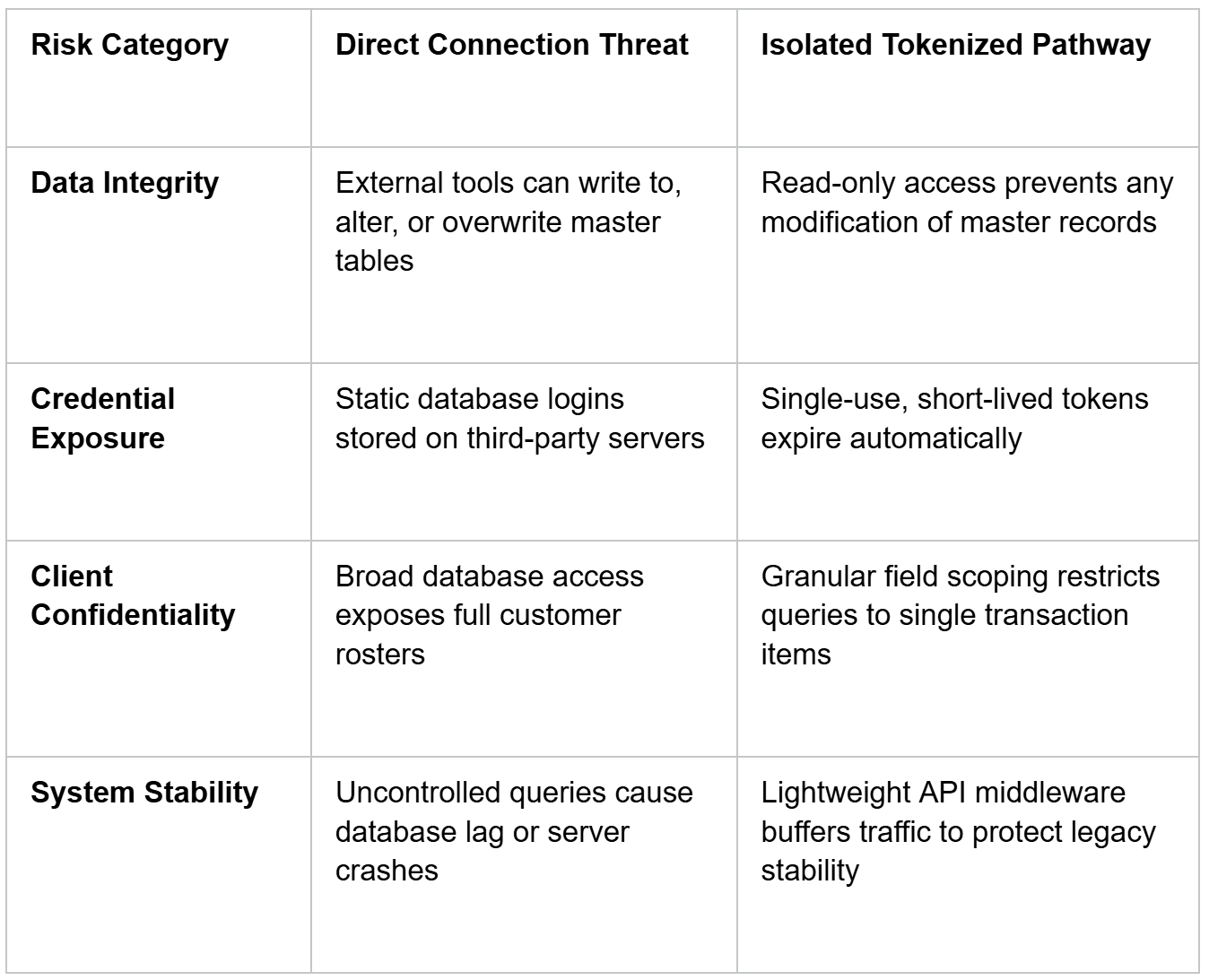
When automation tools hold overly broad write access, simple software glitches or misconfigured integration parameters can wipe out custom pricing tiers, mix up delivery addresses, or overwrite historical invoice data. For traditional trade operators who rely on precise, multi-tiered contractor discounts, a single database write error can disrupt key customer relationships and damage operational trust.
Protecting enterprise data integrity does not require abandoning automation altogether. Instead, modern technical architecture decouples the conversational intake layer from the master database using an isolated, token-authenticated bridge.
[ Inbound Customer Inquiry ]
│
▼
┌─────────────────────────┐
│ Conversational AI Tool │ ──( Requests verification )──► ┌──────────────────────────┐
└─────────────────────────┘ │ Scoped API Gateway │
▲ │ (Token Authentication) │
│ └──────────────────────────┘
│ │
└───────────( Scoped data payload returned )───────────────┘
│
( Validates & queries )
│
▼
┌──────────────────────────┐
│ Master Legacy CRM / ERP │
└──────────────────────────┘
Rather than giving an external application free reign via master admin logins, IT directors deploy a scoped middleware interface that governs every data transaction through three protective layers:
The conversational assistant is restricted to read-only queries for specific operational fields—such as SKU availability, unit pricing, or order status. It is physically blocked from executing write, delete, or bulk-export commands on the master database.
Every request between the AI interface and the legacy database utilizes short-lived, encrypted API tokens rather than static credentials. Once the specific transaction query resolves, the security token expires immediately.
The API bridge enforces strict field boundaries, ensuring the AI assistant can only query data relevant to the active conversation. Master customer lists, full account rosters, and financial reporting tables remain entirely invisible to the external layer.
Implementing an isolated data architecture gives enterprise leaders the best of both worlds: rapid, automated customer response times and absolute data governance.
When contractors reach out via text, email, or web messaging, an AI assistant can safely look up custom account terms and verify stock levels in real time without ever accessing master administrative configurations. Routine inquiries are handled in seconds, while complex orders are pre-qualified and handed off securely to senior sales managers for final sign-off.
Safeguarding customer rosters behind unidirectional API gateways ensures your business satisfies compliance mandates, protects proprietary trade intelligence, and automates customer intake with total peace of mind.
Ready to deploy conversational automation while keeping your legacy CRM data completely protected? You can explore a live view of our private platform through our online scheduling system or reach out directly to our integration team at hello@salesape.ai to review our isolated architecture protocols.
No. By connecting through a read-only API gateway, the conversational tool has zero write or delete permissions on your core database tables, making it impossible to alter master records.
The API bridge uses field-level scoping, meaning the system can only query individual data points required for a specific transaction—it cannot execute bulk data exports or read master client lists.
Isolated middleware can connect to legacy databases through secure on-premise connectors, local API wrappers, or read-only database replicas, allowing old systems to interface safely with modern tools.