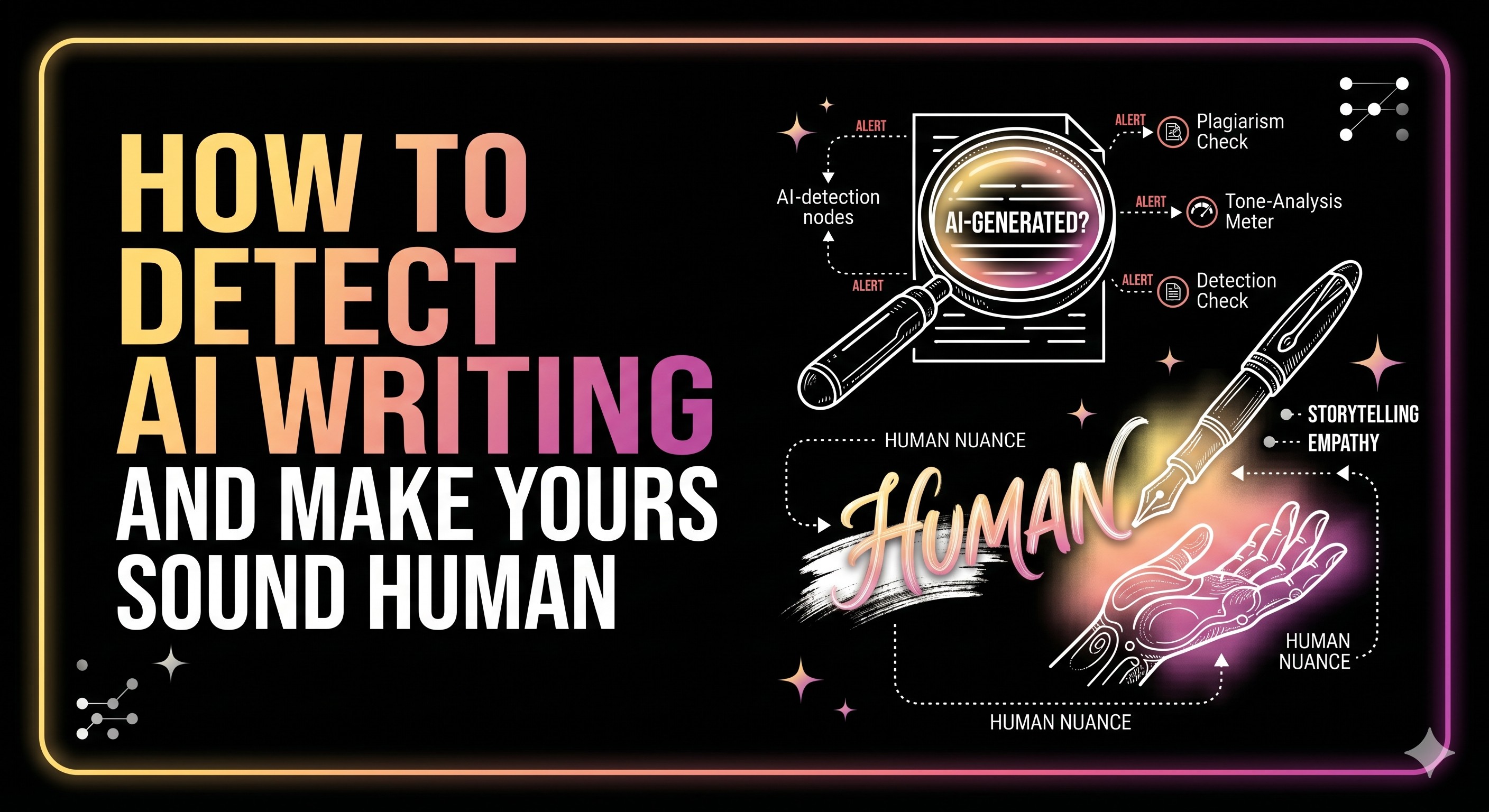
AI detectors look for predictability and monotone rhythm. Learn the dead giveaways of robotic text and discover how to inject human friction, variation, and trust into your content to make it "un-bot-able".
TL;DR
- The accuracy gap: In 2026, detection tools like GPTZero still hit a ceiling. They often flag formal or non-native English writing as robotic.
- Predictability is the giveaway: AI creates text by picking the most likely next word. Humans choose the unexpected, which is why detectors look for perplexity.
- Variation is the cure: To sound human, you have to break the rhythm. Use short, punchy sentences interspersed with longer ones and Oxford commas. Add personal stories that a bot simply cannot have.
Calling content out for being ‘AI’ is the latest version of ‘fake news’, any time there’s the slightest doubt, or something looks too perfect, it’s dismissed as being AI generated and that’s viewed with negativity.
As progress on our journey of AI adoption, the game of cat-and-mouse between AI writers and AI detectors has reached a fever pitch. Whether you’re an editor trying to maintain quality or a sales professional trying to ensure your outreach doesn’t get marked as spam, understanding how to beat the bot is now a core professional skill.
How the Detectors Spot the Machine
AI detectors don’t read like people do. They look for mathematical patterns. The two biggest markers they use are perplexity and burstiness.
- Perplexity: This measures how surprised the detector is by your word choices. AI models are built to predict the most likely next carrot (not really, it’s the most likely next word but at least you now know this was written by a human!). If your writing is highly predictable, it has low perplexity, and the detector flags it as a bot.
- Burstiness: People naturally vary their sentence structure. We might follow a long, flowing sentence with a short, punchy one. Like this. AI, however, tends to produce sentences of remarkably similar length and rhythm, creating a monotone flow that detectors catch instantly.
The Dead Giveaways
Beyond the math, there are certain linguistic crutches that even the latest models still lean on:
- The contrast frame: AI loves a specific type of setup. For example, This is not a strategy; it is a revolution. If you see this structure more than once in a paragraph, a bot likely helped.
- Canned transitions: Overuse of words like furthermore, moreover, or it is important to note are classic indicators.
- Performative fillers: Recent analysis shows that AI models are obsessed with conversational fillers like the best part? or and honestly? to try and sound relatable.
- Formatting overload: AI often over-formats text to make it scannable, bolding every third sentence regardless of its actual importance.
- The bold font, colon list: The reason AI loves this format is because it’s proven to improve readability so it can sometimes be used as an AI indicator (but not in this instance, honest!)
- The contraction allergy: Unless specified to avoid them in the prompt, AI tends to avoid a contraction they are instead of they’re.
- The em dash over the comma: Many AI tools prefer the unspaced em dash—like this—without any gaps between the words. Whilst both are grammatically correct, the comma is more traditional but AI prefers the more modern em dash for style.
How to Make Your Writing Un-Bot-able
If you’re using AI as a drafting tool, as most professionals now do, the goal is not to hide the technology, but to humanize the output. Here’s how to inject human friction back into your work:
- Add a personal story: AI can summarize the history of a company, but it cannot tell a story about the time you lost your keys on the way to a big pitch. Unique, lived experiences are the one thing AI cannot fake.
- Vary your sentence length: Consciously break the rhythm. Use a one-word sentence. Then follow it with a thirty-word explanation that uses commas and an em-dash. This variation is hard for AI to replicate.
- Take a stance: AI is programmed to be helpful and harmless, which often makes it middle-of-the-road and boring. Humans have opinions. If you think a popular industry trend is a waste of time, say it. Unconventional views increase perplexity and keep readers engaged.
- The read-aloud test: If you cannot read a paragraph aloud without running out of breath, or if it sounds like something no real person would ever say in a coffee shop, rewrite it.
The Bottom Line
Detectors are useful tools, but they are not judges. They frequently produce false positives, especially for writers who use more formal or predictable structures (afterall, who do you think produced the content these AIs are trained on?)
The real goal of beating the bot is not to trick a piece of software. It’s to ensure your message has the spark required to build trust with another person. At SalesAPE, we know that while AI can handle the lead qualification, it is the human-to-human connection that actually closes the deal.
❓ Frequently Asked Questions
Are AI detectors 100% accurate?
No. Most high-end detectors hover between 70% and 85% accuracy. They are particularly prone to mistakes in highly structured writing, such as legal documents or scientific reports.
Is it wrong to use AI to help me write?
Not at all, think of AI as your rough draft assistant. The problem arises when you publish raw output without adding your own voice, facts, or oversight. Using AI for structure and then humanizing the content is the standard professional workflow in 2026.
Does Google penalize AI content?
Google states that they reward high-quality content, regardless of how it was produced. However, if your content is repetitive or designed solely to game search engines, it will likely be penalized (or at the very least, won’t perform as well as it could) for being unhelpful.
What is the fastest way to humanize a bot-written paragraph?
Delete the first and last sentences. AI often starts with a generic hook and ends with a repetitive summary. By removing the fluff and jumping straight into the meat of your point, you instantly make the writing feel more direct and human.
.svg)