.svg)
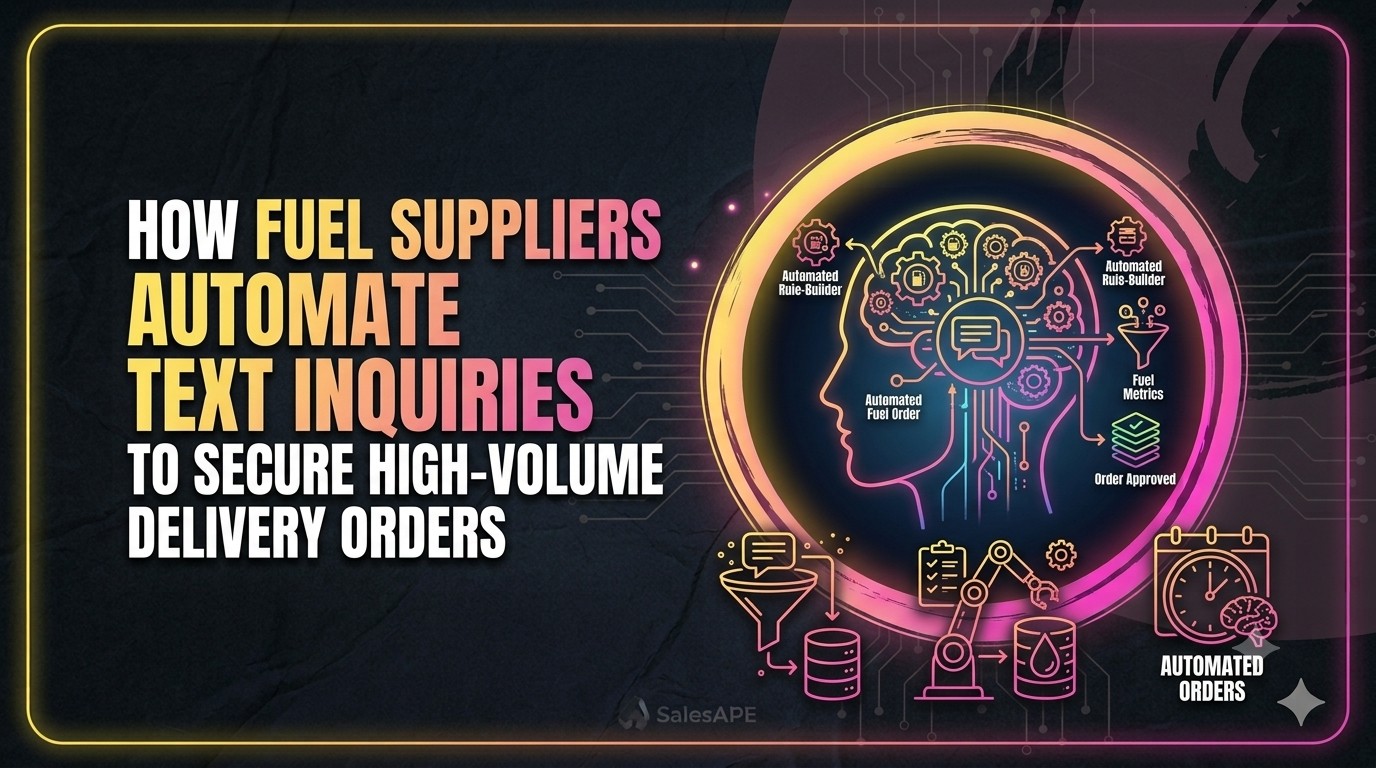
Learn how fuel suppliers automate text inquiries to qualify tank volumes and delivery locations instantly, securing high-margin commercial orders.
For fuel distributors and commercial petroleum suppliers, winning recurring delivery accounts is a high-volume, margin-sensitive business. Whether supplying off-road diesel to an active construction site, topping off a commercial logistics fleet, or dispatching emergency heating fuel during cold snaps, commercial buyers operate under strict operational deadlines.
When a fleet dispatcher or job-site superintendent needs fuel, they do not want to wait hours for a sales desk callback. They want immediate confirmation on three basic parameters:
Yet, many independent fuel suppliers still rely on traditional web forms or unmonitored dispatch phone lines. When an inbound inquiry sits unacknowledged for even fifteen minutes, the buyer simply clicks the next supplier on the search results page. Automating initial text-based intake ensures fuel suppliers capture high-margin commercial orders before competitors even read the initial inquiry.
Commercial fuel procurement relies on immediate logistical feasibility. According to supply chain logistics studies from the Freight Waves Fleet Procurement Analysis, over 75% of commercial fleet managers and site directors cite fast delivery confirmation as the primary deciding factor when choosing between regional fuel distributors. Furthermore, research from the National Association of Convenience Stores (NACS) Fuels Report demonstrates that commercial petroleum buyers increasingly favor digital-first text and messaging channels for quick reorders over traditional phone calls.
When fuel suppliers rely on manual email or phone intake, several operational friction points slow down dispatch execution:
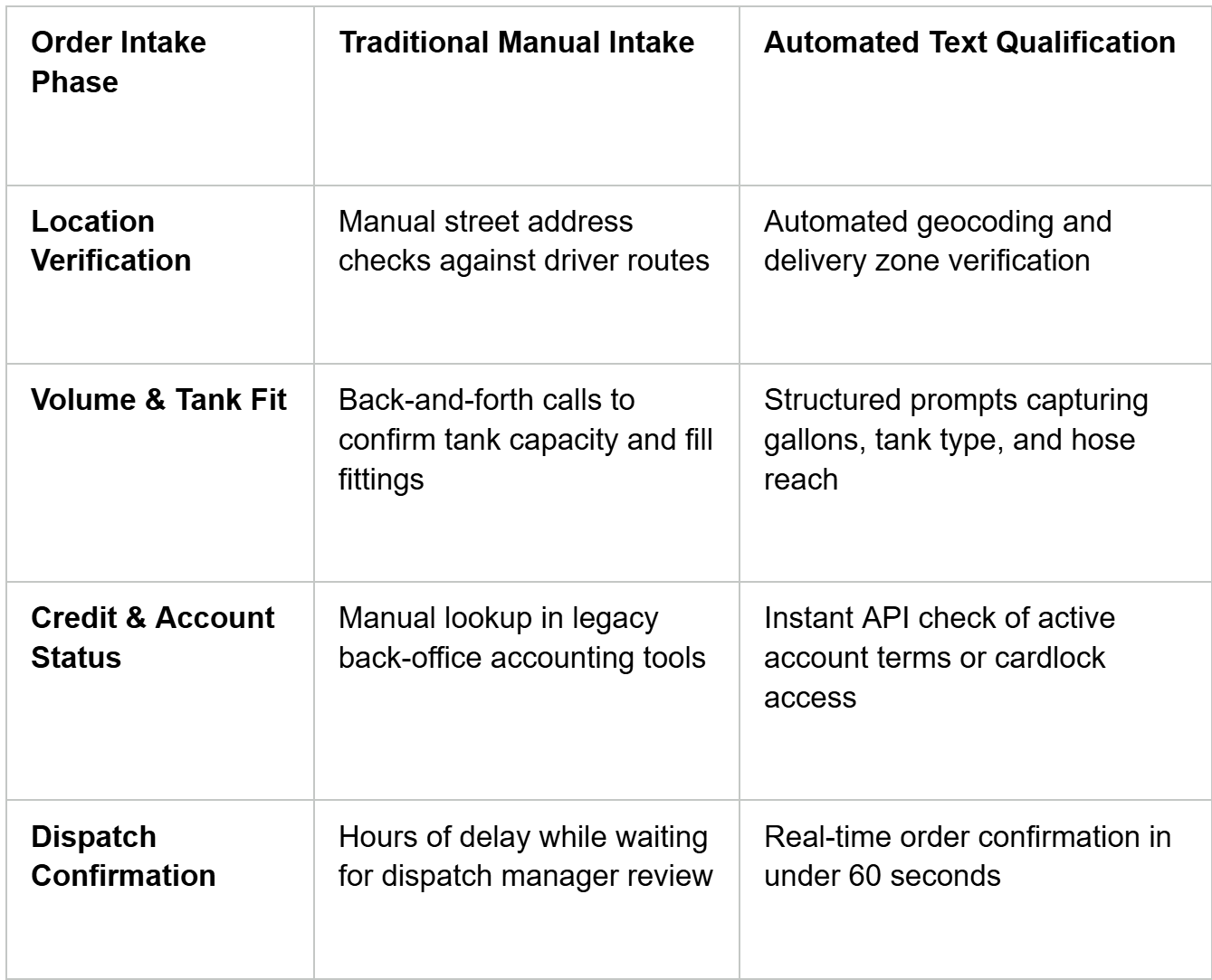
If your sales desk takes half a day to confirm whether a tank wagon or transport truck can reach a new job site, you are routinely surrendering high-volume orders to faster regional operators.
Capturing commercial fuel orders over SMS and WhatsApp requires a structured, conversational screening process. By establishing automated qualification fields, fuel suppliers can collect essential logistical data instantly, ensuring that only viable, pre-qualified orders reach the dispatch desk.
[ Inbound Text Inquiry ]
│
▼
┌──────────────────────────────────────────────────────────┐
│ Automated Screening Field 1: Fuel Grade │
│ (Off-Road Diesel, On-Road Diesel, Gasoline, Heating Oil) │
└──────────────────────────────────────────────────────────┘
│
▼
┌──────────────────────────────────────────────────────────┐
│ Automated Screening Field 2: Volume & Tank Setup │
│ (Est. Gallons, Skid Tank vs. Equipment Fill, Hose Reach) │
└──────────────────────────────────────────────────────────┘
│
▼
┌──────────────────────────────────────────────────────────┐
│ Automated Screening Field 3: Delivery Location │
│ (Zip Code / GPS Pin / Job-Site Access Restrictions) │
└──────────────────────────────────────────────────────────┘
│
▼
┌──────────────────────────────────────────────────────────┐
│ Instant Route Validation & Pre-Qualified Order Creation │
└──────────────────────────────────────────────────────────┘
An effective text qualification loop captures three critical data points before handing the order off to dispatch:
The system prompts the user to select the required product—such as ultra-low sulfur off-road diesel (ULSD), premium winterized diesel with anti-gel additives, or commercial heating oil—ensuring the right truck compartment is assigned.
Automated fields confirm estimated gallon needs and drop-off mechanics. The interface verifies whether the delivery requires filling an on-site skid tank, direct-to-equipment fueling (wet-hosing), or specialized pump fittings.
The buyer provides a delivery address or pin location. The system instantly screens for route access restrictions, such as narrow access roads, gate codes, or bridge weight limits, before confirming dispatch feasibility.
Implementing automated text qualification allows fuel suppliers to scale commercial accounts without overwhelming dispatch staff with repetitive data-entry calls.
When a site manager texts a fuel request at 6:00 AM, the system instantly validates location and volume, checks route availability, and generates a pre-filled delivery ticket. Routine reorders are processed in seconds, while complex, multi-site fuel contracts are routed immediately to senior account managers with all site details attached.
Eliminating intake delays protects your delivery margins, keeps your transport fleet fully utilized, and ensures commercial fleet managers view your business as their most reliable fuel partner.
Ready to automate your text intake and secure high-volume fuel delivery orders? You can explore a live view of our private platform through our online scheduling system or reach out directly to our integration team at hello@salesape.ai to discuss your dispatch intake workflows.
Yes. Automated screening fields specifically ask whether fuel should be dropped into a central storage tank or pumped directly into individual fleet vehicles or construction machinery.
Custom geofencing and delivery zone rules automatically screen incoming location data against your active delivery radiuses, instantly notifying out-of-area buyers while keeping your dispatch queue clear.
Yes. The system can cross-reference incoming mobile phone numbers against your master ERP or billing database, allowing registered commercial buyers to reorder via simple text commands while maintaining custom contract pricing.