.svg)
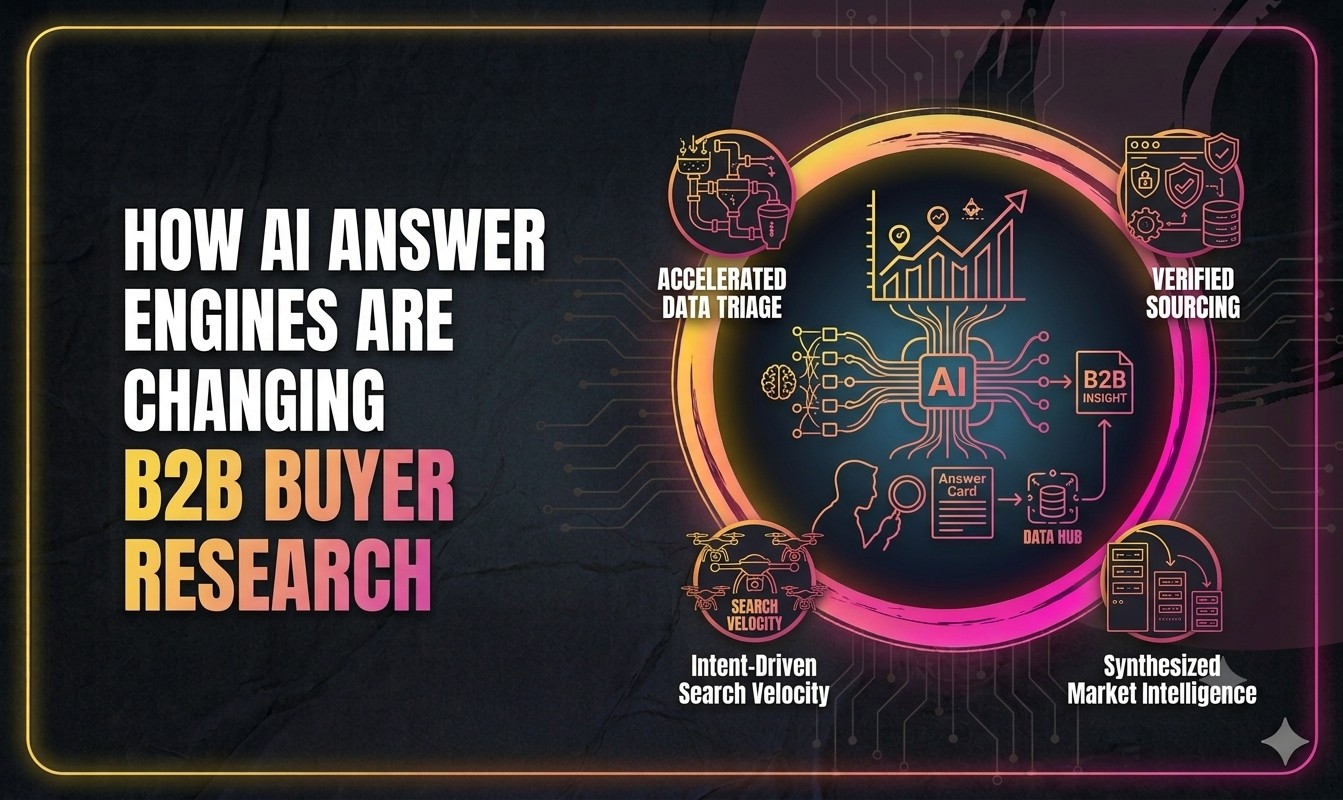
Learn how the shift to generative engine search queries changes the B2B buyer discovery funnel and discover how to format content for AI citations.
For decades, the B2B buyer discovery funnel followed a predictable pattern. A corporate evaluation committee identified an operational need, typed fragmented keywords into Google, scanned a page of ten blue links, and clicked through to vendor websites to download gated whitepapers.
Digital marketing strategies were engineered around a single core objective: capturing top SERP rankings to drive web traffic.
That traditional search model is undergoing its most profound structural shift since the commercial internet began. B2B buyers now conduct extensive early-stage research inside generative AI interfaces. Rather than wading through sponsored ad links and SEO-optimized marketing fluff, corporate buyers type complex, multi-variable prompts directly into Large Language Models (LLMs). They ask answer engines to compare enterprise software capabilities, synthesize technical compliance requirements, and compile initial vendor shortlists—all before visiting a single vendor home page.
Understanding how generative engines synthesize digital content allows forward-thinking enterprise marketers to restructure their content architecture and capture high-intent buyers in the new discovery ecosystem.
The transition to generative queries fundamentally alters how information flows through the buyer journey. Research from the Gartner Search Engine Volume Forecast highlights that traditional search volume is losing market share as decision-makers replace standard search queries with conversational virtual agents. Furthermore, technical findings detailed in the landmark Princeton University GEO Study demonstrate that optimizing content for factual density and structural extractability can boost brand visibility inside AI generative responses by up to 40%.
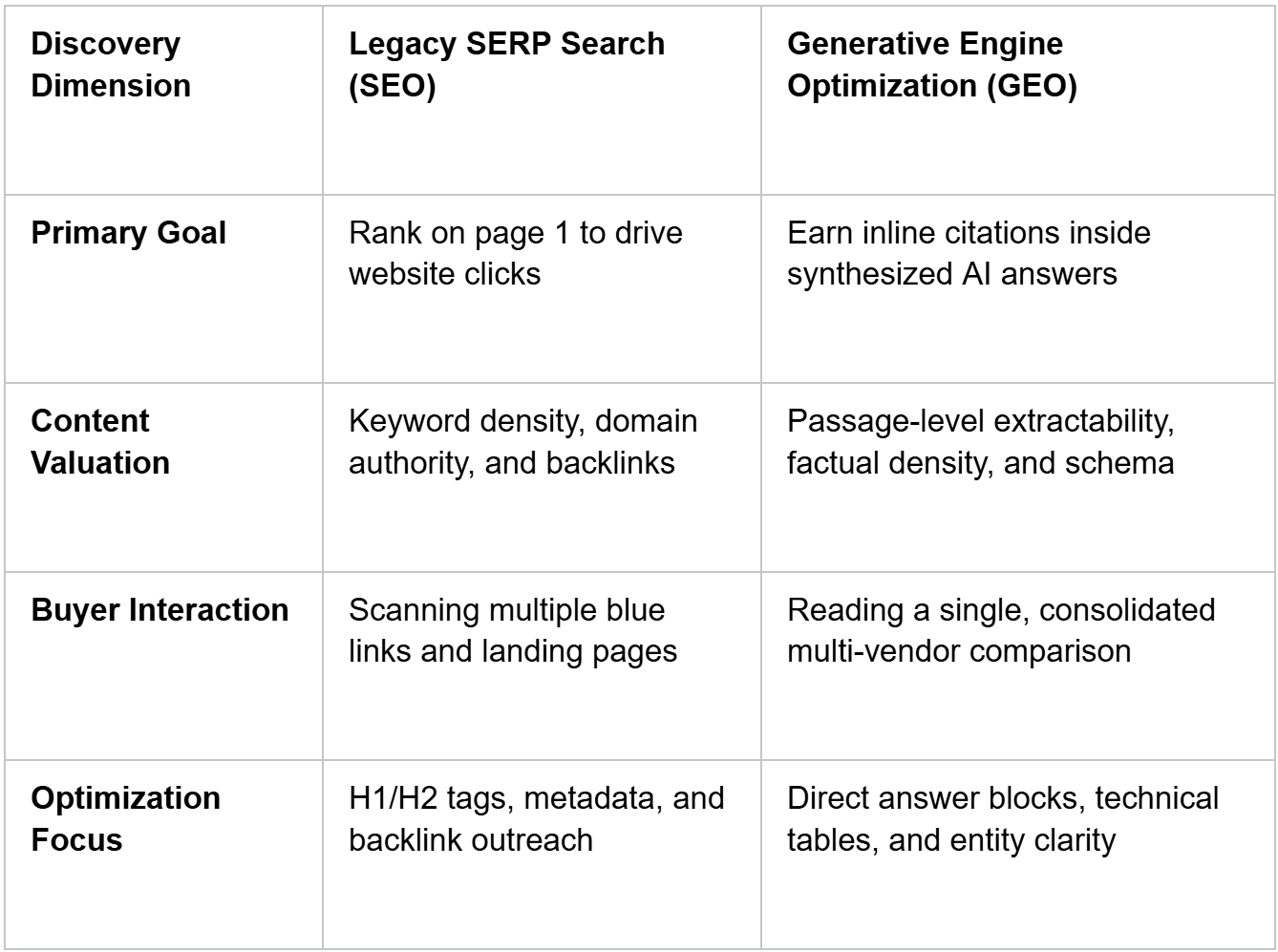
When corporate content relies on legacy SEO tactics, major visibility bottlenecks occur inside the AI discovery funnel:
If your digital content strategy remains focused purely on driving web clicks rather than earning generative engine citations, your brand risks becoming invisible during the crucial early phase of buyer research.
Adapting to conversational search requires a deliberate shift in how internal writing and technical teams format information. Instead of building long, introductory narratives designed to hold a user's attention on a webpage, writers must adopt a structured "data-first" approach that makes content easily parsable for LLMs.
To ensure your technical assets earn consistent citations in AI-generated answers, apply these four internal formatting principles:
Open technical articles, spec sheets, and product overviews with a concise, self-contained summary block. Generative models prioritize extracting direct statements positioned near the top of a page.
Include specific metrics, verified performance benchmarks, and explicit technical parameters. Generative engines favor passages packed with verifiable facts over subjective marketing assertions.
Use precise industry terminology, exact part numbers, and standardized compliance codes. Clearly defining how your solution fits into specific technical categories helps LLMs accurately categorize your brand during vendor synthesis.
Format comparison parameters, feature breakdowns, and pricing structures into clean HTML tables and JSON-LD microdata. Structured data layouts provide clear boundaries that AI crawlers can index without hallucination.
Earning citations inside ChatGPT, Perplexity, or Google AI Overviews is a powerful top-of-funnel signal, but converting that discovery into revenue requires a frictionless transition to your owned channels. When a B2B buyer follows an AI citation link to your website, they expect the same immediate, intelligent interaction that characterized their initial search experience.
“Connecting your structured GEO content strategy with an intelligent conversational intake layer bridges the gap between AI discovery and enterprise sales.”
By deploying specialized conversational agents on your high-intent landing pages, incoming prospects can instantly verify complex technical requirements, check account availability, and transition straight into qualified sales conversations without friction.
Ready to align your B2B content strategy with the generative search era and capture high-intent buyer traffic? You can explore a live view of our private platform through our online scheduling system or reach out directly to our integration team at hello@salesape.ai to review your content architecture and intake workflows.
Traditional SEO optimizes web pages to rank in search engine link lists, whereas GEO formats technical content so generative AI models can easily extract, synthesize, and cite your brand inside conversational answers.
Enterprise marketing teams track metrics like "Share of Model" and citation frequency across AI platforms like ChatGPT, Perplexity, and Google AI Overviews using specialized brand-monitoring and prompt-testing tools.
No, long-form content remains essential for deep technical validation; however, it must be restructured with clear answer blocks, data tables, and schema markup so both human readers and AI crawlers can parse it efficiently.