.svg)
Explore how modern in-car AI is reshaping the driving experience. We compare the unique tech philosophies of BMW, Mercedes-Benz, and Volkswagen to help you choose the perfect vehicle for your daily commute.
TL;DR
According to comprehensive retail research from J.D. Power, over forty percent of modern car shoppers now utilize AI-powered tools during their vehicle search, with the vast majority stating that automated cabin technology directly influences their final purchase decision.
Cars have officially evolved into software-defined lifestyle hubs. But as every manufacturer claims to offer the smartest vehicle on the market, understanding which features are truly essential—and how individual brands deploy them—is key to finding the right match for your daily drive.
True intelligence in a modern vehicle is no longer about isolated gadgets; it is about seamless integration. When you shop the current market, an effective system must handle two primary responsibilities:
The industry standard relies on three essential pillars of infrastructure:
While the foundational engineering behind these systems shares a common technological heritage, how individual automakers package and present this intelligence to the driver depends heavily on their core brand philosophy.
BMW has utilized its brand new Neue Klasse software-defined platform to champion a design philosophy focused entirely on reducing driver distraction.
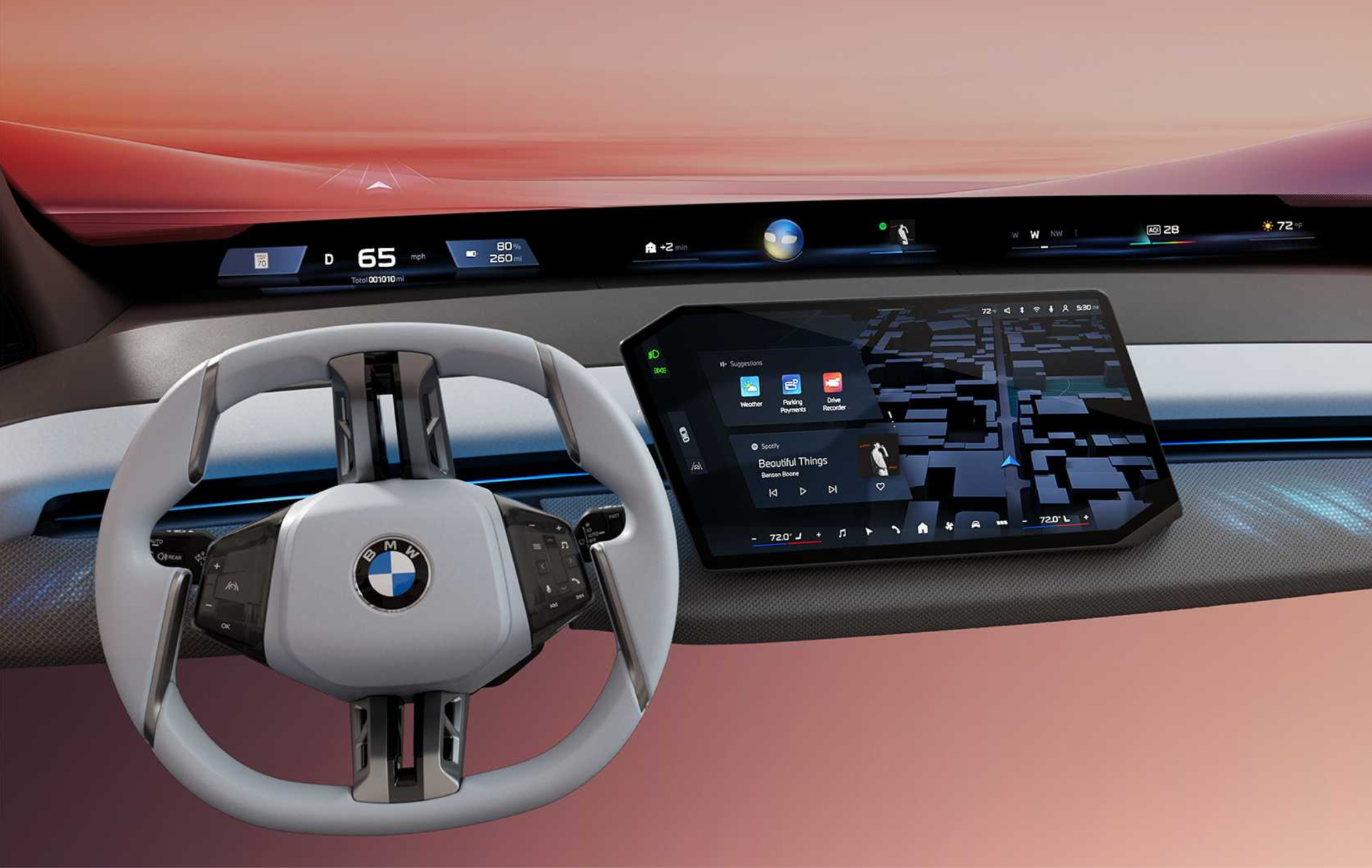
BMW Group
Mercedes-Benz takes the exact opposite approach, leaning heavily into total digital immersion with the MBUX Hyperscreen.
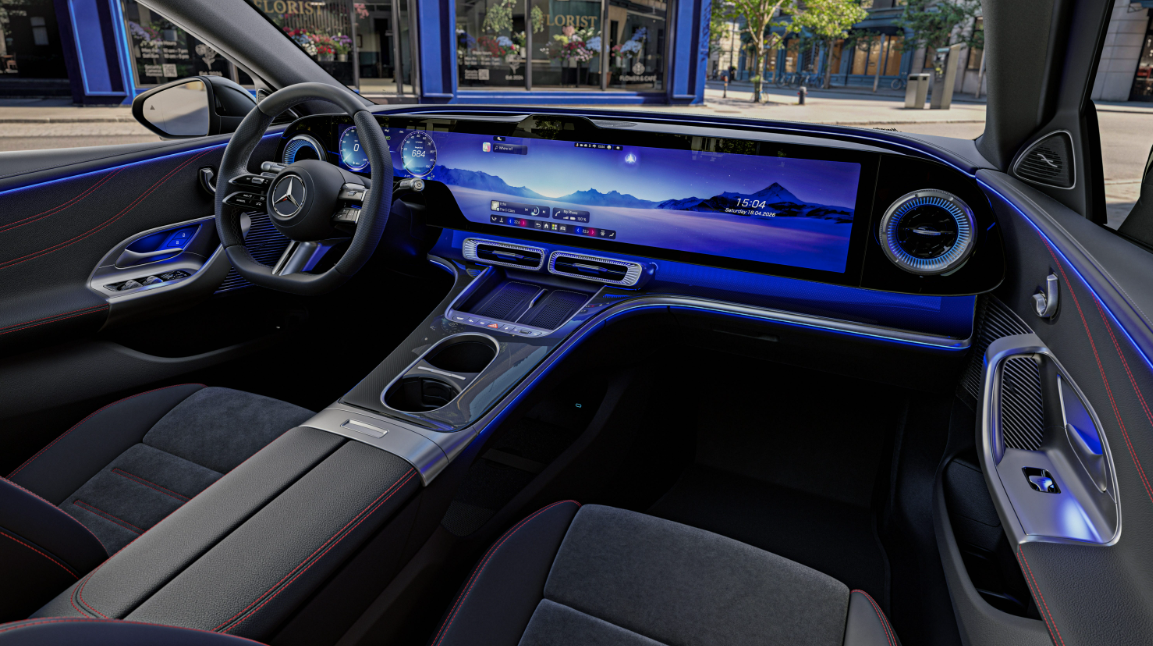
Mercedes-Benz
Volkswagen has focused its engineering investments on democratic, accessible technology, forming close development alliances with specialized software developers to integrate intuitive conversational capabilities across its standard production lines.
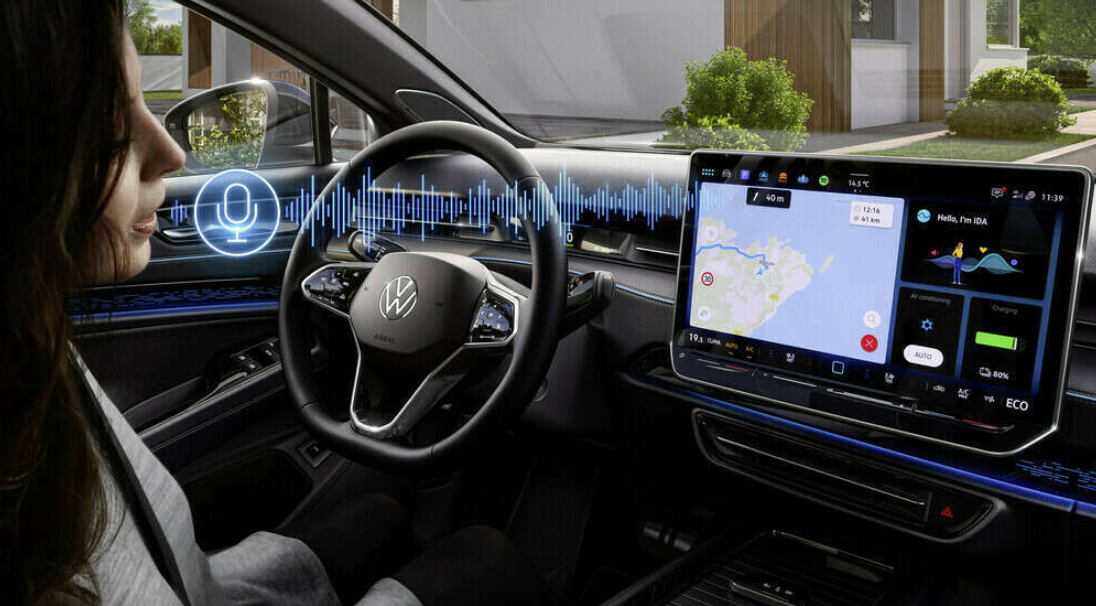
Volkswagen Group
The massive divergence in how these brands design their cockpits reveals that there is no single best approach to automotive intelligence. The right setup depends entirely on how you want to manage your personal energy during a commute.
If you view your vehicle as an extension of your office and want a system that actively curates your schedule, manages your communications, and optimizes your productivity, a hyper-connected environment is an unmatched operational asset. If you prefer to use your drive to disconnect from the digital noise and recharge your mental battery, a minimalist, vision-forward interface provides the perfect sanctuary.
By understanding the true philosophy beneath the dashboard, you can choose a vehicle that doesn't just get you to your destination, but actively improves your quality of life along the way.
A vertically locked platform requires the automaker to design, build, and maintain every single line of code and application interface internally, frequently resulting in slower software updates and limited feature scaling. An open ecosystem, built on standardized infrastructure like Android Automotive OS, allows the vehicle to seamlessly run pre-optimized corporate applications, secure cloud-based analytics, and third-party productivity software, ensuring your dashboard receives seamless over-the-air capability upgrades throughout the entire lifecycle of the vehicle.
Modern computer-vision arrays are explicitly trained to identify partially covered or obscured objects by utilizing advanced spatial neural networks. Rather than relying on a single camera view, the vehicle fuses inputs from multiple radar, LiDAR, and imaging sensors simultaneously. If a pedestrian steps out from behind a parked truck, or an incident occurs around a sharp curve, the tracking software calculates the predictive trajectory of the hidden asset in real time, executing pre-emptive brake pre-charging before the hazard is fully visible to the human eye.
Enterprise-grade automotive platforms isolate safety-critical vehicle controls from the cloud-connected communication networks. Basic cabin commands are handled entirely by local processing hardware embedded inside the dashboard, meaning your voice data never leaves the vehicle. When a complex query requires cloud-based computation, the transmission undergoes strict telemetry anonymization, removing any personal identifiers, registration numbers, or user profiles before routing the request through secure, encrypted data tunnels that satisfy strict regional corporate governance and data-privacy standards.